Four July 1, 2026 travel rule changes will affect tourists, business visitors, transit passengers and employer-sponsored workers in the United States, Japan, Vietnam and Australia.
The measures include an optional expedited U.S. visa interview fee, higher Japanese visa charges, a Vietnamese health declaration and increased Australian sponsored-work salary thresholds. The rules take effect on Wednesday, July 1, 2026, but eligibility differs by country.
What the July 1, 2026 travel rule changes include
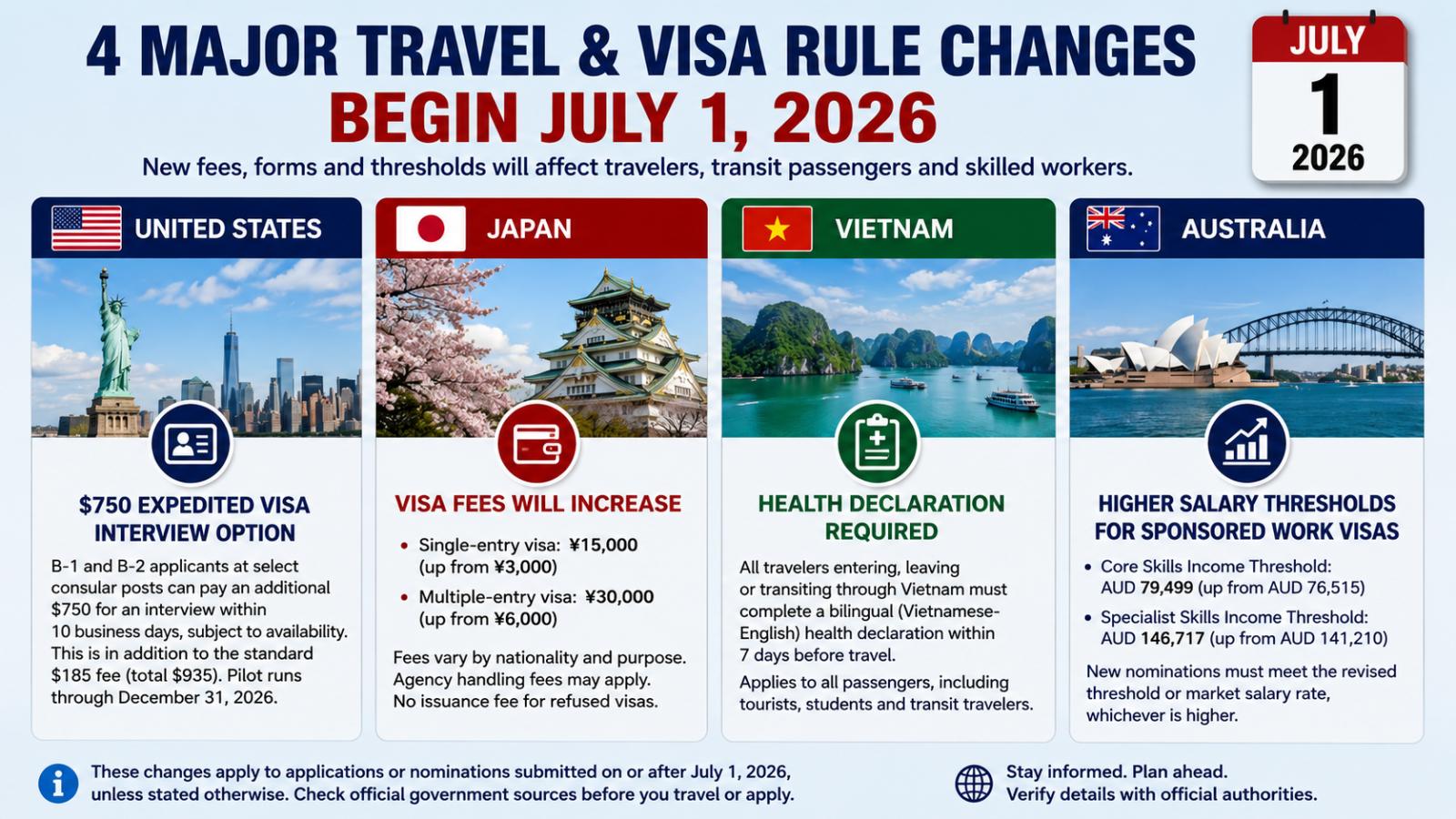
United States adds a $750 expedited B-1/B-2 interview option
B-1 business and B-2 tourism visa applicants at selected U.S. consular posts may pay an additional $750 for an interview within 10 business days, subject to availability. Added to the standard $185 application fee, the total cost is $935.
The pilot runs through Thursday, December 31, 2026. The fee only accelerates interview scheduling. It does not improve approval chances or shorten security checks or administrative processing.
Japan raises visa issuance fees
Japan will increase fees for applications accepted on or after Wednesday, July 1, 2026. The approximate charge will rise to ¥15,000 for a single-entry visa and ¥30,000 for a multiple-entry visa.
Fees are generally collected in the local currency where the application is processed. Charges may vary by nationality or travel purpose, and approved agencies may add handling fees. No issuance fee is charged when a visa is refused.
Vietnam introduces a health declaration
Travelers entering, leaving or transiting through Vietnam must complete a Vietnamese-English health declaration within seven days before travel. The requirement covers inbound, outbound and transit passengers.
Australia increases sponsored-work salary thresholds
Australia’s Core Skills Income Threshold will rise from AUD 76,515 to AUD 79,499, while the Specialist Skills Income Threshold will increase from AUD 141,210 to AUD 146,717.
New employer-sponsored filings must meet the revised threshold or the applicable market salary rate, whichever is higher. Existing visa holders and nominations lodged before July 1 will generally remain under the earlier thresholds.
The changes could affect travel costs, preparation time and sponsorship decisions. Applicants should review the latest official instructions before paying fees, traveling or filing a visa request.