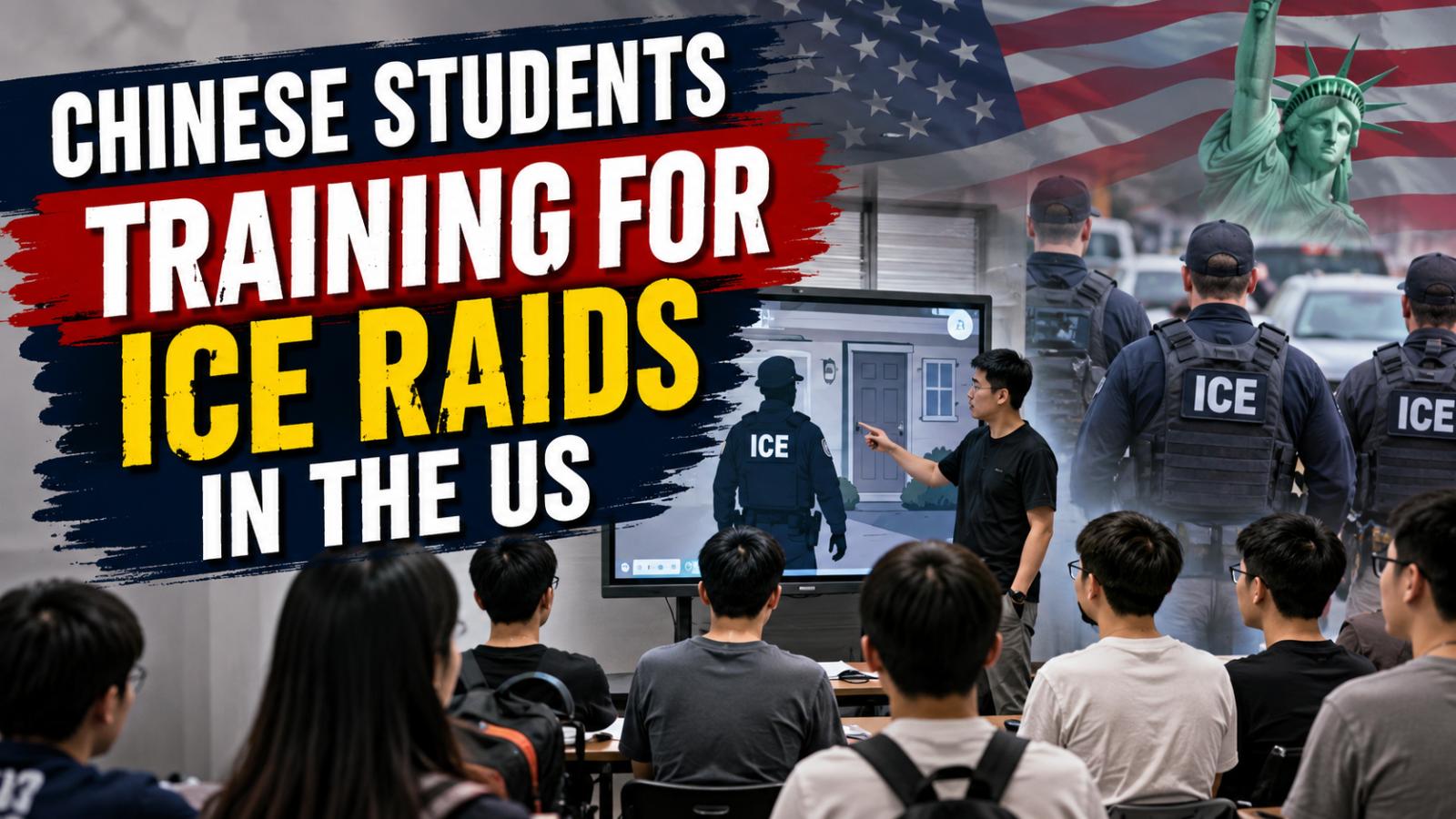
Private summer camps in Beijing are reportedly preparing Chinese students for possible encounters with US immigration officers as anxiety grows over stricter enforcement and changing expectations for international students.
Advertisements for the programmes describe simulations involving US Immigration and Customs Enforcement raids in homes, schools and public places. The training forms part of broader safety courses that already cover scams, bullying, hate incidents, attempted abductions and other emergencies.
The development reflects growing parental concern, but it should not be interpreted as evidence that the Chinese government is operating the camps or that ICE is specifically conducting raids against Chinese students.
Beijing Camps Add ICE Raid Training
A July 26 report reviewing camp advertisements said some private operators had added simulated ICE enforcement scenarios to their summer programmes. One advertisement said participants would learn to remain calm and respond effectively when faced with an unexpected immigration operation.
The exercises reportedly teach students how to identify officers, understand what is happening and avoid panicked reactions. These activities are presented alongside training for phone fraud, internet scams, bullying, hate incidents and other safety risks that students could encounter while living overseas.
However, the promotional language may exaggerate the likelihood that an ordinary international student will face an immigration raid. Students who maintain valid immigration status, follow employment restrictions and comply with visa requirements are in a different legal position from people targeted for removal.
US Immigration Enforcement Raises Concerns
ICE conducts immigration enforcement at residences, workplaces and other locations. Its stated mission includes enforcing federal immigration laws and addressing unlawful immigration.
International students normally enter the United States through temporary student or exchange visa categories and must follow specific enrolment, employment and reporting conditions. Government guidance distinguishes these temporary visa holders from immigrants seeking permanent residence.
Parents should therefore focus on practical preparation rather than panic. Students need copies of their passport, visa, Form I-20 or DS-2019, university contact information and access to qualified legal guidance. They should also understand that an administrative immigration warrant is not automatically the same as a judicial warrant authorising entry into a private home.
Chinese Student Enrolment Continues to Fall
The concern comes as fewer Chinese students are choosing the United States than during the sector’s earlier peak. The Institute of International Education’s Open Doors 2025 report provides the latest comprehensive data on international student enrolment during the 2024–25 academic year.
Open Doors data show that China remains one of the leading sources of international students, although its numbers have declined over several reporting years. Academic quality, research opportunities and established university networks continue to make American institutions attractive, but visa uncertainty, cost, safety perceptions and post-graduation employment prospects increasingly affect family decisions.
Some students are also considering the United Kingdom, Hong Kong and other destinations, while others may return to China after graduation instead of pursuing long-term employment in the United States.
Families Still Consider US Universities
Despite growing uncertainty, many Chinese families continue with American university plans after investing years in language tests, applications and academic preparation. For these families, withdrawing from the process can mean sacrificing substantial time and money.
Safety education can help students prepare for unfamiliar situations, but training should clearly separate realistic legal risks from dramatic scenarios designed to attract worried parents. Universities, immigration advisers and official government resources remain more reliable sources for visa compliance information.
The reported Beijing camps illustrate how changes in US immigration enforcement can influence decisions far beyond the people directly involved. Their popularity also reveals a broader decline in confidence among families considering American education, even as US colleges retain a strong reputation for teaching, research and global career opportunities.