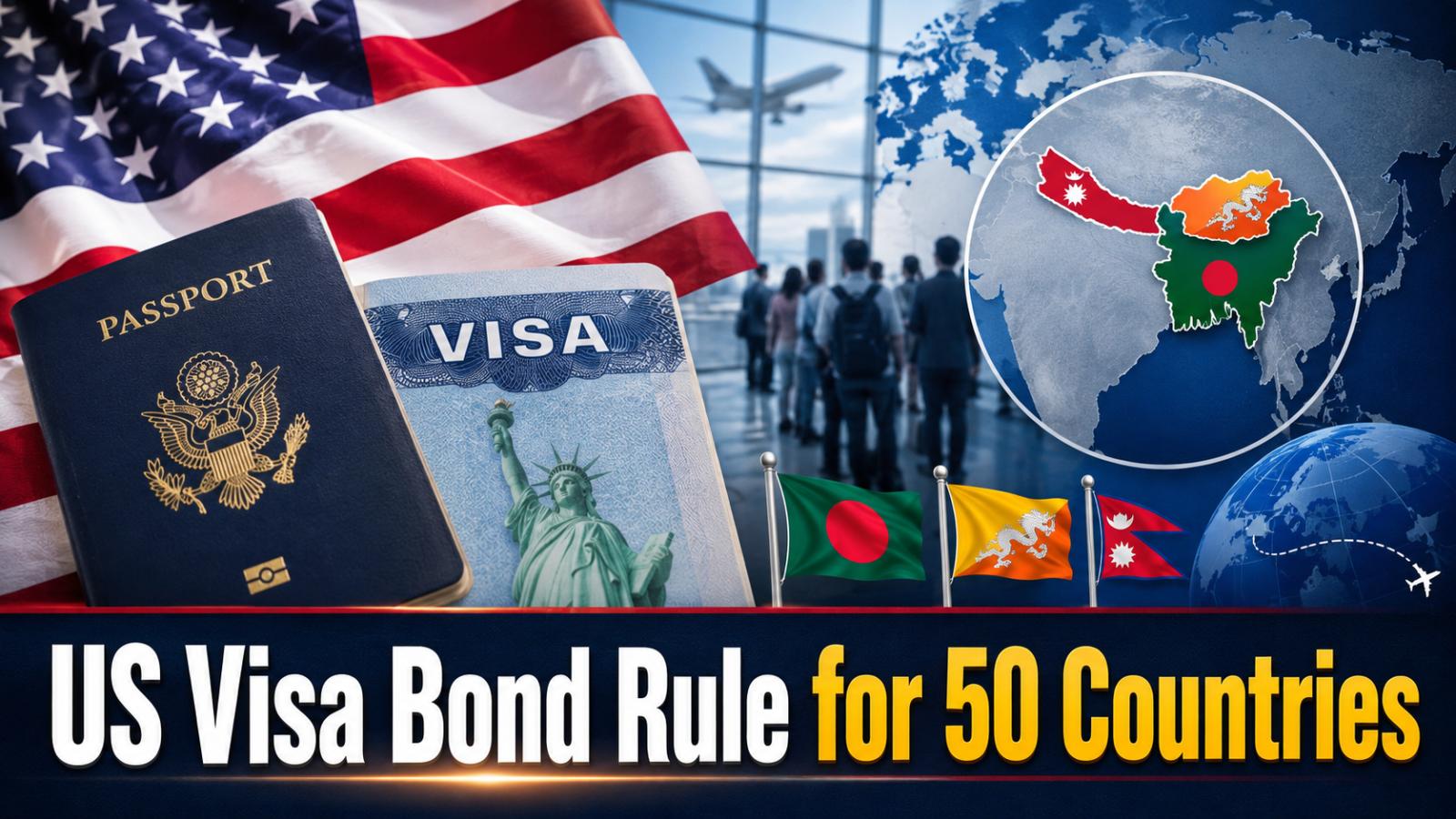
The US visitor visa bond program has become permanent, affecting selected B1/B2 visa applicants from 50 countries, including Bangladesh, Bhutan and Nepal. Eligible travellers may need to pay a refundable bond of up to $20,000, depending on a consular officer's assessment.
US Visitor Visa Bond Program Becomes Permanent
The United States has officially made its pilot visitor visa bond program a permanent part of its immigration process for selected temporary visitors. According to the final rule titled "Visas: Visa Bond Program," published by the US Department of State in the Federal Register, the new policy took effect on August 3, 2026. The program applies to certain applicants seeking B1/B2 business and tourist visas from 50 designated countries.
The Department of State says the measure is intended to encourage compliance with US immigration laws rather than generate government revenue. Information about participating countries and program details has also been published through the Bureau of Consular Affairs.
Visa Bond Rules for Selected Applicants
Not every applicant from an eligible country will be required to pay a bond. US consular officers will decide on a case-by-case basis whether a financial guarantee is necessary. If a bond is required, the amount will be either $10,000 or $20,000.
The bond is separate from regular visa application fees and should not be confused with them. It serves as a financial guarantee that the visitor will follow the conditions of their temporary stay, including leaving the United States before the authorised period expires.
Among South Asian countries, Bangladesh, Bhutan and Nepal are included in the list. Africa is the most affected region, with 30 countries covered by the program. Other affected nations are spread across Asia, Eurasia, Oceania, the Pacific, the Caribbean and the Americas.
Visa Bond Refund Process
Travellers who comply with all visa conditions will receive their bond back automatically after leaving the United States within the approved period of stay. Applicants whose visa applications are denied will also receive a full refund of the deposited amount.
The Department of State explains that the program is designed as a compliance mechanism rather than a financial penalty. Unlike standard visa fees, the bond remains refundable when travellers meet all applicable immigration requirements.
Visa Forfeiture and Travel Conditions
The bond may be forfeited if a traveller violates the conditions of their temporary stay. Examples include overstaying the authorised period, accepting employment without permission, or seeking to change non-immigrant status while inside the United States, including filing certain immigration applications.
The program also requires covered travellers to enter and leave the United States only through commercial airports equipped with US Customs and Border Protection facilities. Land border crossings and sea ports are not permitted under this scheme.
Travellers planning business or tourism visits should carefully review the latest visa requirements before applying. Because the bond requirement is determined individually by consular officers, applicants from eligible countries should be prepared for the possibility of providing a refundable financial guarantee. The official guidance issued by the US Department of State remains the primary source for determining eligibility, bond amounts and compliance requirements.