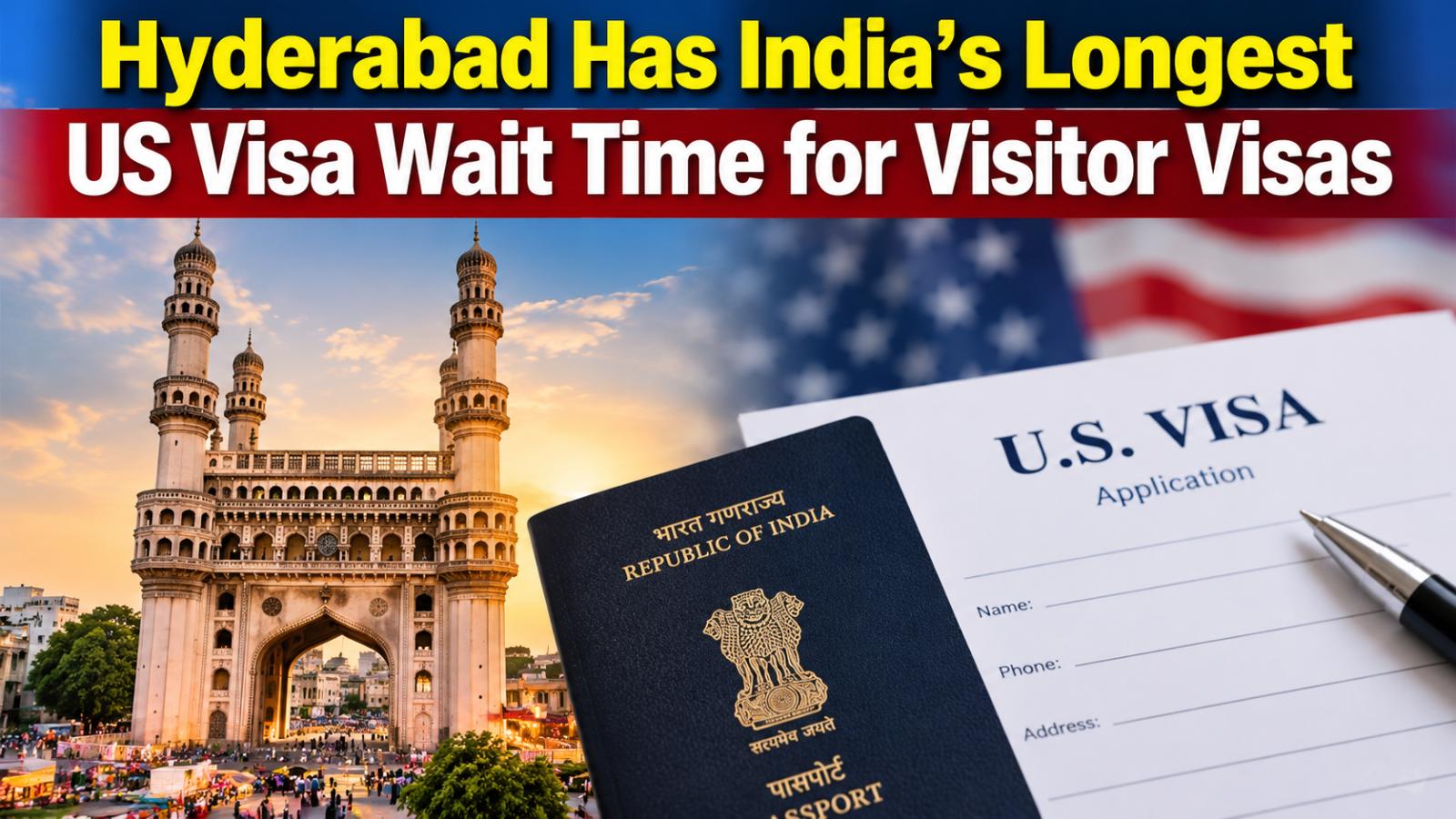
Hyderabad has emerged as the Indian US visa post with the longest current wait for B1/B2 visitor visa appointments. The latest US Department of State data shows a next available appointment wait of around 12 months, with an average wait of 11.5 months. The article explains the differences across Indian visa posts, recent changes to interview-waiver rules, and why Hyderabad’s longer wait cannot currently be attributed to any single officially confirmed reason.
Hyderabad residents planning to travel to the US may now have to wait nearly a year just to secure a visitor visa interview. According to the latest US Department of State visa wait-time data, updated on September 17, the next available B1/B2 appointment in Hyderabad is around 12 months away, with an average wait of 11.5 months.
Among the five US visa posts in India, Mumbai has the next-longest wait, with the next available B1/B2 appointment at around 11.5 months. New Delhi stands at 10 months, while Chennai and Kolkata have shorter waits of approximately 7.5 and 6.5 months, respectively.
Hyderabad Sees a Sharp Rise in Visitor Visa Wait Times
Hyderabad’s average B1/B2 waiting period has increased from around 9.5 months in the previous update to 11.5 months. The next available appointment has also moved to approximately 12 months. Mumbai, meanwhile, has seen its average wait fall to around 11 months.
The US government’s publicly available data does not provide a city-wise breakdown of applicant numbers, monthly appointment slots, or staffing levels. As a result, there is no official confirmation of whether staffing changes or reduced appointment capacity are specifically responsible for Hyderabad’s longer queue.
Interview-Waiver Changes Add Pressure
One major change affecting US visa appointments is the tightening of interview-waiver eligibility. From October 1, 2025, most nonimmigrant visa applicants generally became subject to an in-person interview, with limited exceptions.
For B1/B2 applicants, some people renewing a full-validity visa within 12 months of its expiry may still qualify for an interview waiver, subject to additional requirements. With more applicants now requiring in-person interviews, demand for regular appointment slots has increased.
However, the same rules apply across India's US visa posts, so they do not fully explain why Hyderabad currently has a longer visitor-visa queue than the other cities.
Hyderabad Wait Times Vary by Visa Category
The long wait is particularly noticeable for B1/B2 visitor visas and does not apply equally to every visa category. According to the State Department data, Hyderabad’s next available appointment for F, M and J student and exchange visas is around 1.5 months.
For petition-based H, L, O, P and Q visas, the next available appointment is around 5.5 months. These differences indicate that appointment availability varies considerably by visa category.
US Visa Appointment Wait Times in India
| Visa Post | B1/B2 Average Wait | B1/B2 Next Available | F/M/J Next Available | H/L/O/P/Q Next Available |
|---|---|---|---|---|
| Hyderabad | 11.5 months | 12 months | 1.5 months | 5.5 months |
| Mumbai | 11 months | 11.5 months | 2.5 months | 1.5 months |
| New Delhi | 7.5 months | 10 months | 2 months | 3 months |
| Chennai | 7 months | 7.5 months | <0.5 month | 1.5 months |
| Kolkata | 6 months | 6.5 months | 2 months | 1 month |
Appointment Availability Can Change
The 12-month figure represents an estimated wait rather than a guaranteed appointment date. The US State Department notes that wait times can change as additional appointment slots are released.
Applicants who have already booked an appointment can also check periodically for earlier slots, as availability may change.
For Hyderabad residents planning a holiday, family visit, or short business trip to the US, the latest figures highlight the importance of planning well in advance. While the broader increase in interview requirements and continued demand may be contributing to longer waits, the exact reason for Hyderabad’s particularly long B1/B2 queue has not been publicly specified by the US government.