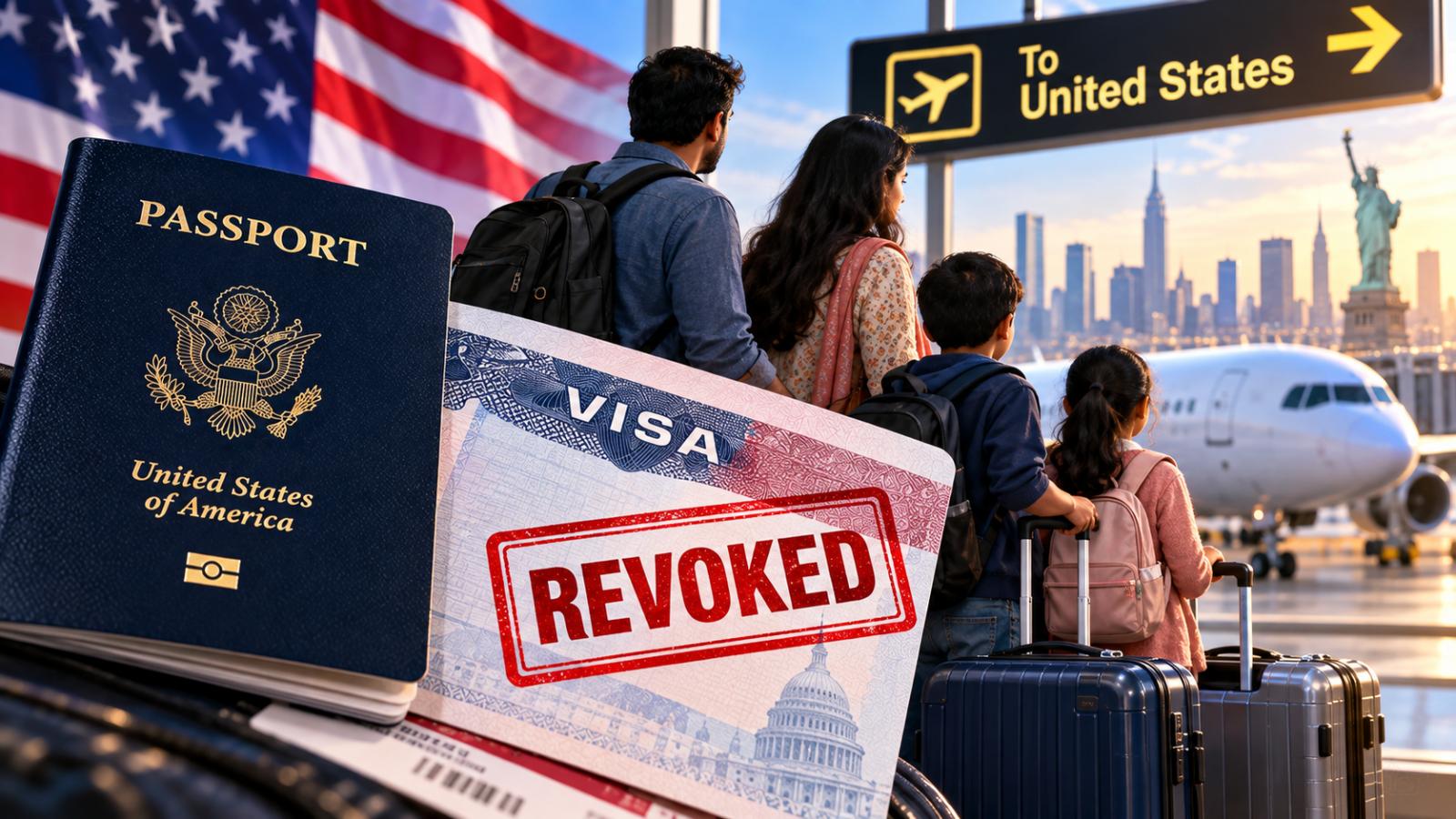
US visa revocation can create serious travel problems for NRIs, especially Indian workers, students and families returning from India. This guide explains how revocation may affect return travel, dependents, visa stamping and future applications.
For many NRIs, a U.S. visa is more than a travel document. It may be connected to employment, education or family life in the United States.
That makes visa revocation particularly disruptive when an Indian professional, student or dependent is traveling in India and expects to return to the U.S.
Can an NRI return to the US with a revoked visa?
A revoked visa generally cannot be used to seek admission to the United States.
This can become especially important when someone travels to India for a wedding, family emergency, vacation or visa stamping and later learns that the existing visa is no longer valid.
The State Department treats visa validity separately from admission and immigration status. A visa allows a traveler to seek entry at a U.S. port of entry; it does not itself guarantee admission.
What about H-1B, H-4 and student visa holders?
Indian nationals commonly use H-1B, H-4, F-1, J-1 and other nonimmigrant categories. Current State Department reciprocity information for India lists these classifications separately, with different validity periods and conditions.
A visa revocation therefore must be evaluated according to the person's own classification and circumstances.
For example, an H-1B worker, H-4 spouse and F-1 student should not assume that the same revocation consequences automatically apply to each category.
Does one family member's revocation cancel everyone's visa?
Not automatically.
Each visa is issued to an individual applicant, and visa eligibility is assessed separately.
However, family members may face practical complications if the principal worker or student cannot return to the United States. Dependents should verify their own visa validity rather than assuming their documents remain usable solely because the principal applicant previously held valid status.
What if the person is already in the United States?
A visa and lawful immigration status are not the same thing.
The visa is primarily used for travel and requesting admission. A person's lawful stay inside the United States is governed separately by the terms of admission and applicable immigration status.
Because of that distinction, a visa revocation does not always answer every question about whether someone may remain in the U.S. Individual circumstances can require separate review.
Can an NRI apply for another visa?
A person whose previous visa can no longer be used may in some circumstances submit a new application.
The State Department says applicants may reapply after a visa refusal, although they generally need to complete a new application and pay the applicable fee again. Approval is not automatic and depends on eligibility at the time of the new application.
Where the original issue involved fraud, criminal conduct, overstaying or another ground of inadmissibility, the underlying problem may need to be addressed before a new visa can be issued.
Why online screening matters for Indian applicants
Several visa categories widely used by Indian nationals are now subject to expanded online-presence review.
The State Department currently lists H-1B, H-4, F-1, F-2, J-1, J-2 and several other categories among those subject to broader online vetting. Effective October 1, 2026, additional categories including I, TN and TD were added.
Applicants should therefore make sure that information provided in visa forms, interviews and required online disclosures is accurate and consistent.
What should NRI families do after a revocation?
The first step is to confirm exactly whose visa has been affected, the visa category involved and the stated reason.
Travel should not be planned on the assumption that an old visa remains valid after revocation. Applicants should also avoid treating revocation, visa refusal, loss of status and inadmissibility as the same issue.
Where an H-1B worker, student or dependent faces criminal allegations, fraud concerns, status violations or another complex immigration issue, individualized legal advice may be appropriate before travel or reapplication.
For NRI families, the practical impact can extend beyond one visa document. It can affect employment schedules, school calendars, family travel and the ability to return to the United States, making early verification of visa status especially important.