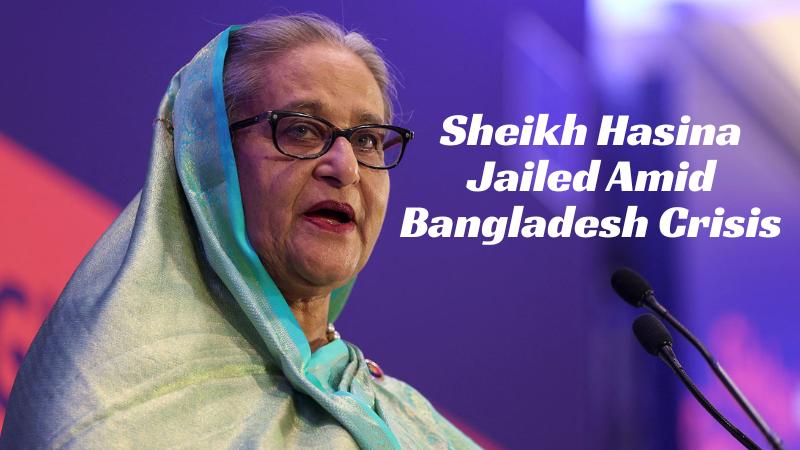
Bangladesh’s political turmoil deepened further on Monday as a Dhaka court sentenced deposed Prime Minister Sheikh Hasina to 10 years of rigorous imprisonment in two corruption cases related to alleged irregularities in government land allocations. The verdict, delivered by Dhaka’s Special Judge’s Court, marks another major legal setback for the former leader, who has been facing a barrage of cases since her removal from power in 2024. The cases revolve around the Rajuk New Town Project in Purbachal, where Hasina was accused of misusing her official influence to allocate residential plots to close relatives and associates.
According to court proceedings, the 79-year-old former prime minister was tried in absentia along with several others. The judge stated that the trial was conducted lawfully despite the absence of most accused, emphasizing that their location outside the country did not obstruct the judicial process. Alongside Hasina, her relatives also received prison sentences, further intensifying the political fallout surrounding the verdict. Only one accused, a senior official from Rajuk, appeared in person during the announcement of the judgment, while the remaining defendants were also convicted and handed varying prison terms for their roles in the alleged misuse of authority.
The ruling has triggered sharp reactions from different quarters. Hasina’s now-dissolved Awami League dismissed the verdict as politically motivated, claiming the cases were fabricated by the interim administration led by Muhammad Yunus. Party leaders described the sentencing as predictable and part of a broader campaign to discredit the former prime minister and her family. On the international front, one of the accused relatives, a British lawmaker, criticized the legal process as deeply flawed, stating that she had never been formally summoned or contacted by Bangladeshi authorities despite the allegations circulating for months.
The verdict comes against the backdrop of Bangladesh’s dramatic political shift following the student-led uprising in August 2024 that forced Hasina out of office. Since then, multiple corruption and human rights cases have been initiated against her, her family members, and close associates. Earlier court rulings had already sentenced her to lengthy prison terms in other land-related cases, while a separate tribunal controversially handed down a death sentence on charges linked to the violent crackdown during the protests. As legal pressure mounts and political divisions widen, the latest conviction underscores the uncertain future of Bangladesh’s former strongwoman and signals prolonged instability in the country’s political landscape.