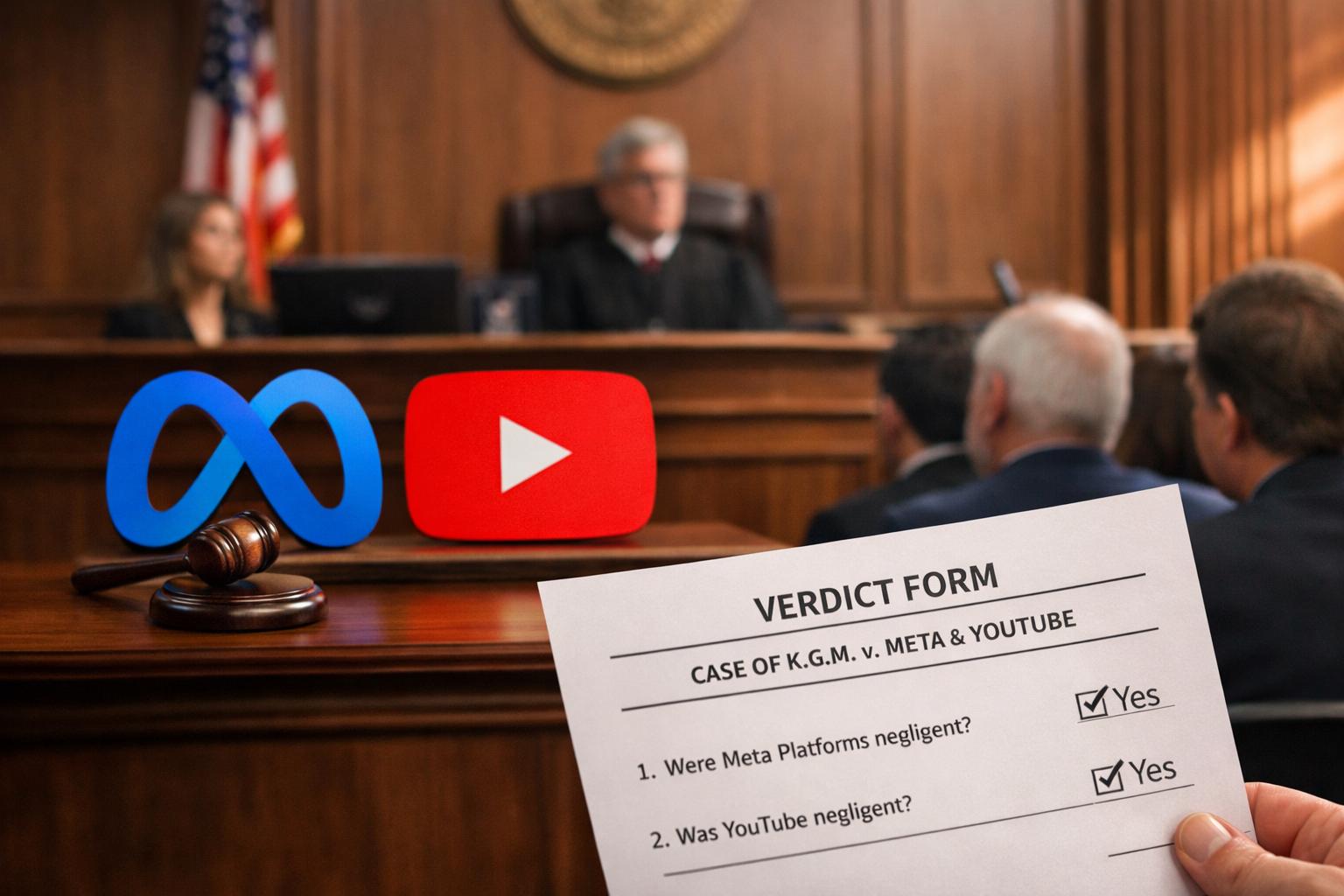
A Los Angeles jury has found Meta and YouTube negligent in the design and operation of their platforms, delivering a significant verdict in one of the first trials addressing allegations of social media addiction. The jury concluded that both companies played a substantial role in causing harm to the plaintiff, identified as K.G.M., and failed to adequately warn users about potential risks associated with Instagram and YouTube.
The panel awarded $3 million in compensatory damages, assigning 70 percent responsibility to Meta and 30 percent to YouTube. The case is part of a broader set of lawsuits involving more than 1,600 plaintiffs, including families and school districts, who claim that social media platforms contribute to youth mental health issues.
Testimony during the trial included statements from senior technology executives, with arguments focusing on platform design, user engagement features, and their potential psychological effects. The plaintiff, now 20, told the court that prolonged and nearly constant use of social media contributed to depression, anxiety, and body image concerns, significantly affecting her self-worth.
Attorneys for the companies rejected the claims, arguing there was insufficient evidence linking platform use directly to addiction or harm. They also pointed to other factors in the plaintiff’s personal history. Despite these arguments, the jury determined that the platforms’ design and lack of warning played a meaningful role in the outcome.
Outside the courtroom, families involved in similar cases described the verdict as a moment of validation. Legal representatives for the plaintiff characterized the decision as a turning point, emphasizing that it signals growing accountability for technology companies.
The jury is expected to consider punitive damages next, which could further increase financial penalties. The case also adds momentum to ongoing legal debates over Section 230, a law that has historically shielded online platforms from liability for user-generated content.
This verdict follows a separate ruling in New Mexico, where Meta was held liable for failing to protect minors from exploitation, resulting in substantial civil penalties. Together, these cases highlight increasing legal scrutiny of social media companies and their impact on youth wellbeing.
With additional trials expected, legal experts suggest this decision may influence future litigation and regulatory approaches, marking a critical moment in the evolving relationship between technology platforms and public accountability.