Spiti Valley guide: monasteries, villages, adventureSpiti Valley guide: monasteries, villages, adventure
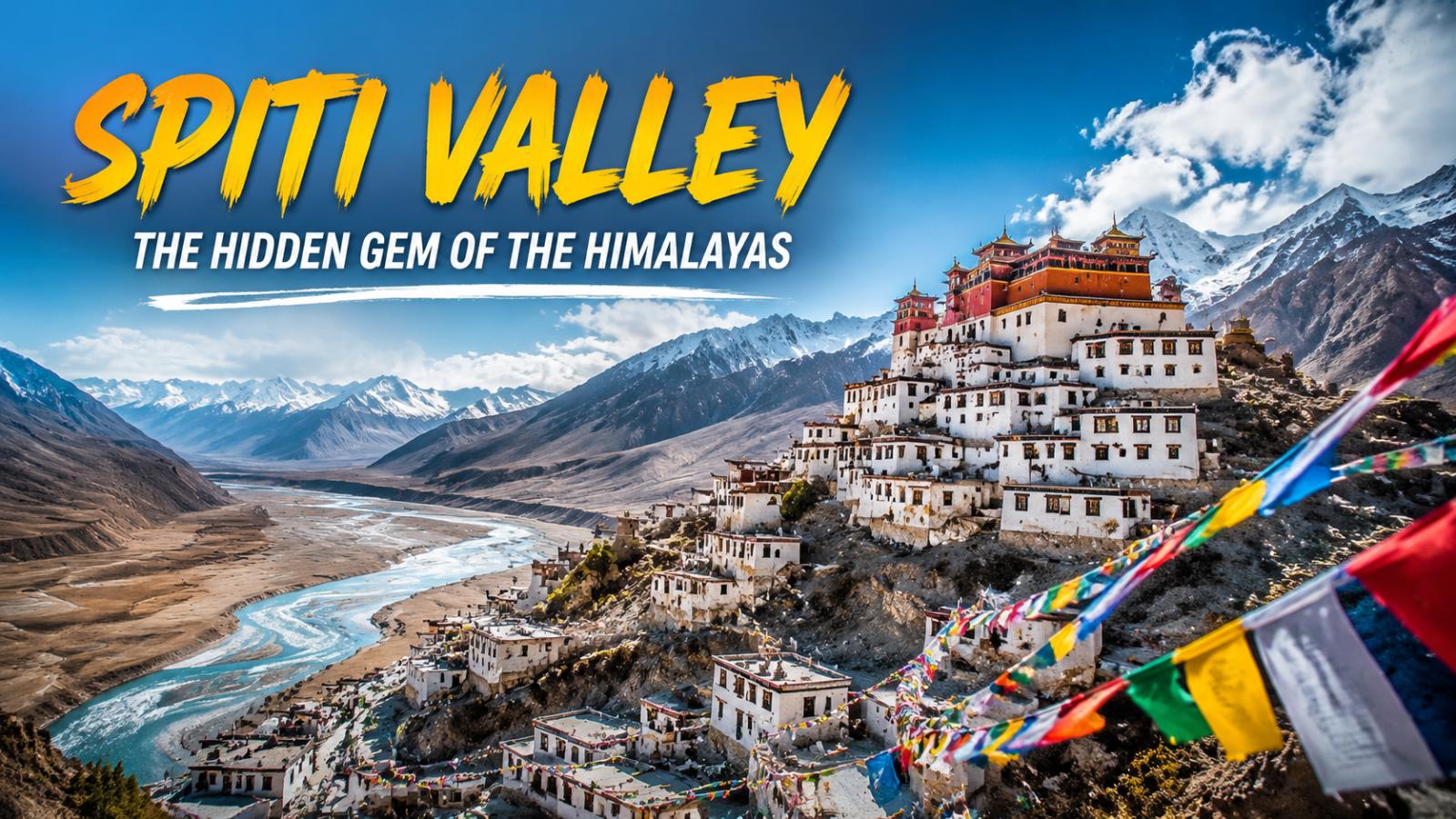
Spiti Valley, located in the Lahaul and Spiti district of Himachal Pradesh, is a remote Himalayan region near the Tibet/China border. Known as the “Middle Land,” Spiti Valley is a high-altitude cold desert with barren mountains, dramatic cliffs, blue skies, ancient monasteries, and small villages. Its unique landscape offers adventure, stargazing, and a spiritual Himalayan experience, making it a rare destination for travelers seeking raw and silent beauty. The valley is famous for its centuries-old Buddhist monasteries, including Key Gompa, Tabo Monastery, Dhankar Monastery, and Kungri Monastery. Key Gompa stands as the largest monastery in Spiti, overlooking Kaza at approximately 13,500 ft.
Adventure and remote experiences
Spiti Valley attracts off-road travelers and adventure seekers. Villages such as Kaza, Kibber, Langza, Hikkim, and Komic provide unparalleled stargazing opportunities and photo-worthy landscapes. The rugged roads, high passes, and remote terrain offer a challenge to visitors. Tibetan Buddhist culture is visible in the architecture, prayer flags, local festivals, and cuisine, giving travelers a deep cultural insight.
Historical and cultural significance
Historically, Spiti served as a bridge between India and Tibet. Monasteries functioned as learning centers, manuscript repositories, and community hubs. Key Gompa, founded in the 15th century by Sherap Zangpo, features fortress-like architecture adapted to harsh Himalayan conditions. Some villages, like Komic and Hikkim, are among India’s highest settlements. Hikkim is known for its high-altitude post office, while Langza houses ancient marine fossils from the Tethys Sea. Wildlife includes snow leopards, Himalayan ibex, and blue sheep. Eco-tourism is expanding through homestays, solar projects, and local livelihood support.
Visiting challenges
Spiti is not a conventional tourist destination. Roads are rough, medical help is limited, mobile networks are weak, and altitude sickness is a concern. Tourist season is short, and winters are severe. Visitors must plan carefully to explore monasteries, murals, mud houses, and glacial water systems safely.
Mythological significance
Spiti Valley is also linked to legends. According to Mahabharata, Lord Indra took Yudhishthira to heaven at a sacred spot here. Folklore tells of Chandra, the Moon God’s daughter, and Bhaga, the Sun God’s son, eloping and forming the Chandrabhaga River and alpine lakes Chandratal and Suraj Tal. Another tale speaks of a shepherd who fell in love with a mermaid; after breaking his promise, she vanished, and locals believe his spirit still wanders the lake’s banks. These myths, combined with monasteries, adventure, fossils, and stargazing, make Spiti Valley a unique Himalayan experience far from conventional tourism.