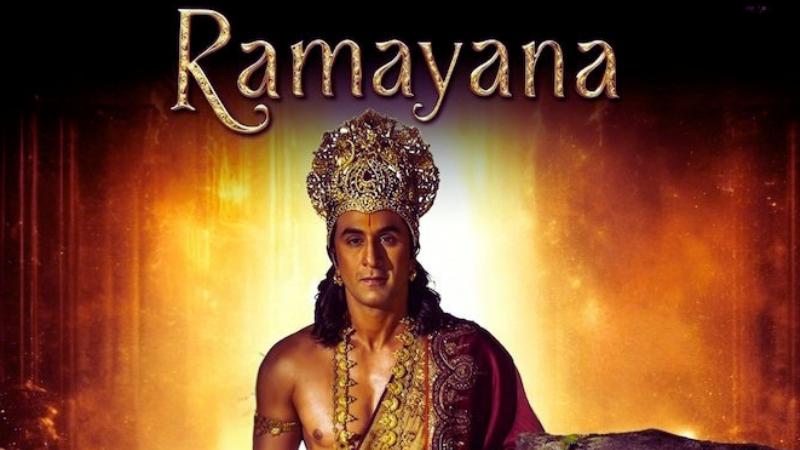
Nitesh Tiwari’s Ramayana promises to be India’s boldest venture into global-scale VFX storytelling. The teaser featuring Ranbir Kapoor as Lord Rama, released on April 2, has split audiences, stirring a significant debate over the film's visual direction. Positioned as a global introduction to Indian cinema, the film's ambition is undeniable, but so is the backlash. While some appreciate the high-tech visuals, others question whether the use of VFX is too excessive for a cultural epic like the Ramayana, traditionally a rich and tactile story.
The debate centers around the heavy reliance on VFX, particularly with the film’s polished, almost synthetic look. The golden skies, floating landscapes, and symmetrical frames of Rama have sparked comparisons to video games, with many feeling that the visuals prioritize spectacle over authenticity. The criticism mirrors the reaction to another recent mythological film, Adipurush, where a similar lack of texture led to audience dissatisfaction.
Industry insiders, however, are optimistic. The film is backed by international VFX powerhouse DNEG and promises a level of scale rarely attempted in Indian cinema. VFX supervisor Debdoot Ghosh notes that while AI is heavily integrated into the production, it helps manage the scale rather than replacing the artistry. “If used correctly, it will make the world of Ramayana seamless,” says Ghosh, acknowledging that while AI can streamline workflows, human craft is still crucial to making the film believable.
Despite this technological leap, the film has arrived at a time when many international filmmakers are pulling back from heavy digital manipulation. Directors like Christopher Nolan, Denis Villeneuve, and George Miller are now opting for practical effects, using real locations and stunts to create more tangible, grounded visuals. This shift has influenced audience expectations globally, where realism in even fantastical settings is valued more than ever before.
In India, filmmakers like SS Rajamouli have continued to blend VFX with practical effects, shooting extensively on real locations for RRR and his upcoming project Varanasi. Similarly, Sanjay Leela Bhansali’s highly stylized sets retain a tactile quality despite their visual grandeur. This raises the question: Can a film of Ramayana’s scale maintain emotional authenticity when relying so heavily on digital enhancements?
The reaction to Ramayana reflects a broader shift in audience expectations. Today’s viewers are more visually literate than ever, and they can tell when something feels “off.” In a saturated market of high-end visuals, credibility and emotional depth are becoming increasingly important. For Ramayana, achieving this balance could determine whether it becomes a landmark film for Indian cinema or a cautionary tale about the limits of VFX.
As the film continues its production journey with an estimated budget of Rs 4000 crore, the stakes are high. The use of AI and VFX is almost inevitable given the scope, but how seamlessly these tools are integrated will decide whether Ramayana succeeds in capturing the audience’s heart—and whether the global scale and ambition live up to the cultural and emotional richness of the story. Ultimately, Ramayana may be remembered not for its visual effects but for how it tells its story, staying true to the timeless elements that have captivated audiences for centuries.