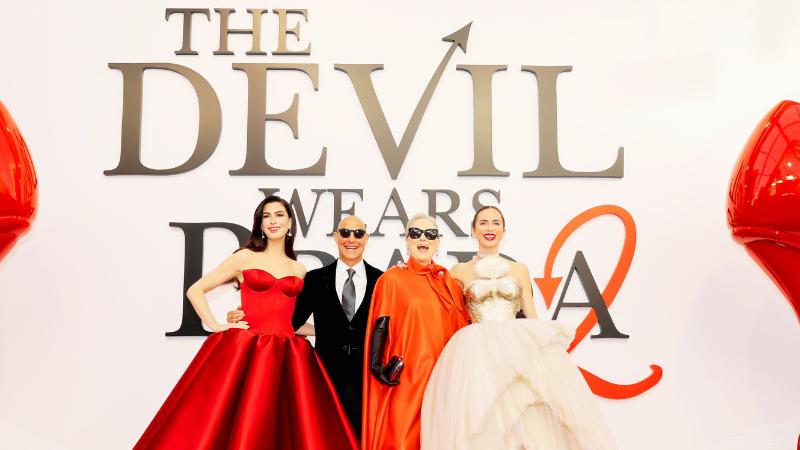
The sequel to The Devil Wears Prada 2 has delivered a powerful opening at the global box office, earning $77 million across the United States and Canada in its debut weekend, along with an impressive $156.6 million internationally. Released across more than 4,150 theaters in North America by The Walt Disney Company under its 20th Century Studios label, the film has clearly tapped into nostalgia while attracting a new generation of viewers. The strong performance also marks a solid start to Hollywood’s crucial summer movie season, which typically accounts for a large share of annual ticket sales.
Audience trends played a major role in the film’s success, with women making up nearly 76% of ticket buyers. A large percentage of viewers also indicated they would recommend the film, showing strong word-of-mouth potential. The sequel brings back fan-favorite characters, with Anne Hathaway reprising her role as Andy Sachs and Meryl Streep returning as the iconic Miranda Priestly. Set in a modern and evolving media landscape, the film explores how the fashion and publishing industries have changed over time, while maintaining the sharp dialogue and drama that made the original a cult classic.
Despite facing competition from Michael, the Michael Jackson biopic, the sequel managed to dominate the weekend charts. “Michael” collected $54 million in its second weekend and has already crossed $423.9 million globally, showing strong staying power. Industry analysts note that such performance indicates a healthy box office environment, where multiple big films can succeed simultaneously rather than one completely overshadowing the other. This trend reflects changing audience behavior and a growing appetite for diverse entertainment options.
The success of The Devil Wears Prada 2 also highlights a broader shift in audience preferences toward engaging, escapist content. Other films like The Super Mario Galaxy Movie and Project Hail Mary continue to draw steady crowds, while new releases have seen moderate openings. With the annual box office already running about 14% ahead of last year, early indicators suggest a strong recovery and growth phase for the film industry. If this momentum continues, the 2026 summer season could turn into one of the most profitable periods in recent years, even without a traditional superhero blockbuster leading the lineup.