Plot
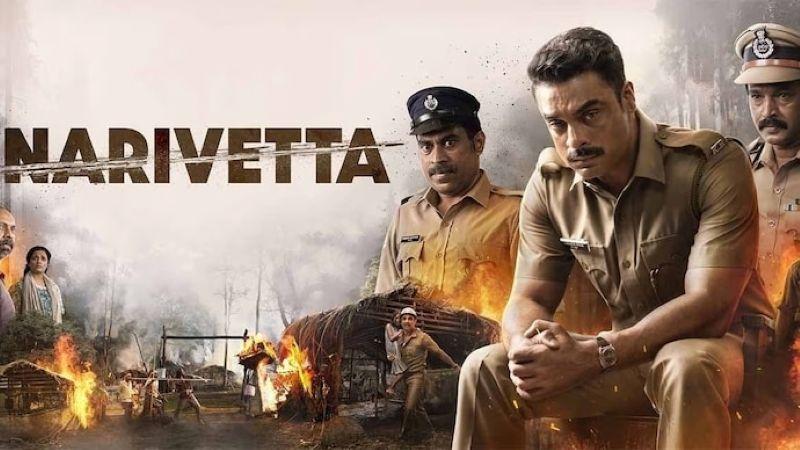
Narivetta is inspired by the 2003 Muthanga incident, where clashes between police and the Adivasi community over land rights led to a tragic loss of life. The film follows Varghese Peter (Tovino Thomas), a young man with ambitions beyond the modest job prospects in front of him. Struggling with personal pride and expectations, he reluctantly becomes a police constable. As he begins his posting in Wayanad, he finds himself on the wrong side of history, tasked with forcibly evicting protesting Adivasis. Over time, Varghese undergoes a personal transformation, uncovering systemic corruption and questioning the very uniform he wears.
Overview
Directed by Anuraj Manohar, Narivetta is a politically charged, emotionally resonant tale about systemic oppression, police brutality, and the awakening of conscience. Though slow in its initial portions, the narrative gains strength after the midpoint and crescendos into a gripping final act that critiques the abuse of power in a democratic setup. Unlike typical Malayalam cop thrillers, Narivetta avoids over-stylization and chooses raw, realistic storytelling.
Performances
-
Tovino Thomas (Varghese Peter): Outstanding, especially in the film’s final act. His transformation from a passive officer to a man with purpose feels organic and powerful.
-
Suraj Venjaramoodu (Basheer): Poised and grounded, he plays the moral compass to Varghese with quiet conviction.
-
Cheran (Keshavadas): While effective as a corrupt superior, his emotional range feels limited, affecting the overall impact.
-
Priyamvada Krishnan: Adequate in her supporting role, serving primarily to define Varghese’s emotional arc.
Technical Aspects
-
Cinematography (Vijay): Striking visuals, especially in the Wayanad sequences and protest scenes. The use of natural light and close-ups enhances the raw emotionality.
-
Direction: Anuraj Manohar’s straightforward approach works well post-interval but lacks finesse in early portions.
-
Narrative Structure: Non-linear storytelling gives depth but may confuse casual viewers in the first half.
-
Production Design: Authentic depiction of tribal habitats and police infrastructure adds realism.
Music
Jakes Bejoy’s score is haunting and atmospheric. It amplifies tension during the protest and custodial sequences and adds emotional weight during Varghese’s introspective moments. The background score succeeds in conveying urgency and despair.
Editing
The first half could have benefited from tighter editing. The pacing drags in the early portions with excessive focus on Varghese’s indecisiveness. Post-interval, the editing becomes crisper and more coherent, aligning with the rising narrative tension.
Positives
-
Tovino Thomas’s transformative performance
-
Strong political message and real-life relevance
-
Effective protest and confrontation scenes
-
Sound design and cinematography elevate the narrative
-
Suraj Venjaramoodu's restrained, empathetic portrayal
Negatives
-
Slow, meandering first half
-
Cheran’s limited emotional range as an antagonist
-
Some clichéd romantic subplots that dilute the urgency
-
Lack of stronger screenplay grip in the first 45 minutes
Analysis
Narivetta is a searing reminder of how institutions, meant to protect citizens, can also become tools of oppression. The film’s second half is where it truly shines offering visceral insights into power dynamics, misplaced nationalism, and the forgotten voices of India’s tribal communities. It doesn’t glorify rebellion; instead, it exposes the emotional and physical trauma of those fighting for their rights.
Bottomline : Powerful, Uneven
Rating : 3.5 / 5