Plot:
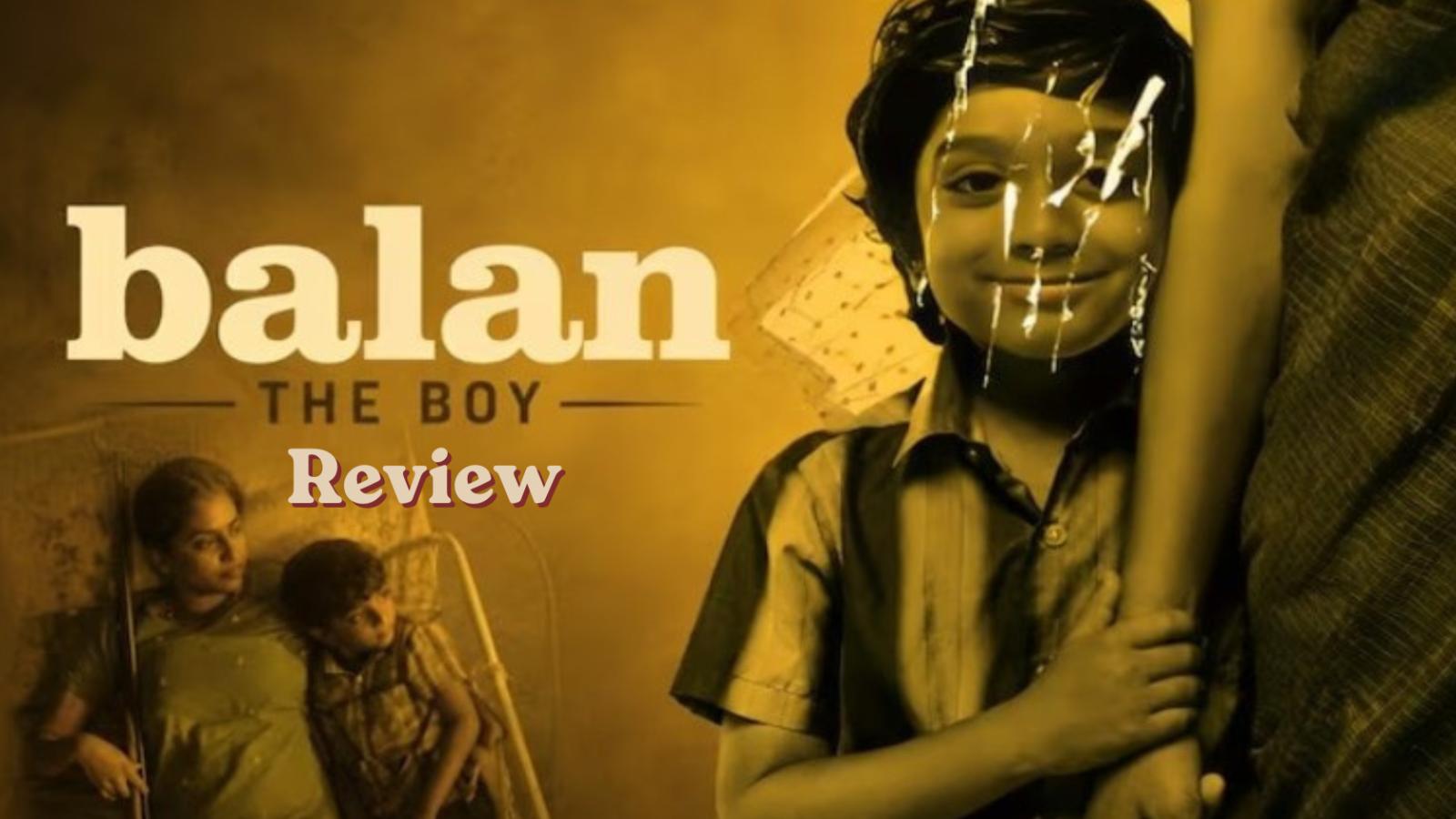
Balan The Boy follows a mother and her young son who live on the run, constantly changing towns, names and identities. Every new place comes with a new story created by the mother to protect her child from a hidden danger. What begins like a survival thriller slowly reveals itself as an emotional journey about fear, trauma, sacrifice and the extreme lengths a mother and son will go to in order to protect each other.
Overview:
Director Chidambaram, after Manjummel Boys, returns with a film that looks simple on paper but carries strong emotional weight. Written by Jeethu Madhavan, Balan The Boy begins as a suspense drama but gradually becomes a layered mother-son story. The film works best when it focuses on the bond between the two central characters rather than the thriller mechanics around them. It is not a loud, twist-heavy film. Its strength lies in restraint, emotional tension and careful character writing.
Performances:
Farzana delivers a powerful yet controlled performance as the mother. She plays the character with fear, guilt and quiet strength without making her look unstable or exaggerated. Her performance keeps the emotional core of the film alive.
Adhisheshan is excellent as the boy. He avoids forced innocence and behaves like a real child trying to understand a confusing world. His natural performance is one of the film’s biggest strengths. Tovino Thomas, as Abbas, has an important role, but the writing does not give him enough emotional space. The supporting cast is effective in parts, though a few characters needed better development.
Technical Aspects:
Chidambaram’s direction is confident and sensitive. He does not rush the emotional moments and allows tension to build naturally. The film’s two-half structure works well, with the first half leaning toward thriller elements and the second half focusing more on emotional consequences. However, some supporting characters and logical questions could have been handled with more clarity.
Music:
Sushin Shyam’s background score is one of the film’s major assets. The music does not overpower the scenes or force emotion. Instead, it supports the mood after the drama has already landed. This restraint gives the film a mature and haunting feel.
Editing:
The editing is mostly effective, especially in the second half where the emotional rhythm becomes stronger. However, the opening twenty minutes feel slightly slow and repetitive. A tighter beginning would have helped the film reach its main conflict faster.
Positives:
- Strong mother-son emotion
- Farzana’s restrained performance
- Adhisheshan’s natural acting
- Sushin Shyam’s background score
- Chidambaram’s sensitive direction
- Effective thriller-to-drama transition
- Memorable tense scenes
Negatives:
- Slow opening stretch
- Some supporting characters feel underwritten
- Tovino Thomas’ role needed more depth
- A few logical gaps remain unanswered
- Certain emotional beats are repeated early on
Analysis:
Balan The Boy is not a typical thriller that depends on constant twists or loud revelations. Its suspense comes from the life its characters are forced to live. The mother’s lies, fake identities and constant fear create tension, but the film’s real impact comes from the boy’s emotional world. He is not just a helpless child in danger. He is observant, curious and slowly learning why his life is different from everyone else’s.
The writing succeeds because it avoids turning the mother into a dramatic stereotype. She is not shown as frightening or mentally unstable, even though the premise could have easily gone in that direction. Instead, the film treats her actions as the result of trauma, protection and desperation. That balance gives the story emotional credibility.
The second half is stronger because the film stops chasing mystery and starts exploring consequence. Scenes involving danger, recognition and moral choices carry real weight. The auto-rickshaw driver sequence and the grandmother scene stand out because they combine suspense with emotional stakes. The conversation about poisoning is another highlight, showing how ordinary words can carry terrifying meaning when a child’s safety is involved.
Still, the film is not flawless. The early stretch takes too long to establish what could have been communicated faster. Abbas and the police officer Pavithran needed stronger writing because their actions matter to the story’s resolution. These gaps prevent the film from becoming a complete emotional knockout.
Even with these issues, Balan The Boy stays with you because it refuses easy melodrama. The climax does not beg for tears. It trusts the audience to feel the weight of love, damage and sacrifice. That restraint is what makes the film memorable.
Bottomline: Emotional Thriller
Rating: 3.5/5