Plot:
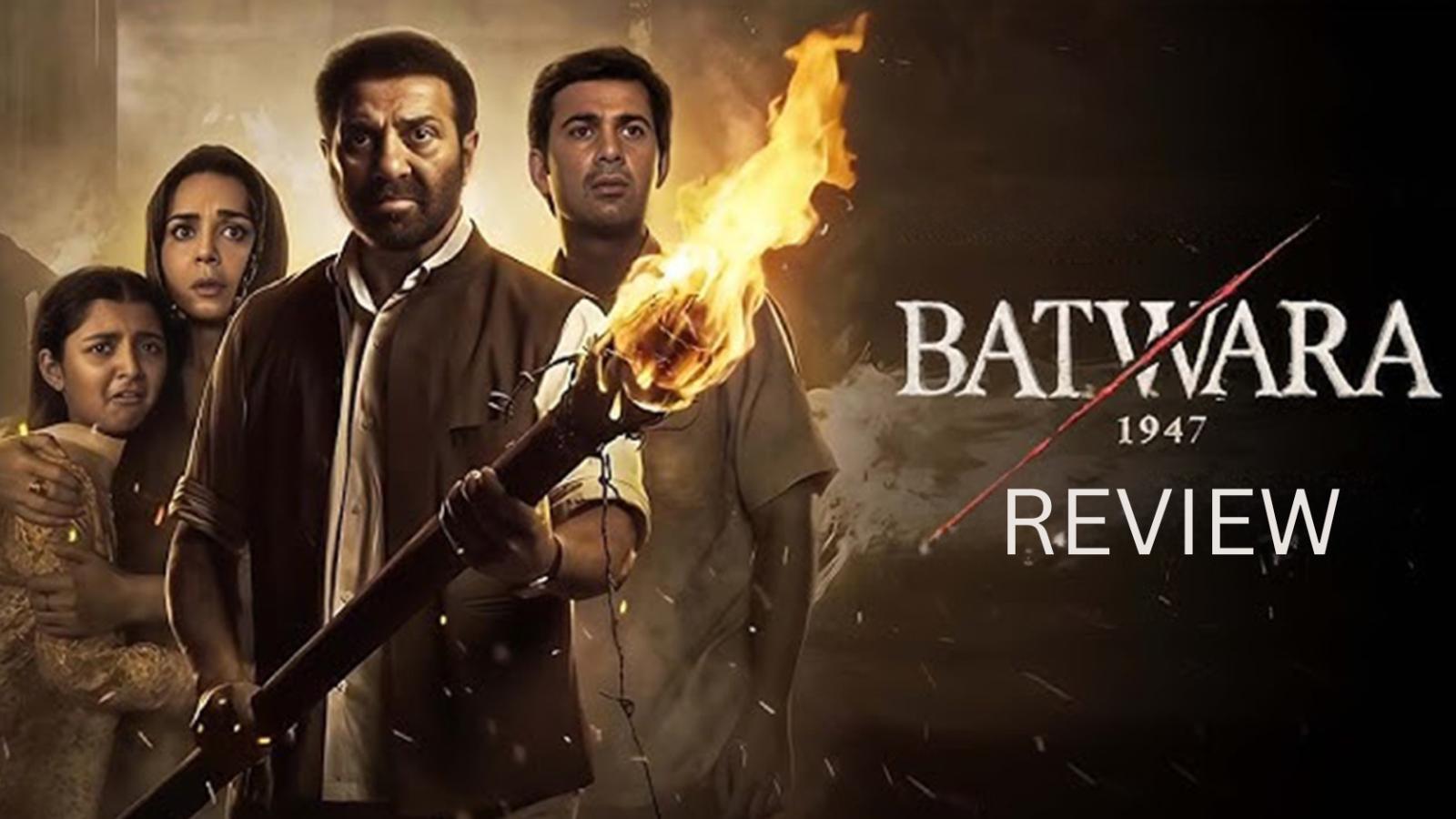
Batwara 1947 begins around India's Independence and Partition, with Sikandar Mirza, played by Sunny Deol, celebrating the birth of a new nation before violence and displacement completely alter his life.
Forced to move to Pakistan while his son is left behind, Sikandar reaches a relief camp where even finding a permanent home becomes a struggle. His circumstances change after he meets Habib, played by Ali Fazal, who helps him secure a house.
However, the house is already occupied by an elderly Hindu woman played by Shabana Azmi. Sikandar's family initially wants her to leave, but their hostility slowly transforms into affection and mutual respect.
As communal tensions intensify, Sikandar eventually becomes determined to protect her right to live and practise her religion. The house gradually becomes a metaphor for coexistence, suggesting that people of different faiths can share the same space without sacrificing their identities.
Overview:
Batwara 1947 is Rajkumar Santoshi's Partition-era drama built around religious coexistence, humanity and brotherhood. Sunny Deol leads an ambitious story with powerful ideas, but abrupt emotional transitions, artificial production design and uneven performances prevent the film from creating the emotional impact its subject deserves.
Performances:
Sunny Deol dominates Batwara 1947 with his familiar screen presence. Sikandar gives him emotional scenes, powerful dialogues and mass-action moments where he stands against groups of attackers. However, the performance often feels closer to the traditional Sunny Deol template than a completely distinctive Partition-era character.
Shabana Azmi has an emotionally significant character, but the screenplay does not give her enough depth to fully utilise her abilities. Her pain is evident in the writing but does not always translate into emotionally memorable scenes.
Preity Zinta's character experiences the anguish of separation from her son, yet some of the emotional moments lack the intensity required to make the audience feel her suffering.
Ali Fazal brings personality to Habib, a poet who assists Sikandar. Karan Deol receives a potentially interesting arc but struggles to establish an independent presence alongside Sunny Deol.
Abhimanyu Singh's antagonist is exaggerated and lacks the realism and menace required from a villain operating against the backdrop of Partition violence.
Technical Aspects:
Rajkumar Santoshi has a powerful foundation in the source material, adapted from the acclaimed play Jis Lahore Nai Vekhya, O Jamya E Nai. The film's central metaphor of people from different religions sharing the same house is particularly effective.
The dialogues frequently underline secularism, humanity and religious tolerance. A Diwali sequence involving the family is among the moments where the film's message comes together effectively.
However, the production design becomes a major weakness. Several locations and sets appear constructed rather than lived-in, making it difficult to fully believe that the story is unfolding during the turbulent Partition period. he commercial action portions also occasionally clash with the more sensitive historical and emotional material.
Music:
The music and background score support the dramatic and emotional atmosphere but do not emerge as defining strengths of the film.
The background music attempts to heighten moments involving communal tension, family separation and Sikandar's confrontations. However, stronger musical integration could have helped some emotional scenes create a deeper impact.
Editing:
Editing is one of the areas where Batwara 1947 struggles. The most noticeable problem is the sudden transformation in the relationship between Sikandar's family and the Hindu woman sharing their house.
The family moves from wanting her removed to treating her as one of their own without enough intermediate conversations or experiences to make that transition emotionally convincing.
Several dramatic developments similarly arrive abruptly. More time devoted to relationships and fewer conventional commercial diversions could have strengthened the film considerably.
Positives:
- Strong message of communal harmony
- Powerful central metaphor involving the shared house
- Sunny Deol's commanding screen presence
- Important themes of humanity and religious tolerance
- Effective Diwali sequence
- Meaningful source material
- Some impactful dialogues
- Relevant social message
Negatives:
- Emotional transitions feel rushed
- Supporting performances are inconsistent
- Shabana Azmi is underutilised
- Preity Zinta's emotional scenes lack impact
- Karan Deol struggles to stand out
- Villain feels caricaturish
- Artificial-looking sets
- Commercial action weakens historical realism
- Film tells audiences what to feel instead of making them feel it
Analysis:
Batwara 1947 has everything required for a powerful Partition drama on paper. Its central message is relevant and humane: protecting another person's religion does not diminish one's own faith, and violence cannot be defeated through further violence. The relationship between Sikandar's Muslim family and the Hindu woman occupying their home should have been the emotional heart of the movie. Their shared house offers a powerful representation of an inclusive society in which different religions can coexist.
Unfortunately, the screenplay does not spend enough time developing this relationship. Their movement from hostility to affection happens so quickly that audiences understand the transformation intellectually without necessarily feeling it emotionally. This becomes the film's biggest problem. Batwara 1947 repeatedly communicates important ideas about secularism, solidarity, Partition and communal violence, but it often explains those ideas through dialogues instead of developing them organically through its characters.
Sunny Deol provides the star power required to keep the film moving, but the repeated use of mass dialogues and one-man-against-many action makes some portions resemble a conventional commercial entertainer rather than an intimate Partition drama. The supporting cast also fails to consistently strengthen the material. Shabana Azmi deserved more layered writing, while Preity Zinta and Karan Deol struggle to turn potentially emotional tracks into memorable ones.
The tragedy is that Batwara 1947 possesses a meaningful story and a powerful central philosophy. With more natural performances, stronger production design and patient development of its relationships, it could have been deeply moving.
Bottomline: Weak Execution
Rating: 2.5/5