Plot
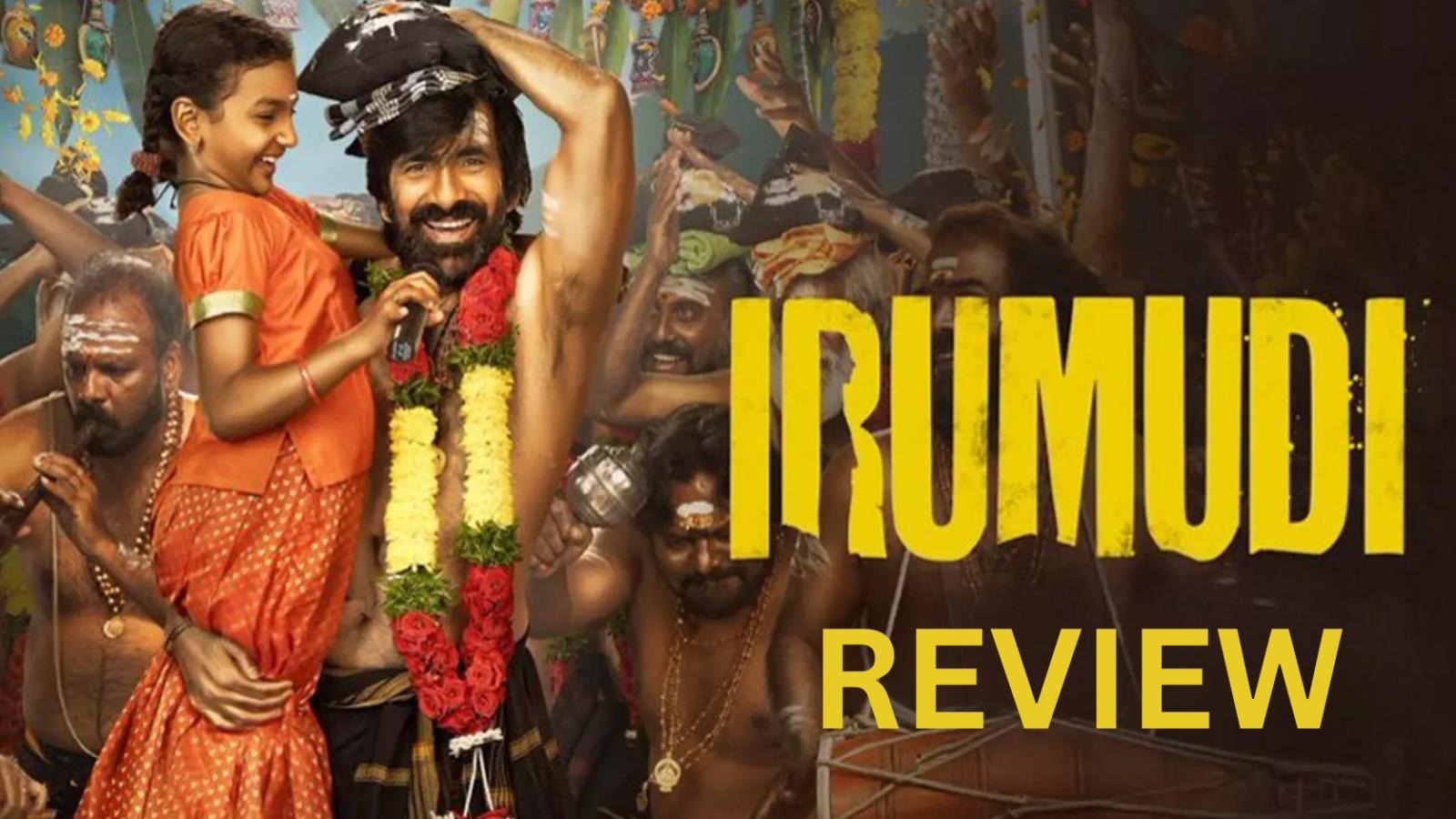
Trinath Rama Kasu, played by Ravi Teja, is a farmer, devoted Ayyappa Swamy follower, caring husband and affectionate father living in a remote village. Though he has his own flaws, including a drinking habit, his strongest belief is that his daughter Manemma should grow up fearless and speak openly about everything she experiences.
Trinath encourages Manemma to tell him whenever someone troubles or misbehaves with her. He extends the same protective attitude towards other girls in the village and considers their safety his responsibility.
When troubling incidents begin affecting girls in the village, Trinath finds himself facing a larger threat. The story follows how he tries to protect his daughter, confront the dangers around them and encourage young girls to become confident and self-reliant.
Overview
Irumudi is a 2-hour-25-minute Telugu action family drama directed by Shiva Nirvana and starring Ravi Teja, Priya Bhavani Shankar and Baby Nakshathra. Released on August 21, 2026, the film combines a father-daughter story, social commentary, suspense and Ayyappa Swamy elements.
The film is produced by Naveen Yerneni and Y Ravi Shankar under Mythri Movie Makers, with music composed by GV Prakash Kumar.
Performances
Ravi Teja delivers one of his most restrained and effective performances in recent years. Instead of depending on his familiar mass-hero mannerisms, he plays Trinath with controlled emotion, maturity and intensity. His scenes with Baby Nakshathra form the emotional backbone of the film.
Baby Nakshathra is one of the biggest strengths of Irumudi. As Manemma, she gives a natural and confident performance and handles both emotional and dramatic moments convincingly.
Priya Bhavani Shankar performs well as Kaveri, portraying a caring wife and mother caught in difficult circumstances. Her performance in an important second-half sequence is especially impactful.
Sai Kumar makes a strong impression as Guru Swamy and effectively handles the different shades of his character. Swasika delivers a striking performance in an unexpected role, while Ajay Ghosh and the remaining supporting cast contribute well to the film.
Technical Aspects
Vishnu Sarma's cinematography is one of the film's strongest technical assets. The village landscapes, natural surroundings and devotional portions are captured with an attractive visual texture that gives the film a grounded and aesthetically rich appearance.
Shiva Nirvana handles the story, screenplay, dialogues and direction. His writing remains largely focused on the central father-daughter relationship and the issue of empowering girls rather than adding unnecessary commercial distractions. Mythri Movie Makers provides solid production values, helping the film maintain a polished visual quality throughout.
Music
GV Prakash Kumar's background score effectively supports both the suspense and emotional portions. His music helps build tension during the first half and adds weight to several emotionally charged scenes.
The two Ayyappa Swamy songs are among the film's highlights. The Mallepoola Pallaki sequence, particularly when combined with an action episode in the second half, provides one of the film's strongest theatrical moments.
Editing
Prawin Pudi's editing is crisp and effective during the first half, keeping the narrative focused and maintaining curiosity around the central mystery.
The pacing becomes slightly uneven after the major twist is revealed. A stretch of roughly 15 minutes before the climax feels predictable and somewhat prolonged. Tighter editing in this portion could have made the second half more consistently gripping.
Positives
- Ravi Teja's mature and restrained performance
- Strong father-daughter emotional bond
- Baby Nakshathra's impressive performance
- Socially relevant core theme
- Effective dialogue writing
- GV Prakash Kumar's background score
- Ayyappa Swamy songs and devotional backdrop
- Attractive cinematography
- Suspenseful first-half narration
- Emotional climax
Negatives
- Post-twist portions become predictable
- Some second-half scenes feel stretched
- Twist presentation could have been more impactful
- Several disturbing sequences may feel uncomfortable for some viewers
- The suspense loses some momentum before the climax
Analysis
Irumudi works mainly because Shiva Nirvana keeps the story centred on its social message without turning it into a lecture. The film contrasts two approaches to raising girls: one based on fear and silence, and another based on confidence, communication and self-reliance.
The relationship between Trinath and his daughter is handled with warmth, while the threats faced by girls in the village gradually introduce tension into the narrative. The first half successfully combines family emotion with suspense and keeps the identity of the threat uncertain.
Another major strength is the integration of the Ayyappa Swamy backdrop. The devotional portions are connected organically to Trinath's character instead of appearing as separate commercial elements.
The film is at its strongest when it focuses on parenting, social responsibility and the emotional connection between father and daughter. The dialogues reinforce these ideas without making the narrative excessively preachy.
However, the film loses some momentum after the central revelation. While the twist itself is interesting, its presentation does not deliver the full dramatic impact expected from the buildup. The subsequent stretch becomes easier to predict before the story recovers with an emotional climax.
Some scenes involving violence and threats against girls are deliberately uncomfortable and may be difficult for sensitive viewers. Yet these sequences also underline the seriousness of the film's subject.
Ravi Teja's decision to play the character without relying heavily on his usual commercial image works strongly in the film's favour. His understated performance, along with Baby Nakshathra's natural presence, gives Irumudi its emotional strength.
Bottomline: Empowering Drama
Rating: 3/5