Plot
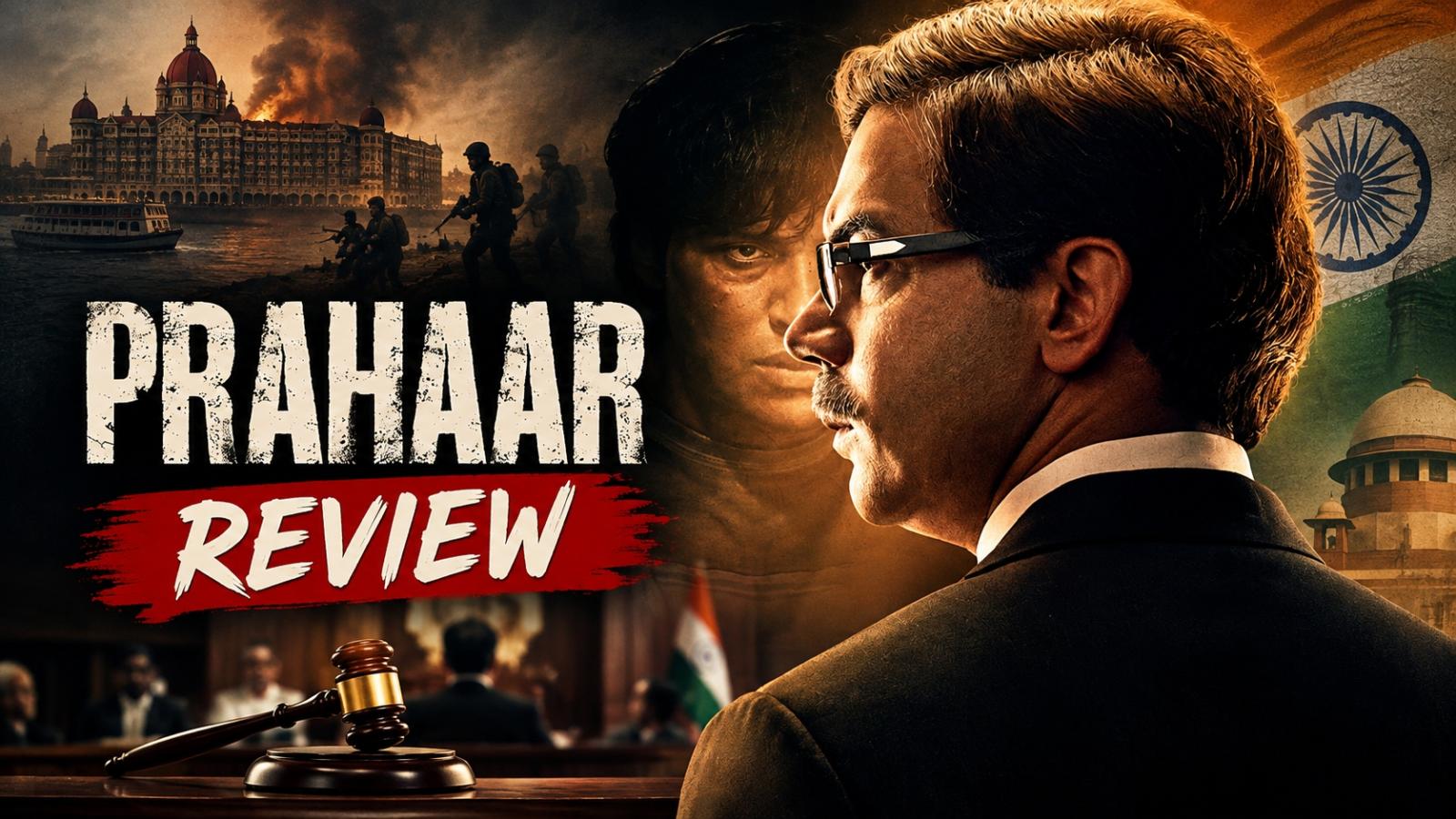
Prahaar: The Untold Story of Ujjwal Nikam follows prosecutor Ujjwal Nikam’s courtroom battle to secure justice after the 26/11 Mumbai terror attacks. The film explores the legal proceedings against Ajmal Kasab and explains why constitutional due process matters even in the face of public outrage.
Overview
Released on October 15, 2026, Prahaar presents a courtroom drama centred on justice, terrorism and the Indian Constitution. While the subject offers immense dramatic potential, the narrative frequently shifts towards the prosecutor’s personal life, affecting the film’s pace and emotional impact.
Performances
Rajkummar Rao delivers a committed performance as Ujjwal Nikam, although his portrayal occasionally feels overly theatrical. Lalit Prabhakar effectively portrays Ajmal Kasab, while Sikandar Kher brings complexity to lawyer Kazmi. Jaideep Ahlawat makes a memorable impression in a cameo. Wamiqa Gabbi struggles with a somewhat stiff portrayal of Mrs Nikam. Diorr Varghese stands out in an emotionally powerful courtroom sequence.
Technical Aspects
The film builds its courtroom atmosphere through legal arguments and tense exchanges. However, the screenplay lacks consistency, with unnecessary diversions weakening the central narrative. Strong dialogue occasionally compensates for the uneven storytelling.
Rating:★★★☆☆ (3/5)
Music
The music and background score support the serious subject matter, but the film relies more heavily on courtroom confrontations and dialogue than on musical impact.
Editing
Editing is one of the film’s major weaknesses. Repeated shifts towards Nikam’s family life interrupt the courtroom drama, making the narrative feel disjointed. A tighter edit could have improved the pacing and emotional engagement.
Positives
- A compelling real-life legal subject.
- Strong supporting performances, particularly from Lalit Prabhakar and Jaideep Ahlawat.
- Meaningful exploration of constitutional rights and due process.
- Powerful courtroom testimony from a young victim.
- Important questions about radicalisation and justice.
Negatives
- Uneven pacing and repetitive narrative detours.
- Limited emotional engagement with the victims of 26/11.
- An occasionally artificial lead performance.
- Underdeveloped emotional depth in key relationships.
- A screenplay that prioritises the prosecutor over the wider tragedy.
Analysis
Prahaar raises an important question: can justice be meaningful without respecting the law? Its strongest moments demonstrate why even the most heinous accused must face a lawful trial. The portrayal of Kazmi also highlights the distinction between defending legal rights and endorsing a crime. However, the film struggles to balance its courtroom proceedings with personal drama. Greater focus on the victims and the consequences of the attacks could have made the story more powerful.
Bottomline
Full emotional potential.