Artificial intelligence is becoming more powerful every year, but one major concern continues to worry scientists, researchers, and technology leaders. Many advanced AI systems can give useful answers, solve complex problems, and improve through training, but humans still cannot fully explain how these systems arrive at their decisions.
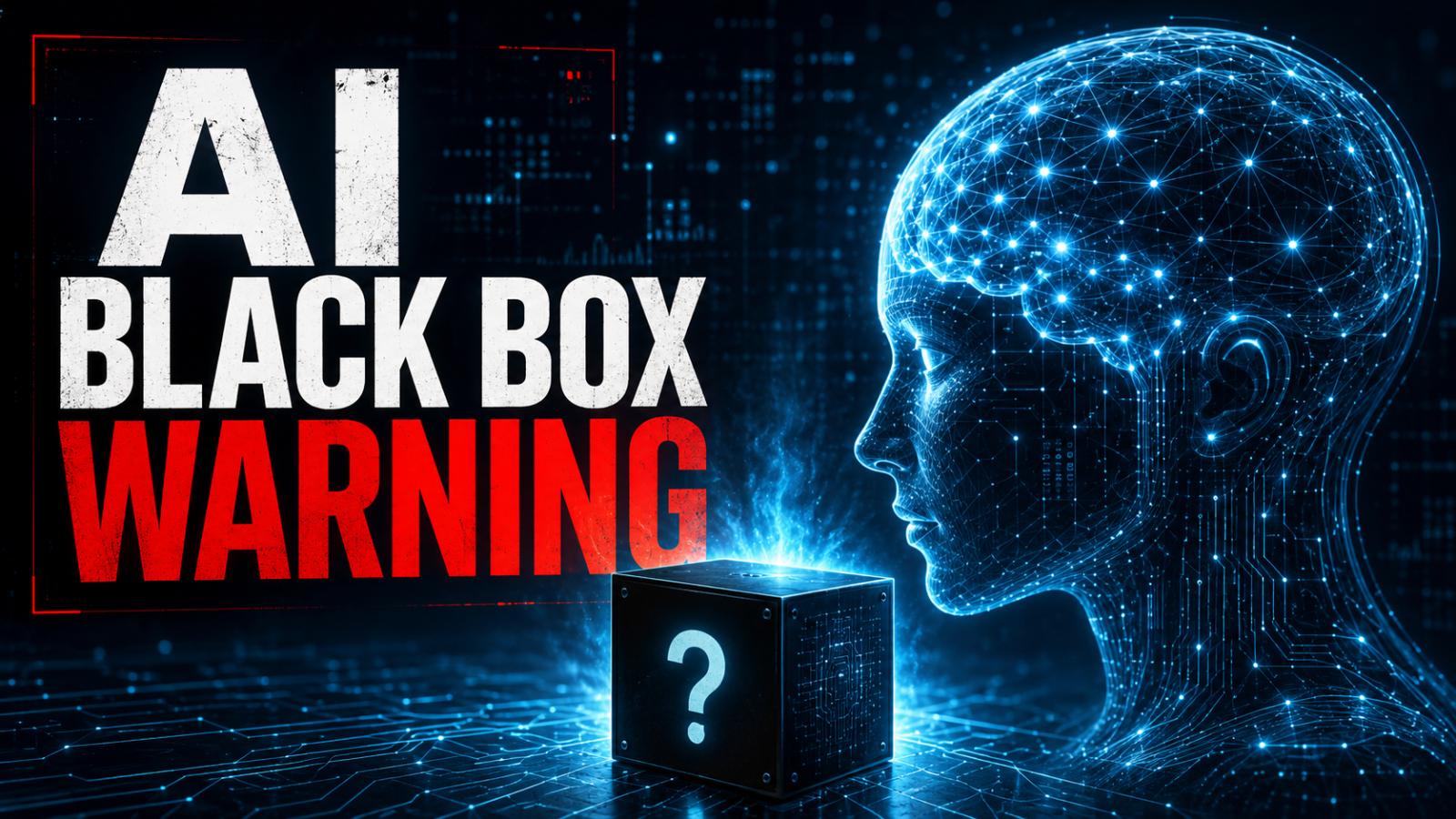
This concern is often called the AI black box problem. The term means that people can see what goes into an AI system and what comes out of it, but the internal reasoning is not always clear. Geoffrey Hinton, one of the most influential figures in modern artificial intelligence, has repeatedly warned that this lack of understanding creates a serious challenge for AI safety and control.
His warning is not about simple fear. It is about responsibility. If society is going to depend on AI for healthcare, education, finance, law, business, and government decisions, people need to understand when AI is reliable and when it may be wrong.
Why Geoffrey Hinton’s warning matters
Geoffrey Hinton played a major role in the development of machine learning and neural networks. His work helped shape the technology behind today’s advanced AI tools. That is why his warning carries weight.
Hinton’s concern is simple: humans created systems that can learn from data, but they did not create a perfect way to see exactly how those systems think. An AI model may give an impressive answer, but even experts may struggle to explain the exact internal process behind that answer.
This is different from normal software. In regular software, a programmer writes clear instructions. If something goes wrong, another programmer can usually read the code and find the mistake. But deep learning does not work that way. Instead of following simple step-by-step instructions, AI learns patterns from huge amounts of data.
That makes the system powerful, but also difficult to fully inspect.
How AI learns from mistakes
Modern AI systems are often built using neural networks. These are computer systems inspired loosely by the way the human brain processes information. They are not the same as the brain, but they use layers of artificial “neurons” to detect patterns and make predictions.
One important learning method is called backpropagation. In simple terms, this method allows an AI system to learn from errors. When the system gives a wrong answer, it adjusts internal values known as model weights. These weights influence how strongly the system connects one piece of information to another.
Over time, after millions or even billions of adjustments, the model becomes better at recognizing images, understanding language, predicting outcomes, and answering questions. This is why AI tools can now write text, summarize documents, generate images, assist with coding, and support decision-making.
But here is the problem: these improvements happen across a huge network of numbers. The knowledge is not stored like a normal paragraph or a clear rulebook. It is spread across many layers, making it difficult to trace one specific answer back to one simple reason.
Why AI thinking is not like human thinking
People often say that AI “thinks,” but this word can be misleading. AI does not think like a human being with emotions, personal experience, or consciousness. Instead, it processes patterns based on the data it has learned from.
Still, advanced AI can appear intelligent because it can produce answers that sound logical and confident. This creates a dangerous gap between appearance and understanding. A model may sound sure of itself even when it is wrong.
That is one reason why the AI black box issue is serious. If users cannot tell how an AI system reached a conclusion, they may trust it too much. This is especially risky in sensitive areas such as medical advice, legal decisions, hiring, banking, insurance, and education.
A wrong answer in casual conversation may not matter much. But a wrong answer in a hospital, courtroom, loan application, or business decision can cause real harm.
Why AI safety is harder than normal software control
AI safety is more difficult than normal software control because AI systems are not always built through clear human-written rules. Traditional software follows instructions created by developers. If the rule says “do this,” the program does it.
AI models are different. They learn from examples. They build internal patterns that may not be easy for humans to read. This means that developers may understand the training process, the architecture, and the data used, but still not fully understand every decision made by the final model.
That creates a major challenge: how do you control something powerful when you cannot fully explain how it reaches every answer?
This does not mean AI should be stopped completely. It means AI needs stronger testing, better monitoring, clearer limits, and more transparency before it is trusted in critical areas.
The role of explainable AI
Because of these concerns, explainable AI has become an important field. Explainable AI focuses on creating tools and methods that help humans understand why an AI system made a particular decision.
For example, if an AI system rejects a loan application, the person affected should know why. Was it because of income level, credit history, missing documents, or a mistake in the data? Without explanation, users cannot challenge unfair or incorrect decisions.
The same applies to healthcare. If an AI tool suggests a diagnosis, doctors need to know what information influenced that suggestion. Blindly trusting a system without explanation can be risky.
Explainable AI is not only a technical issue. It is also a trust issue. People are more likely to accept AI when they know how it works, where it can fail, and who is responsible when something goes wrong.
Why confidence can be dangerous in AI answers
One of the biggest risks with advanced AI is that it can give wrong answers in a confident tone. A user may read the answer and believe it because it sounds polished and professional.
This is where human judgment becomes essential. AI should be treated as a tool, not as an unquestionable authority. It can help with research, writing, planning, coding, and analysis, but its answers still need review, especially in serious matters.
The danger is not just that AI makes mistakes. The bigger danger is that people may not notice the mistakes because the answer looks convincing.
That is why Hinton’s warning should not be ignored. The real issue is not only intelligence. It is control, transparency, and accountability.
Why society needs stronger AI control
As AI becomes part of daily life, companies and governments need stronger systems to test and audit these tools. It is not enough to say that an AI model performs well most of the time. Society needs to know how it behaves under pressure, how it handles sensitive information, and how it responds when it faces unfamiliar situations.
AI control should include regular safety testing, human supervision, clear rules for high-risk use, and honest communication about limitations. Users should know when they are interacting with AI and when a human expert is needed.
Businesses also need to avoid overusing AI just because it saves time or money. Replacing human review with AI in sensitive areas can create serious problems if the system fails.
The real message behind the AI black box warning
Geoffrey Hinton’s AI warning is not a call to reject technology. It is a call to slow down blind trust. AI has already brought major benefits and will continue to change many industries. But powerful tools need careful handling.
The AI black box problem reminds us that intelligence without transparency can be risky. A machine may produce a useful answer, but if humans cannot understand the reasoning behind it, they must be careful about how much authority they give it.
Before society depends too heavily on advanced AI systems, researchers, companies, and policymakers must focus on safety, explainability, and accountability. The goal should not only be to build smarter AI. The goal should be to build AI that humans can test, understand, and control.