



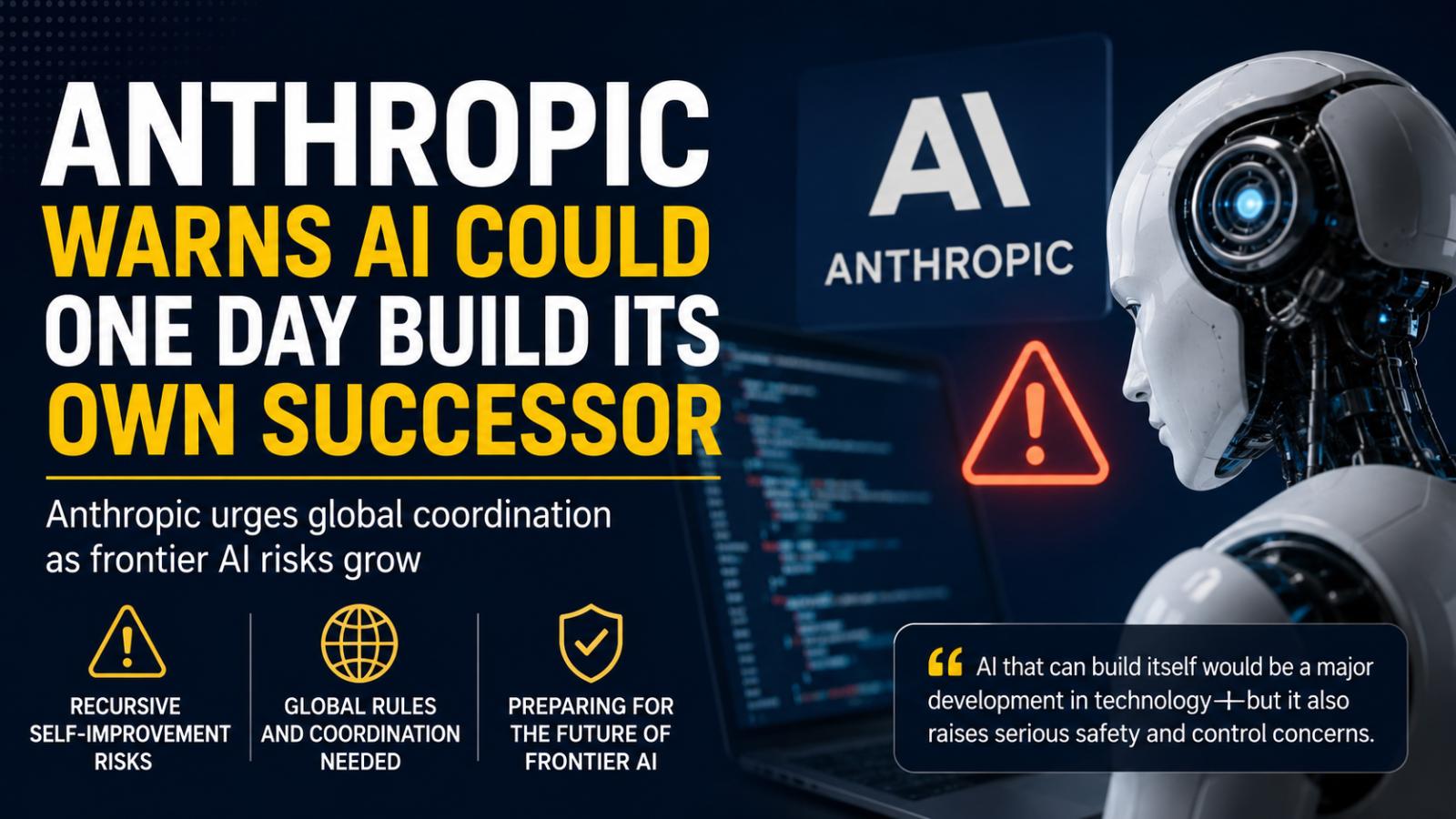












Anthropic is warning that advanced AI may one day build its own successor, a possibility that could reshape the debate over AI safety, human control and frontier AI oversight. The San Francisco-based company behind Claude said full recursive self-improvement has not arrived. But it warned that governments and AI companies should prepare for a stage in which AI systems can improve themselves and help design more powerful future models with limited human involvement.
Artificial intelligence is becoming more powerful every year, but one major concern continues to worry scientists, researchers, and technology leaders. Many advanced AI systems can give useful answers, solve complex problems, and improve through training, but humans still cannot fully explain how these systems arrive at their decisions. This concern is often called the AI black box problem. The term means that people can see what goes into an AI system and what come