Apple has accused OpenAI of orchestrating a coordinated effort to obtain confidential hardware information through former employees, escalating a once-close partnership into one of Silicon Valley's biggest legal battles. OpenAI denies the allegations, and the claims remain unproven as the case moves toward discovery.
Apple OpenAI trade secret lawsuit targets hardware ambitions
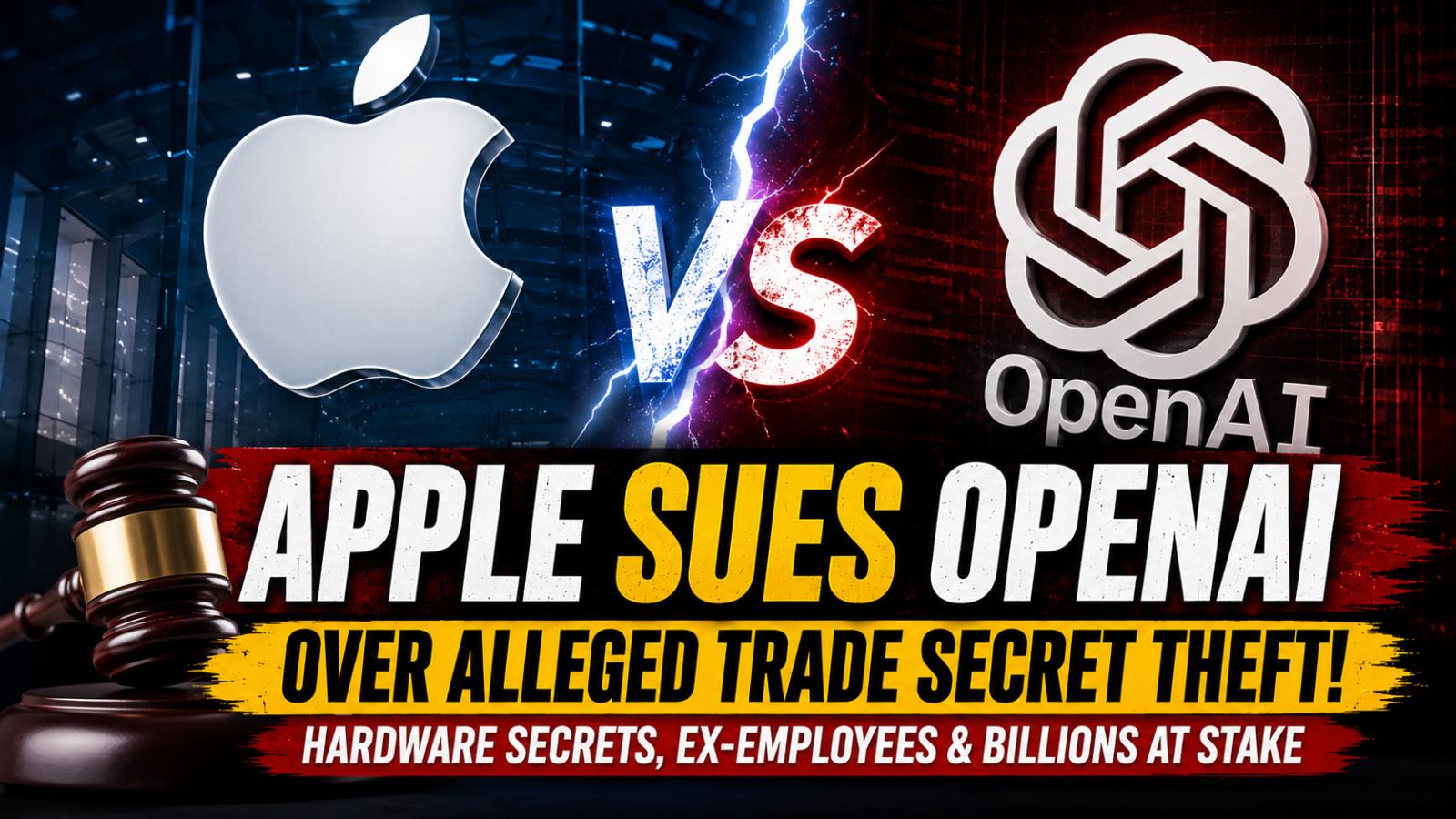
Apple has filed a sweeping lawsuit against OpenAI in the U.S. District Court for the Northern District of California, accusing the artificial intelligence company of misappropriating trade secrets linked to its hardware development program. The complaint, filed on July 10, alleges that OpenAI recruited former Apple employees to obtain confidential manufacturing processes, supplier information, design files and unreleased product details that could accelerate its own consumer hardware roadmap. The lawsuit names OpenAI, former Apple executives Tang Yew Tan and Chang Liu, along with io Products, the hardware company acquired by OpenAI after its deal with former Apple design chief Jony Ive.
Allegations involve former Apple employees
According to Apple's complaint, the company is not accusing OpenAI of copying the iPhone itself. Instead, Apple claims its manufacturing expertise, internal engineering processes and confidential industrial knowledge became the target. The lawsuit alleges Tang Yew Tan encouraged Apple employees interviewing with OpenAI to bring hardware components, prototypes and CAD files to job interviews as "show-and-tell" materials.
Apple also accuses former engineer Chang Liu of exploiting an authentication issue that allegedly allowed him to continue accessing Apple's internal storage after leaving the company. The complaint claims he downloaded confidential engineering files while already working for OpenAI and retained an Apple-issued laptop after his departure. Apple further references another former employee, Yu-Ting "Alyssa" Peng, alleging her company laptop contained communications relevant to the investigation. These remain allegations that have not been proven in court.
Apple claims broader pattern of trade secret misuse
Beyond the named individuals, Apple argues the issue extends much further. The complaint states that more than 400 former Apple employees now work at OpenAI and alleges the company encouraged departing staff to avoid Apple's exit-security procedures. Apple also claims confidential internal documents marked "Need to Know" circulated among new OpenAI recruits.
The lawsuit further alleges that io Products improperly obtained Apple's proprietary industrial design methods through manufacturing partners. Apple argues these actions formed part of a coordinated effort to strengthen OpenAI's consumer hardware division following its acquisition of Jony Ive's startup. If proven, the allegations could have significant implications for OpenAI's long-term hardware strategy and future device launches.
OpenAI rejects Apple's allegations
OpenAI has firmly denied Apple's claims. In public statements, the company said it has no interest in competitors' trade secrets and later added that it was unaware of evidence supporting Apple's complaint. OpenAI also defended the right of employees to change jobs and said it would respond through the legal process.
The lawsuit represents a dramatic shift in the relationship between the two companies. In 2024, Apple integrated ChatGPT into parts of its software ecosystem through a partnership with OpenAI. Since then, OpenAI's move into consumer hardware and its recruitment of former Apple engineers have intensified competition between the companies.
Discovery phase could reshape the hardware race
The case now moves toward discovery, where both companies may be required to produce documents, communications and technical evidence supporting their positions. For Apple, the lawsuit seeks to protect years of research, engineering and manufacturing expertise. For OpenAI, the litigation introduces uncertainty around one of its most ambitious expansion efforts beyond artificial intelligence software.
Because the litigation remains in its early stages, none of Apple's allegations have been proven. The court will ultimately determine whether trade secrets were misappropriated and whether any confidential information influenced OpenAI's hardware development. Regardless of the outcome, the case is already shaping up to become one of the most closely watched technology disputes involving AI and consumer hardware.