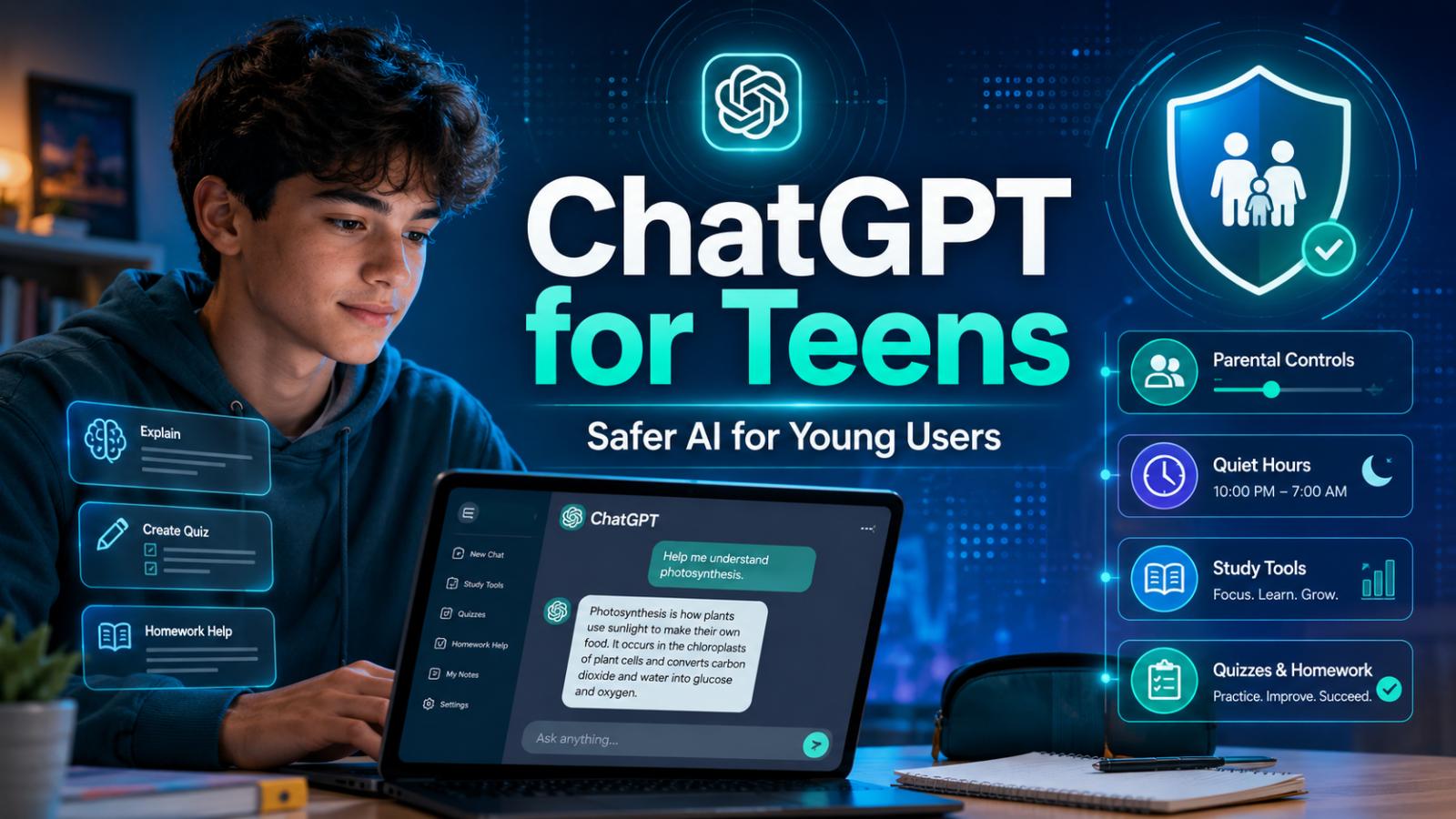
ChatGPT for Teens is rolling out with stronger teen AI safety measures, parental controls and learning-focused features. OpenAI says eligible under-18 accounts can automatically enter the experience, which combines age prediction, Study Mode, Quiet Hours and additional safeguards for sensitive content.
ChatGPT for Teens
OpenAI has started rolling out ChatGPT for Teens, a dedicated experience designed for younger users while keeping the core capabilities of ChatGPT. The company says the service is intended to help teenagers learn, solve problems, explore ideas and handle everyday tasks while applying stronger age-appropriate protections.
The rollout began globally on August 18 for eligible teen accounts on both free and paid personal ChatGPT plans. OpenAI says availability will expand over the coming weeks, with regional differences possible. The experience is intended for accounts identified as belonging to users under 18.
Age prediction and teen AI safety
Eligible users do not have to manually activate ChatGPT for Teens. OpenAI may use account-provided age information, verified age or its age-prediction system to determine whether an account likely belongs to someone under 18. If eligible, the teen experience can be enabled automatically.
OpenAI says its age-prediction system can consider signals such as general conversation topics, usage times, account activity patterns and account age. If an adult is incorrectly placed into the teen experience, they can use age verification to request removal of the additional protections.
The teen safeguards are designed to reduce exposure to sensitive or potentially harmful material. OpenAI lists areas including graphic violence, risky viral challenges, sexual or violent roleplay, extreme beauty standards and unhealthy dieting content among subjects that receive additional restrictions.
Study Mode and learning tools
Learning is a major part of the new experience. ChatGPT for Teens includes Study Mode, learning-focused starter prompts, homework reminders and quizzes where available. Instead of simply delivering an answer, Study Mode can guide students through problems using hints, questions, step-by-step explanations and knowledge checks.
OpenAI has also introduced Study hours, allowing eligible new conversations to begin in Study Mode during selected periods. The experience can encourage breaks and remind teenagers that they are interacting with an AI system, supporting more balanced use beyond traditional homework assistance.
Parental controls and Quiet Hours
Parents and guardians can optionally link their accounts with a teenager's account and manage selected settings. Quiet Hours allows families to schedule periods when the teenager cannot access ChatGPT, while Study hours can encourage learning-focused use without blocking the service entirely.
Importantly, parental controls do not allow parents to read or monitor a teenager's conversations. OpenAI says that in limited safety-notification situations it shares only the information necessary to help support the teenager's safety.
What the launch means
ChatGPT for Teens represents a shift from treating younger and adult users identically toward providing an age-aware AI experience. The important test will be whether age prediction works reliably and whether safeguards can protect younger users without undermining useful educational access.
For OpenAI, the launch also puts learning at the centre of its teen strategy. The combination of Study Mode, homework support, quizzes, age-sensitive safeguards and family controls shows how consumer AI products are increasingly being designed differently for younger users rather than relying on a single experience for everyone.