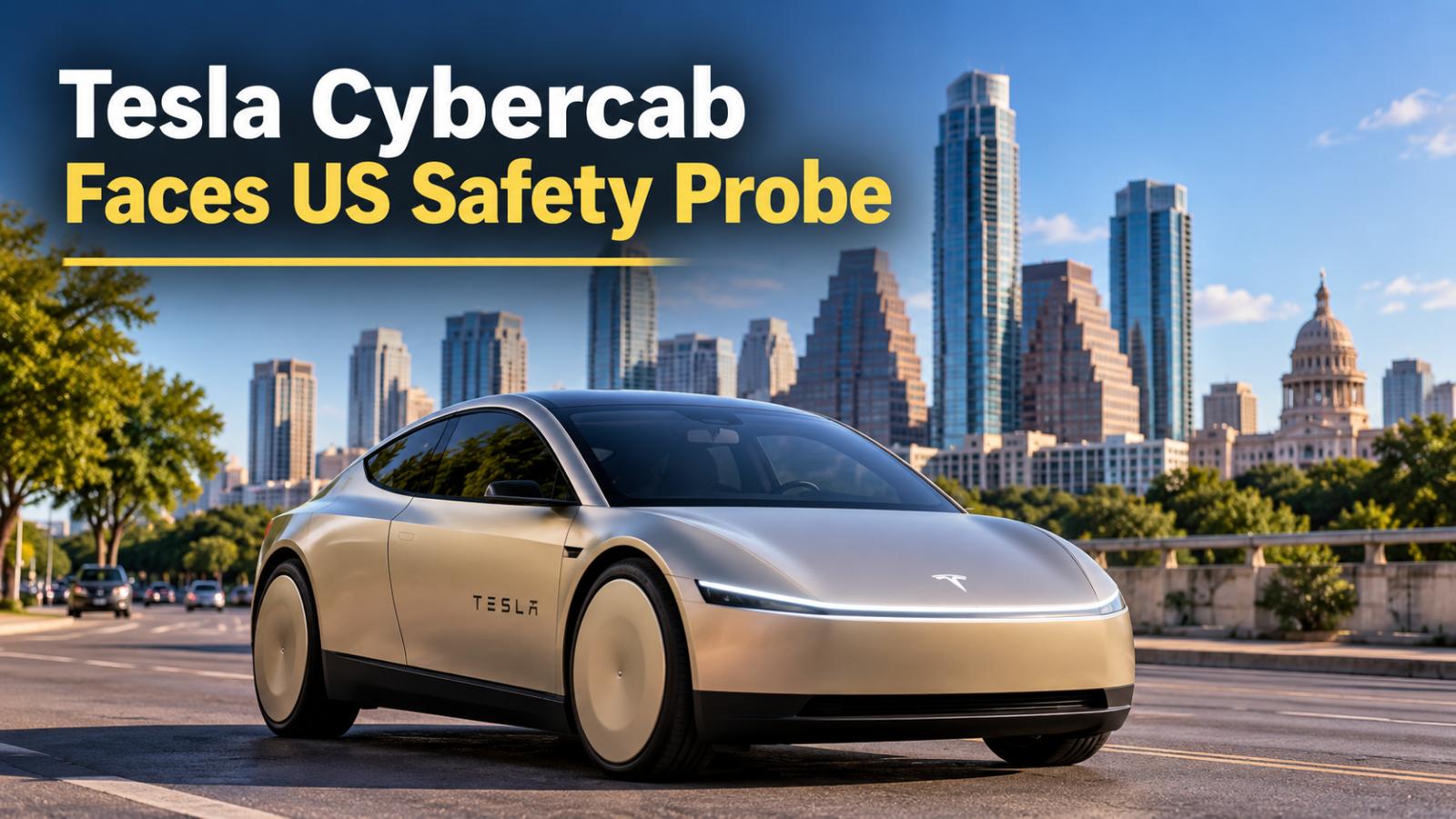
Tesla’s rollout of its purpose-built Cybercab has put Elon Musk’s autonomous-driving ambitions under fresh regulatory scrutiny, with US safety authorities examining whether the driverless vehicle complies with federal standards despite lacking a steering wheel, pedals and conventional mirrors.
Cybercab Launch Draws Immediate Regulatory Attention
AUSTIN, Texas, September 5, 2026 Tesla has begun offering rides in its two-seat Cybercab in limited parts of Austin, marking a major step in Elon Musk’s plan to build a large-scale autonomous robotaxi network. Unlike conventional cars, the Cybercab is designed without a steering wheel or pedals because it is intended to operate without a human driver.
Soon after the rollout, the National Highway Traffic Safety Administration opened an audit examining the certification process and technical information Tesla used to demonstrate compliance with US vehicle-safety standards.
NHTSA Examines Tesla’s Self-Certification
The review covers nearly 1,000 Cybercabs and focuses on whether Tesla properly certified the vehicles under federal motor vehicle safety rules. US automakers are generally allowed to self-certify that their vehicles meet applicable standards instead of receiving government approval before every model reaches the road.
The challenge for Cybercab is that several existing requirements were originally written for vehicles operated by humans and therefore refer to equipment such as steering controls and mirrors.
Tesla Takes Different Route From Exemption Process
Manufacturers developing unconventional autonomous vehicles can seek federal exemptions from certain standards, although those exemptions restrict how many non-compliant vehicles can be deployed. Tesla has instead maintained that Cybercab complies with the applicable rules and has not relied on that exemption pathway.
The approach could become an important test of how existing regulations apply to cars designed from the beginning with no driver controls. Amazon-owned Zoox has previously faced similar regulatory questions over purpose-built autonomous vehicles.
Cybercab Becomes Key Test for Musk’s Robotaxi Strategy
Tesla argues that its autonomous technology can ultimately make transportation safer and less expensive, while Musk has placed robotaxis at the centre of the company’s future growth strategy. However, the Cybercab review comes as federal regulators continue scrutinising Tesla’s automated-driving technologies.
NHTSA has not ordered Tesla to stop the Austin service, but the outcome could determine whether the company can rapidly expand Cybercab operations without additional exemptions or design changes. The case may also influence how US regulators handle a new generation of autonomous vehicles built without traditional human-driving equipment.