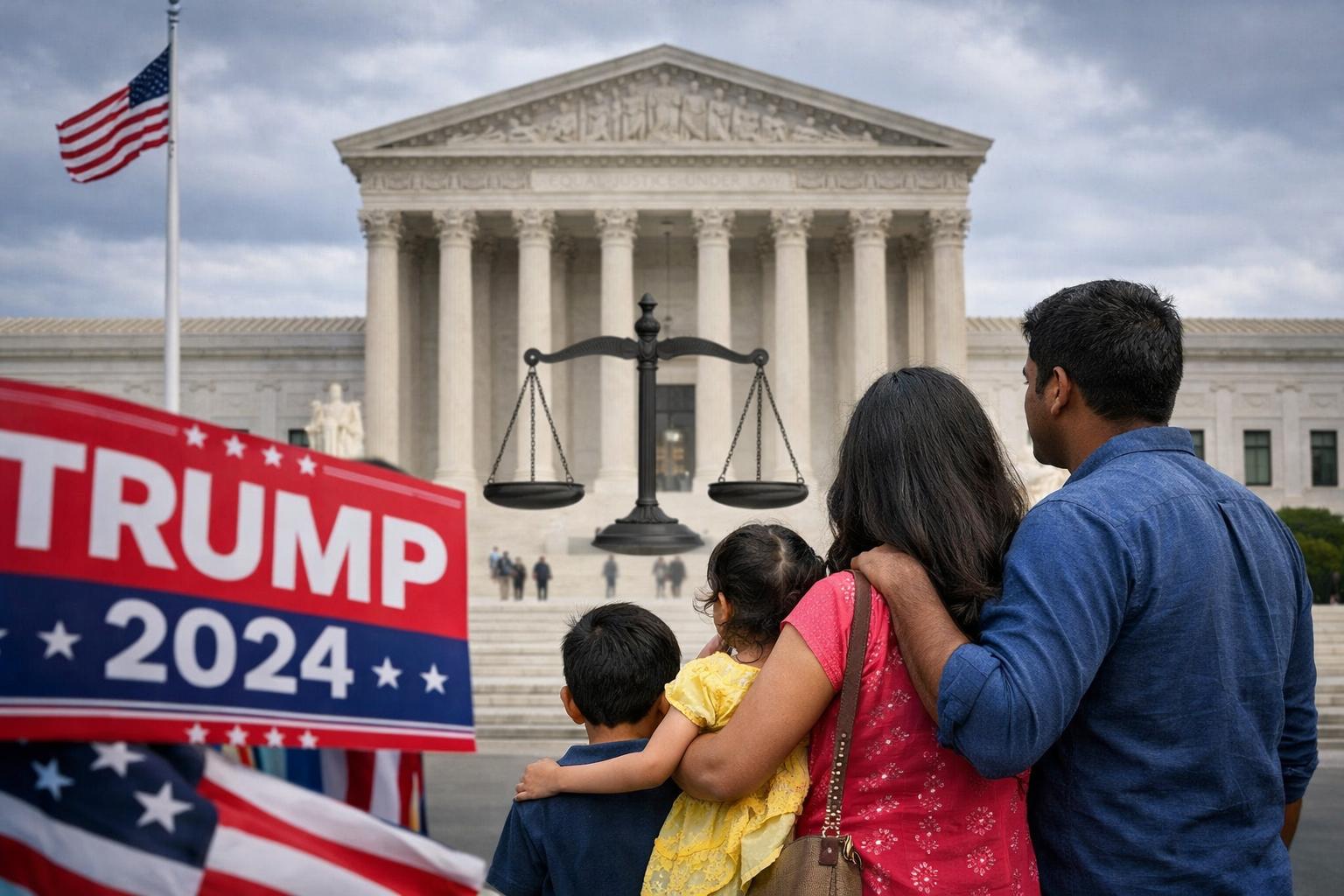
The policy under review would require at least one parent to be a U.S. citizen or lawful permanent resident for a child born on U.S. soil to automatically receive citizenship. Critics contend that this approach challenges the long-standing interpretation of the 14th Amendment, which guarantees citizenship to individuals born in the country regardless of parental immigration status. Legal experts and advocacy groups argue that tying citizenship to parental status reintroduces the concept of conditional or “contingent citizenship,” which the amendment was designed to eliminate.
The debate carries particular significance for Indian-origin families and the broader South Asian diaspora. According to a 2022 analysis of U.S. Census data by Pew Research, approximately 4.8 million Indian Americans live in the United States, with about 1.6 million born in the country and granted citizenship at birth. Advocacy groups emphasize that changes to birthright citizenship could disproportionately affect this population, especially given existing immigration backlogs.
The amicus brief also references historical precedent, including the 1923 United States v. Bhagat Singh Thind decision, which denied naturalization to Indians and led to widespread denaturalization. The groups argue that the case serves as a warning about how citizenship rights tied to shifting definitions can be reversed, creating instability for entire communities.
Beyond legal concerns, the filing highlights potential economic impacts. South Asians play a significant role in sectors such as technology, healthcare, transportation, and small business ownership. Advocates warn that increased uncertainty could discourage skilled migration and contribute to a loss of talent.
Estimates cited in the brief suggest that up to 255,000 children each year could be born without citizenship if the policy takes effect. Such children could face barriers to education, healthcare, and employment, placing families in a prolonged state of legal uncertainty from birth. While the Trump administration continues to defend the measure, several justices have expressed skepticism, signaling that the outcome could have far-reaching implications for immigration policy and constitutional interpretation.