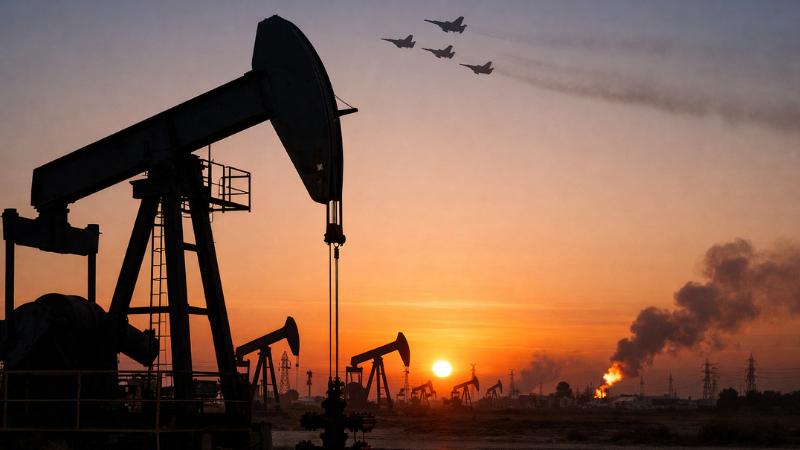
U.S. crude oil prices fell to their lowest level since May on Tuesday, deepening a prolonged downturn that has put the market on track for its weakest annual performance in seven years. The decline reflects growing concerns over a looming supply surplus and shifting expectations around geopolitical risks, particularly the possibility of a peace agreement between Ukraine and Russia.
West Texas Intermediate crude briefly dropped to $55.69 per barrel, while global benchmark Brent crude touched $59.42 per barrel. Both levels marked the lowest prices recorded since May 5, underscoring the extent of selling pressure across energy markets. By late trading, U.S. crude was down 2.13% at $55.61 per barrel, while Brent slipped 1.93% to $59.39.
The sharp pullback has pushed U.S. crude down approximately 22% so far this year, marking its worst annual performance since 2018. Brent crude has fared only slightly better, shedding nearly 20% and posting its steepest yearly decline since 2020. Analysts say the magnitude of the losses reflects a market increasingly dominated by supply-side pressures rather than fears of disruption.
One of the most visible impacts of the crude oil slump has been felt at the pump. U.S. gasoline prices have fallen below $3 per gallon, reaching their lowest level in four years, according to data from the American Automobile Association. Lower fuel costs have provided relief to consumers but have added further pressure on refiners and energy producers already grappling with falling margins.
The oil market has faced sustained headwinds this year as OPEC+ members significantly increased production after maintaining output cuts for several years. The accelerated return of barrels to the market has raised concerns about a supply glut, particularly as global demand growth remains uneven amid slowing economic momentum in several major economies.
At the same time, investors are reassessing geopolitical risks that have supported oil prices in recent years. Since Russia launched its full-scale invasion of Ukraine in 2022, fears of supply disruptions and escalating sanctions had helped underpin crude prices. However, market sentiment has shifted as the possibility of a negotiated settlement gains attention. U.S. President Donald Trump has publicly pressured Ukraine to consider a peace agreement with Russia, a development that traders see as potentially reducing long-term geopolitical risk to energy supplies.
Despite these shifting expectations, the conflict has continued to influence oil infrastructure and trade flows. Ukraine has carried out repeated drone strikes on Russian oil facilities this year, while the United States and its European allies have maintained sanctions targeting Russia’s crude industry. These measures have constrained certain exports but have not been sufficient to offset the broader increase in global supply.
With production rising and geopolitical premiums fading, market participants are increasingly focused on inventory levels and demand signals. Until clearer evidence emerges of tightening supply or stronger consumption, analysts warn that oil prices could remain under pressure, leaving the energy sector vulnerable to further volatility in the months ahead.