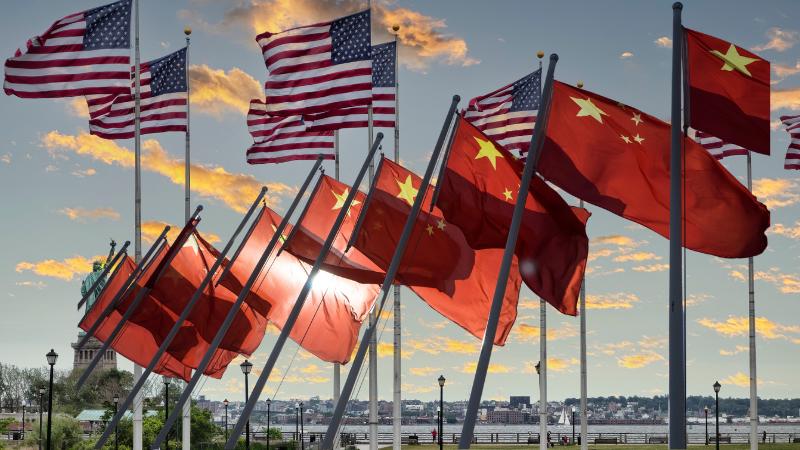
While full details have not yet been disclosed, early signals from both sides suggest cautious optimism. Officials from the United States spoke of a constructive dialogue and indicated that the discussions had resulted in what they described as substantial progress. The Chinese delegation, meanwhile, pointed to mutual agreement on launching a formal negotiation process and confirmed that both sides are working to finalize the structure of a new consultation mechanism. A joint statement outlining the next steps is expected to be released soon
The developments have already begun to resonate across financial markets. After months of volatility triggered by tit-for-tat tariffs and strained international relations, investors welcomed the signs of progress. Market indicators responded favorably, with stock index futures in the United States climbing noticeably on Sunday evening. Gains were also observed in early trading across several Asian markets, reflecting broader optimism that a more stable trade environment may be within reach.
Speaking shortly after the talks concluded, key American officials expressed a positive outlook without revealing specific commitments. One noted the speed with which common ground was reached, suggesting that the perceived economic gap between the two nations may not be as wide as previously assumed. Another highlighted a large U.S. trade deficit with China as a critical issue, calling it a national emergency that has necessitated strong policy responses in recent years.
From the Chinese side, Vice Premier He Lifeng led the delegation and presented a notably cooperative tone during a press conference following the meetings. While avoiding explicit references to a finalized agreement, his remarks conveyed an openness to collaboration and a clear desire to move forward constructively. This marks a shift in rhetoric compared to earlier stages of the trade conflict, when positions were often more rigid and confrontational.
The trade tensions that escalated in recent years have had widespread economic consequences. Both countries have experienced the effects of imposed tariffs and supply chain disruptions, and the fallout has extended to other parts of the global economy. International manufacturers, exporters, and investors have all been impacted by uncertainty surrounding tariff regulations, cross-border investments, and economic forecasts. In this context, even a partial resolution or a clear framework for future negotiations represents a meaningful improvement.
While the exact content of the expected joint statement remains to be seen, early indications point toward a shared commitment to reducing friction and establishing a formal process for addressing economic disputes. A well-defined consultation mechanism could provide a diplomatic path forward, reducing the chances of future escalations and creating a more predictable trading environment.
This recent round of talks is widely viewed as an opportunity to reset the tone of US-China economic relations. As both countries navigate domestic economic challenges and broader global shifts, maintaining open communication channels is increasingly vital. With ongoing issues such as intellectual property rights, technology transfers, and market access still to be addressed, the groundwork laid in Geneva could help guide future rounds of negotiations.
Market watchers and policy analysts will be paying close attention to the contents of the forthcoming joint statement. If the agreement includes steps toward reducing tariffs or opening new avenues for trade cooperation, it could provide a much-needed boost to business confidence worldwide. Even incremental progress may help ease fears of a global slowdown and encourage investment, trade, and economic collaboration on a broader scale.
In the meantime, the positive momentum from the Geneva discussions offers hope for a more stable and cooperative global trade landscape. While challenges remain, both the tone and outcomes of the latest talks suggest that a pathway toward resolution is taking shape—one that could benefit not only the United States and China but the broader international community as well.