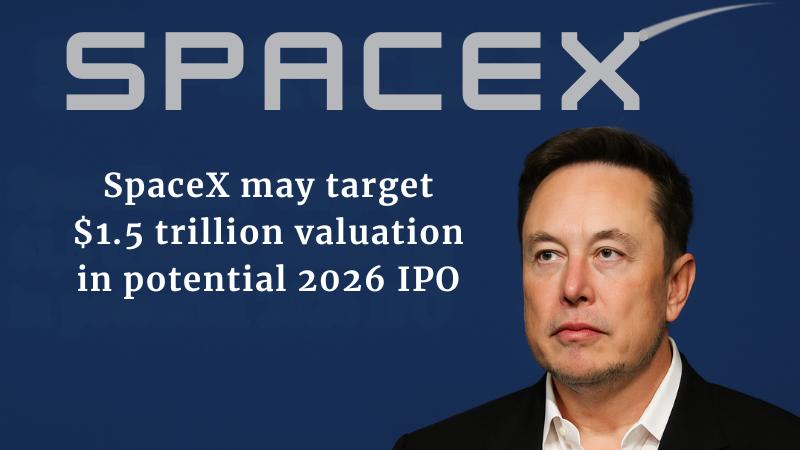
A recent report has indicated that SpaceX, the aerospace company led by Elon Musk, could be poised for one of the largest public listings in history, with a potential valuation approaching $1.5 trillion. The report, based on information attributed to individuals familiar with ongoing internal discussions, suggests that the company may consider launching an initial public offering in 2026, depending on overall market stability and strategic readiness. If pursued at the scale projected, the listing would position SpaceX among the highest-valued companies ever to enter public markets, reflecting widespread investor confidence in the growing commercial space sector and in the company’s expanding operational footprint.
The report indicated that SpaceX is exploring the possibility of raising more than $30 billion through the offering, a figure notably higher than earlier expectations. Such a fundraising effort would place the company’s valuation close to levels only seen in a few landmark listings, including major energy and technology offerings of previous years. Sources cited in the report noted that the company may adjust the timeline, potentially moving the offering into 2027, should financial or regulatory conditions make a delay more favourable. The expected proceeds would support the expansion of space-based data centres, a growing area of interest for SpaceX as it works to increase global connectivity and strengthen the infrastructure supporting its satellite-driven services.
Financial projections referenced in the report show that SpaceX may generate around $15 billion in revenue during 2025, with estimates rising to between $22 billion and $24 billion in 2026. Much of this anticipated growth is attributed to Starlink, the satellite-internet service that has rapidly expanded its global user base. The company is also conducting a secondary share sale that allows employees to sell stock at a price suggesting a valuation exceeding $800 billion, demonstrating continued private-market demand for SpaceX shares.
Previous internal transactions have placed the company’s value near the $800 billion level, but the higher valuation discussed in the latest report reflects expectations tied specifically to an eventual public listing. Musk has commented in the past that some earlier valuation figures were inaccurate, although he acknowledged that employee share sales have occurred periodically. He has not yet addressed the newly reported projections regarding a possible IPO.
Musk has often expressed caution about taking SpaceX public, emphasising that the company’s long-term ambitions, including advancing human exploration of Mars, require flexibility that may not always align with public-market demands. Despite this reluctance, the company has maintained strong cash flow, according to Musk’s earlier statements, and has been able to conduct internal share buybacks without seeking external funding.
As of now, neither Musk nor SpaceX has confirmed any details related to the potential listing. The timeline, valuation and structure of the offering remain subject to change, and any future decision will likely depend on economic conditions, regulatory considerations and the company’s strategic priorities. Nonetheless, the prospect of a record-setting valuation continues to draw significant attention, underscoring SpaceX’s influence within the global space economy and the broader technology landscape.


 Joyful
0%
Joyful
0%
 Cool
0%
Cool
0%
 Thrilled
0%
Thrilled
0%
 Upset
0%
Upset
0%
 Unhappy
0%
Unhappy
0%