US Iran talks signal cautious diplomatic reset
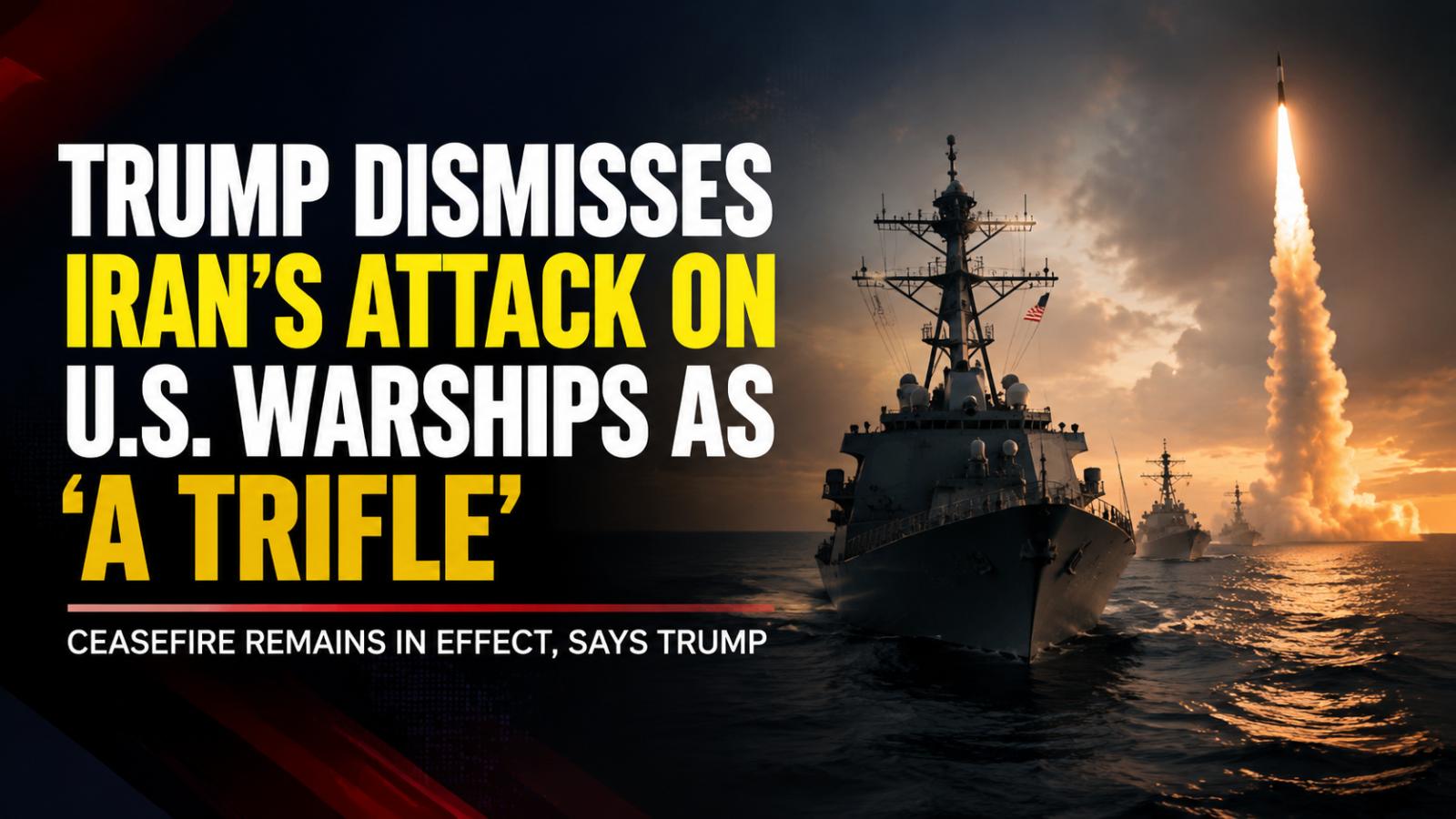
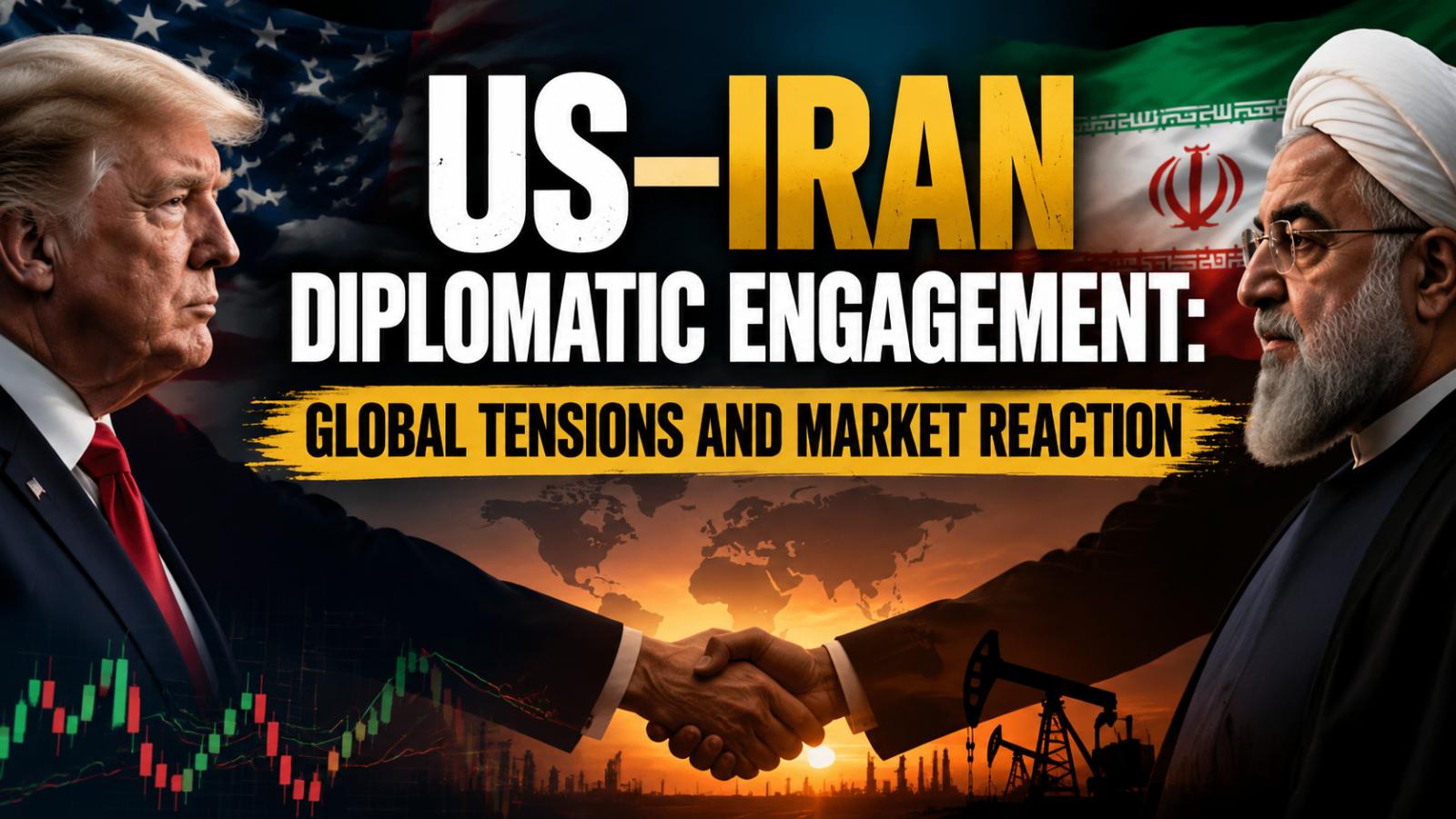
A new round of communication between the United States and Iran has drawn international attention, with both sides indicating a willingness to reopen structured dialogue after a prolonged period of tension. The engagement is being described by officials as an early-stage memorandum-style understanding aimed at reducing immediate escalation risks rather than finalizing a comprehensive agreement. While no detailed treaty framework has been released, the move signals a shift toward man
US Iran talks signal cautious diplomatic reset
A new round of communication between the United States and Iran has drawn international attention, with both sides indicating a willingness to reopen structured dialogue after a prolonged period of tension. The engagement is being described by officials as an early-stage memorandum-style understanding aimed at reducing immediate escalation risks rather than finalizing a comprehensive agreement. While no detailed treaty framework has been released, the move signals a shift toward man
US Consumer Confidence Falls in May as Inflation Pressures Spending
US consumer confidence falls in May as inflation, high gas prices and a softer job outlook pressure household budgets, according to the Conference Board’s latest survey. The drop shows why many Americans are pulling back on spending even as stocks remain near record highs. Why US Consumer Confidence Falls in May The Conference Board’s consumer confidence index slipped 0.7 points to 93.1 in May, marking the first decline after three m
US Consumer Confidence Falls in May as Inflation Pressures Spending
US consumer confidence falls in May as inflation, high gas prices and a softer job outlook pressure household budgets, according to the Conference Board’s latest survey. The drop shows why many Americans are pulling back on spending even as stocks remain near record highs. Why US Consumer Confidence Falls in May The Conference Board’s consumer confidence index slipped 0.7 points to 93.1 in May, marking the first decline after three m
Cerebras Stock Price: CBRS IPO, Ticker and AI Chip Story Explained
Cerebras Systems became one of the most searched AI stock names after the Sunnyvale, California-based AI chipmaker began trading on the Nasdaq under the ticker symbol CBRS on Thursday, May 14, 2026. The company priced its initial public offering at $185 per share, sold 30 million Class A shares, and raised about $5.55 billion. Fresh Trading Update — Thursday, May 14, 2026: Cerebra
Cerebras Stock Price: CBRS IPO, Ticker and AI Chip Story Explained
Cerebras Systems became one of the most searched AI stock names after the Sunnyvale, California-based AI chipmaker began trading on the Nasdaq under the ticker symbol CBRS on Thursday, May 14, 2026. The company priced its initial public offering at $185 per share, sold 30 million Class A shares, and raised about $5.55 billion. Fresh Trading Update — Thursday, May 14, 2026: Cerebra
Modi’s Push for Green Energy Impacts Markets: EV Stocks Rise, Jewellery Stocks Fall
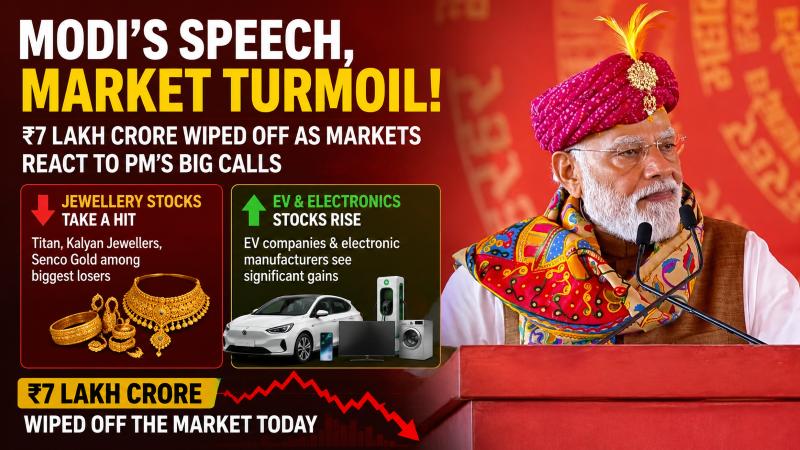
Prime Minister Narendra Modi recently emphasized the need to reduce dependency on petrol and diesel, advocating for sustainable practices and increased adoption of work-from-home models. He also suggested that consumers reconsider discretionary purchases, including gold, in the near term. Following the speech, the stock market reacted sharply. Shares
Modi’s Push for Green Energy Impacts Markets: EV Stocks Rise, Jewellery Stocks Fall
Prime Minister Narendra Modi recently emphasized the need to reduce dependency on petrol and diesel, advocating for sustainable practices and increased adoption of work-from-home models. He also suggested that consumers reconsider discretionary purchases, including gold, in the near term. Following the speech, the stock market reacted sharply. Shares
Could Alphabet overtake Nvidia as the most valuable company? Yes, analysts say it may happen soon
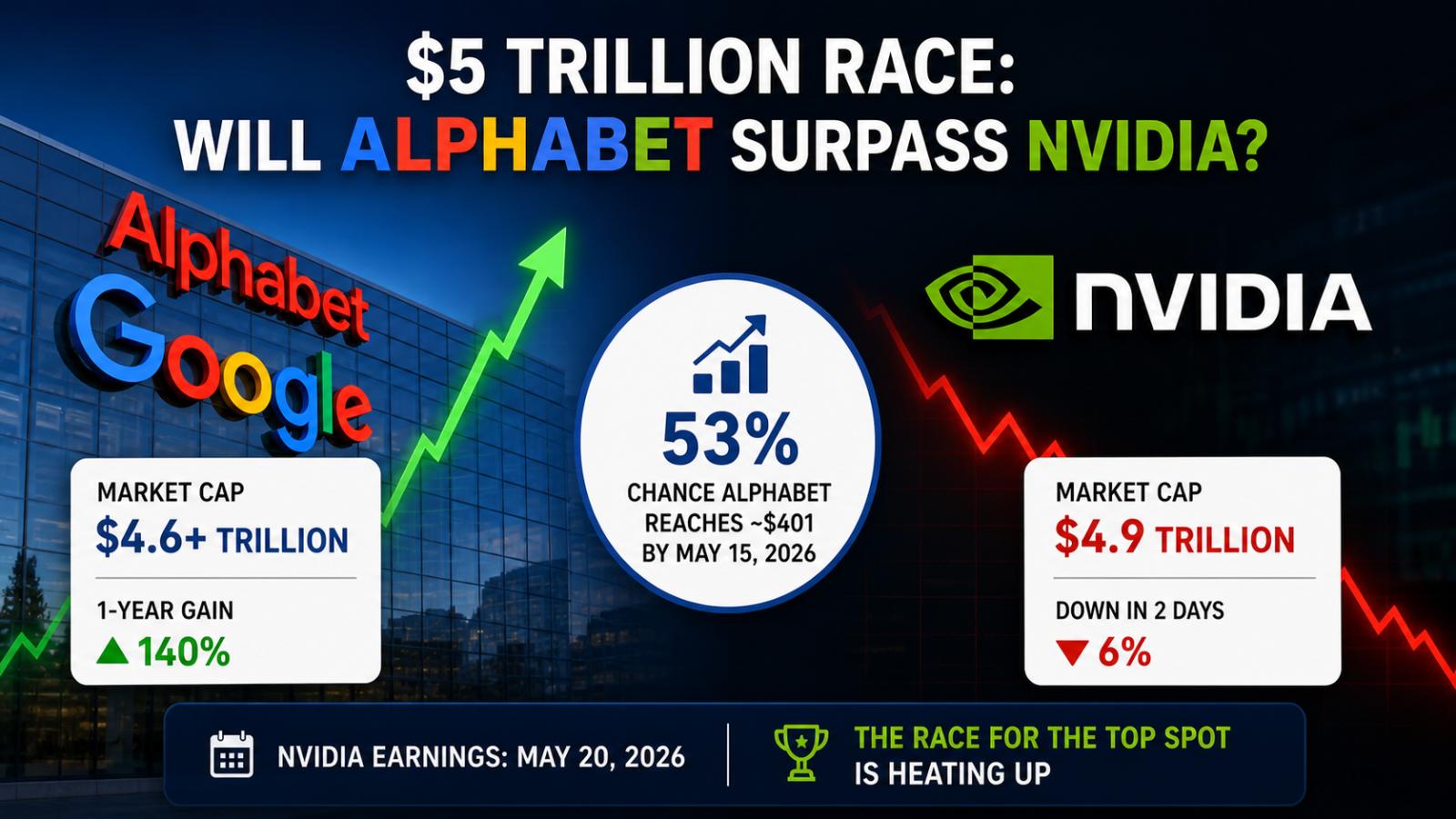
Shares of Alphabet are approaching a historic milestone, with the company nearing a $5 trillion valuation and potentially overtaking Nvidia as the world’s most valuable publicly traded firm. The surge comes after a strong rally in Alphabet’s stock, which climbed 10% on Thursday, extending its one-year gain to approximately 140% and pushing its market capitalization beyond $4.6 trillion. Strong earnings and cloud growth drive Alphabet’s surge The momentum follows a better-than-expected earnings report released on Wednesday, in which Alphabet exceeded analyst forecasts. A key highlight was its Google Cloud division, which generated more than $20 billion in revenue, reinforcing investor confidence in the company’s position within the artificial intelligence and cloud computing sectors. This performance has strengthened Alphabet’s standing among major AI-focused companies and boosted overall investor sentiment. Nvidia faces pressure amid partner concerns and stock decline Meanwhile, Nvidia, currently valued at under $4.9 trillion, has seen its stock decline by more than 6% over two trading sessions. The drop follows a report from The Wall Street Journal indicating that business partner OpenAI missed internal revenue and growth projections. The development has raised concerns about near-term demand and growth expectations in the AI ecosystem, impacting Nvidia’s market performance. Options market signals a potential shift in market leadership Options trading data suggests that Alphabet could soon close the valuation gap. For Alphabet to match Nvidia’s current market capitalization, its stock would need to rise by roughly 4%, reaching about $401 per share. Based on call option premiums around that level, traders estimate a 53% probability that Alphabet could reach that price before Thursday, May 15, 2026. Further projections indicate about a 30% chance that Alphabet will close above $400 on Friday, May 22, 2026, shortly after Nvidia’s upcoming earnings report scheduled for Tuesday, May 20, 2026. Notably, Nvidia’s stock has declined after four of its last five earnings announcements, adding uncertainty to its near-term outlook. Historical context as Alphabet eyes a return to the top Alphabet has previously held the top position among global companies, most recently in 2016 when it briefly surpassed Apple. A renewed rise to the top would mark a significant shift in market leadership, driven largely by advancements in artificial intelligence and cloud infrastructure. As both companies approach key earnings milestones, investors are closely watching whether Alphabet can capitalize on its momentum and reclaim the top spot in global market valuation. Alphabet has previously held the top position among global companies, most recently in 2016 when it briefly surpassed Apple. A renewed rise to the top would mark a significant shift in market leadership, driven largely by advancements in artificial intelligence and cloud infrastructure. As both companies approach key earnings milestones, investors are closely watching whether Alphabet can capitalize on its momentum and reclaim the top spot in global market valuation.
Could Alphabet overtake Nvidia as the most valuable company? Yes, analysts say it may happen soon
Shares of Alphabet are approaching a historic milestone, with the company nearing a $5 trillion valuation and potentially overtaking Nvidia as the world’s most valuable publicly traded firm. The surge comes after a strong rally in Alphabet’s stock, which climbed 10% on Thursday, extending its one-year gain to approximately 140% and pushing its market capitalization beyond $4.6 trillion. Strong earnings and cloud growth drive Alphabet’s surge The momentum follows a better-than-expected earnings report released on Wednesday, in which Alphabet exceeded analyst forecasts. A key highlight was its Google Cloud division, which generated more than $20 billion in revenue, reinforcing investor confidence in the company’s position within the artificial intelligence and cloud computing sectors. This performance has strengthened Alphabet’s standing among major AI-focused companies and boosted overall investor sentiment. Nvidia faces pressure amid partner concerns and stock decline Meanwhile, Nvidia, currently valued at under $4.9 trillion, has seen its stock decline by more than 6% over two trading sessions. The drop follows a report from The Wall Street Journal indicating that business partner OpenAI missed internal revenue and growth projections. The development has raised concerns about near-term demand and growth expectations in the AI ecosystem, impacting Nvidia’s market performance. Options market signals a potential shift in market leadership Options trading data suggests that Alphabet could soon close the valuation gap. For Alphabet to match Nvidia’s current market capitalization, its stock would need to rise by roughly 4%, reaching about $401 per share. Based on call option premiums around that level, traders estimate a 53% probability that Alphabet could reach that price before Thursday, May 15, 2026. Further projections indicate about a 30% chance that Alphabet will close above $400 on Friday, May 22, 2026, shortly after Nvidia’s upcoming earnings report scheduled for Tuesday, May 20, 2026. Notably, Nvidia’s stock has declined after four of its last five earnings announcements, adding uncertainty to its near-term outlook. Historical context as Alphabet eyes a return to the top Alphabet has previously held the top position among global companies, most recently in 2016 when it briefly surpassed Apple. A renewed rise to the top would mark a significant shift in market leadership, driven largely by advancements in artificial intelligence and cloud infrastructure. As both companies approach key earnings milestones, investors are closely watching whether Alphabet can capitalize on its momentum and reclaim the top spot in global market valuation. Alphabet has previously held the top position among global companies, most recently in 2016 when it briefly surpassed Apple. A renewed rise to the top would mark a significant shift in market leadership, driven largely by advancements in artificial intelligence and cloud infrastructure. As both companies approach key earnings milestones, investors are closely watching whether Alphabet can capitalize on its momentum and reclaim the top spot in global market valuation.

What do Apple options trades reveal? Mixed sentiment ahead of earnings
Apple’s stock may have remained largely flat over the past six months, but activity in the options market suggests traders are anticipating significant movement following its latest earnings report. Implied volatility points to a potential 3.5% swing in either direction, notably higher than the average 1.8% move seen after the company’s previous four quarterly earnings announcements. Options pricing reflects heightened expectations The increase in im
What do Apple options trades reveal? Mixed sentiment ahead of earnings
Apple’s stock may have remained largely flat over the past six months, but activity in the options market suggests traders are anticipating significant movement following its latest earnings report. Implied volatility points to a potential 3.5% swing in either direction, notably higher than the average 1.8% move seen after the company’s previous four quarterly earnings announcements. Options pricing reflects heightened expectations The increase in im
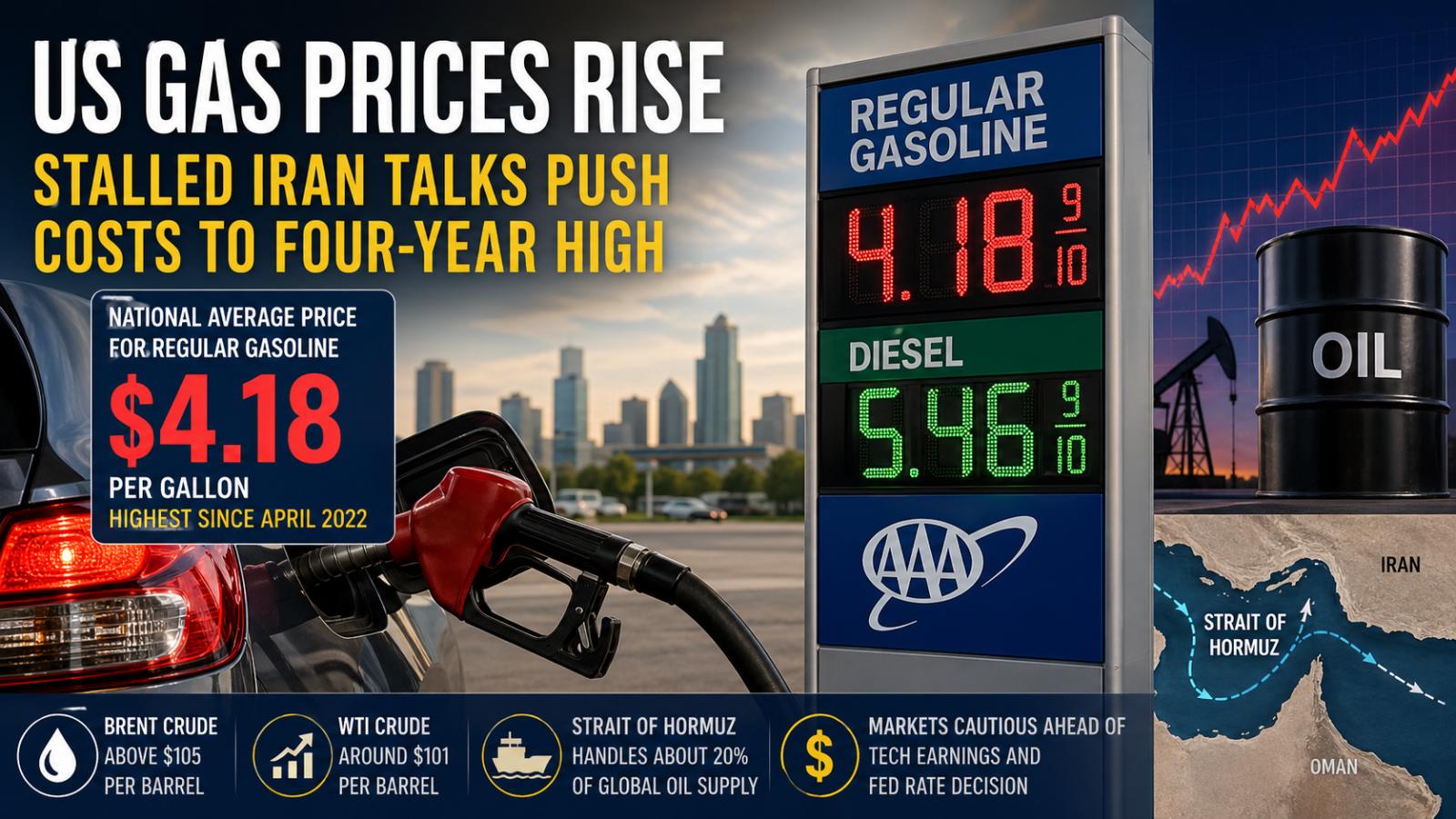
Why are US gas prices rising? Stalled Iran talks push costs to four-year high
Stalled Iran talks push costs to four-year high Gasoline prices across the United States climbed sharply on Tuesday, April 28, 2026, reaching their highest level in four years as stalled negotiations between Washington and Tehran fueled a surge in global oil markets. According to AAA, the national average price for a gallon of regular gasoline rose to $4.18, marking the h
Why are US gas prices rising? Stalled Iran talks push costs to four-year high
Stalled Iran talks push costs to four-year high Gasoline prices across the United States climbed sharply on Tuesday, April 28, 2026, reaching their highest level in four years as stalled negotiations between Washington and Tehran fueled a surge in global oil markets. According to AAA, the national average price for a gallon of regular gasoline rose to $4.18, marking the h
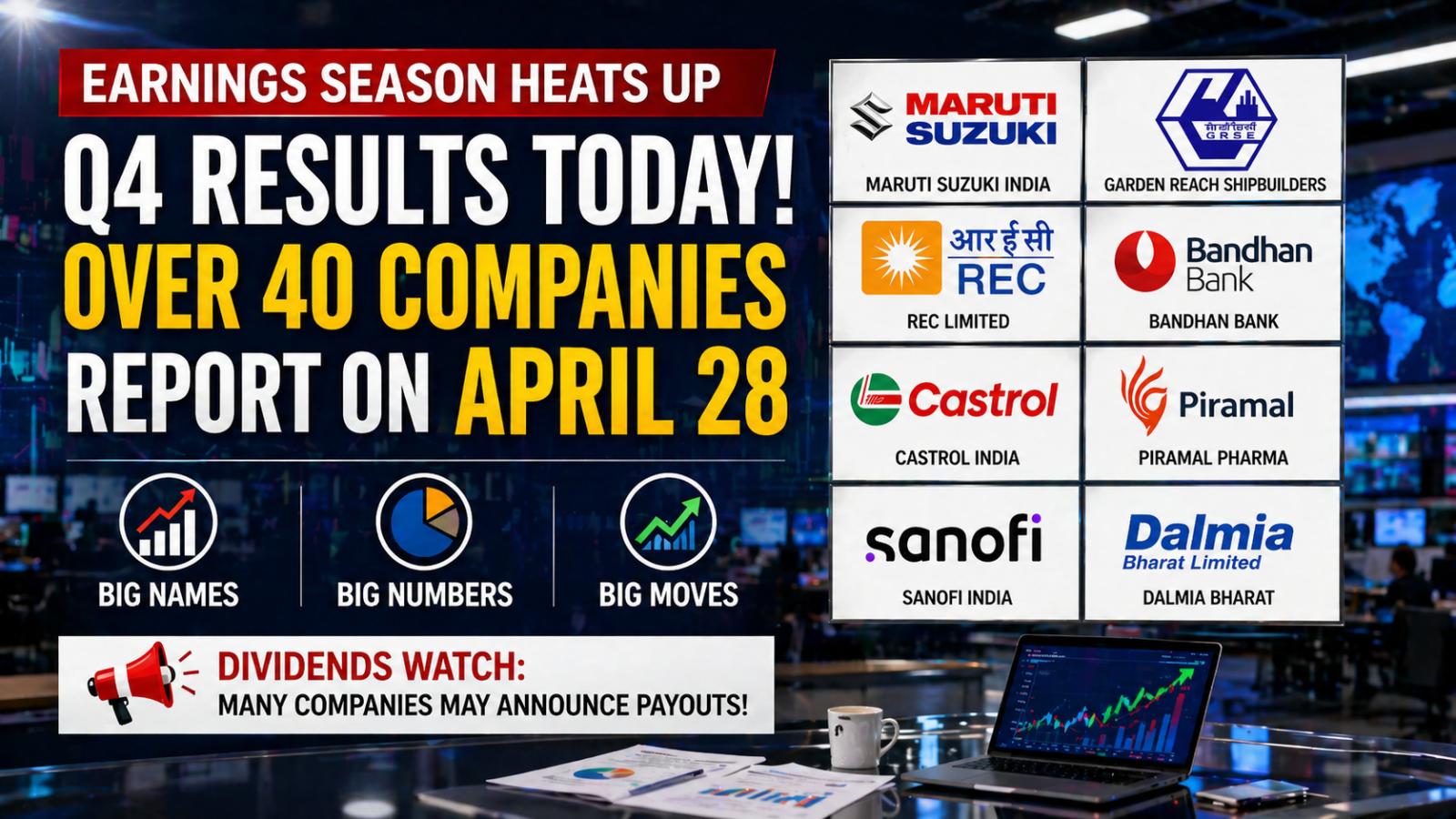
Q4FY26 Earnings Today: Over 40 Companies Including Maruti Suzuki, REC, Bandhan Bank Announce Results
More than 40 companies are scheduled to announce their fourth-quarter results for FY26 on April 28, marking a busy day in the earnings calendar. Major firms such as Maruti Suzuki India Ltd., REC Ltd., Bandhan Bank Ltd., Garden Reach Shipbuilders & Engineers Ltd., Piramal Pharma Ltd., Sanofi India Ltd., Castrol India Ltd., and Dalmia Bharat Ltd. are among the key names expected to release their financial performance. Investors will also be watching closely for potential dividend announcements, as several companies may declare payouts alongside their results. The list of companies reporting includes a mix of sectors such as banking, automotive, pharmaceuticals, cement, insurance, and infrastructure. Firms like Ceat Ltd., AWL Agri Business Ltd., Go Digit General Insurance Ltd., and Mahindra Lifespace Developers Ltd. add further breadth to the day’s announcements, reflecting the diverse representation across industries. Recent quarterly performance provides context for expectations. Garden Reach Shipbuilders & Engineers Ltd. reported strong growth in its third-quarter results, with total income rising significantly year-over-year and profits showing robust expansion. In contrast, REC Ltd. recorded moderate income growth but saw a slight decline in net profit, indicating mixed trends within the financial sector. Maruti Suzuki India Ltd. also posted steady growth in its previous quarter, reporting higher total income and a modest increase in net profit. Market participants will now evaluate whether this momentum has continued into the fourth quarter, particularly amid evolving demand conditions. With multiple companies hosting conference calls following their announcements, analysts and investors will gain deeper insights into sector trends, future outlooks, and management strategies. The concentration of earnings releases on a single day is expected to drive heightened market activity and could influence short-term stock movements across sectors.
Q4FY26 Earnings Today: Over 40 Companies Including Maruti Suzuki, REC, Bandhan Bank Announce Results
More than 40 companies are scheduled to announce their fourth-quarter results for FY26 on April 28, marking a busy day in the earnings calendar. Major firms such as Maruti Suzuki India Ltd., REC Ltd., Bandhan Bank Ltd., Garden Reach Shipbuilders & Engineers Ltd., Piramal Pharma Ltd., Sanofi India Ltd., Castrol India Ltd., and Dalmia Bharat Ltd. are among the key names expected to release their financial performance. Investors will also be watching closely for potential dividend announcements, as several companies may declare payouts alongside their results. The list of companies reporting includes a mix of sectors such as banking, automotive, pharmaceuticals, cement, insurance, and infrastructure. Firms like Ceat Ltd., AWL Agri Business Ltd., Go Digit General Insurance Ltd., and Mahindra Lifespace Developers Ltd. add further breadth to the day’s announcements, reflecting the diverse representation across industries. Recent quarterly performance provides context for expectations. Garden Reach Shipbuilders & Engineers Ltd. reported strong growth in its third-quarter results, with total income rising significantly year-over-year and profits showing robust expansion. In contrast, REC Ltd. recorded moderate income growth but saw a slight decline in net profit, indicating mixed trends within the financial sector. Maruti Suzuki India Ltd. also posted steady growth in its previous quarter, reporting higher total income and a modest increase in net profit. Market participants will now evaluate whether this momentum has continued into the fourth quarter, particularly amid evolving demand conditions. With multiple companies hosting conference calls following their announcements, analysts and investors will gain deeper insights into sector trends, future outlooks, and management strategies. The concentration of earnings releases on a single day is expected to drive heightened market activity and could influence short-term stock movements across sectors.
Nvidia stock hits record high, pushes market cap above $5 trillion
Shares of Nvidia hit a record $208.27 on Friday, April 24, 2026, pushing its value past $5 trillion amid strong AI demand. Gains followed upbeat results from Intel, lifting chipmakers broadly, even as Alphabet
Nvidia stock hits record high, pushes market cap above $5 trillion
Shares of Nvidia hit a record $208.27 on Friday, April 24, 2026, pushing its value past $5 trillion amid strong AI demand. Gains followed upbeat results from Intel, lifting chipmakers broadly, even as Alphabet
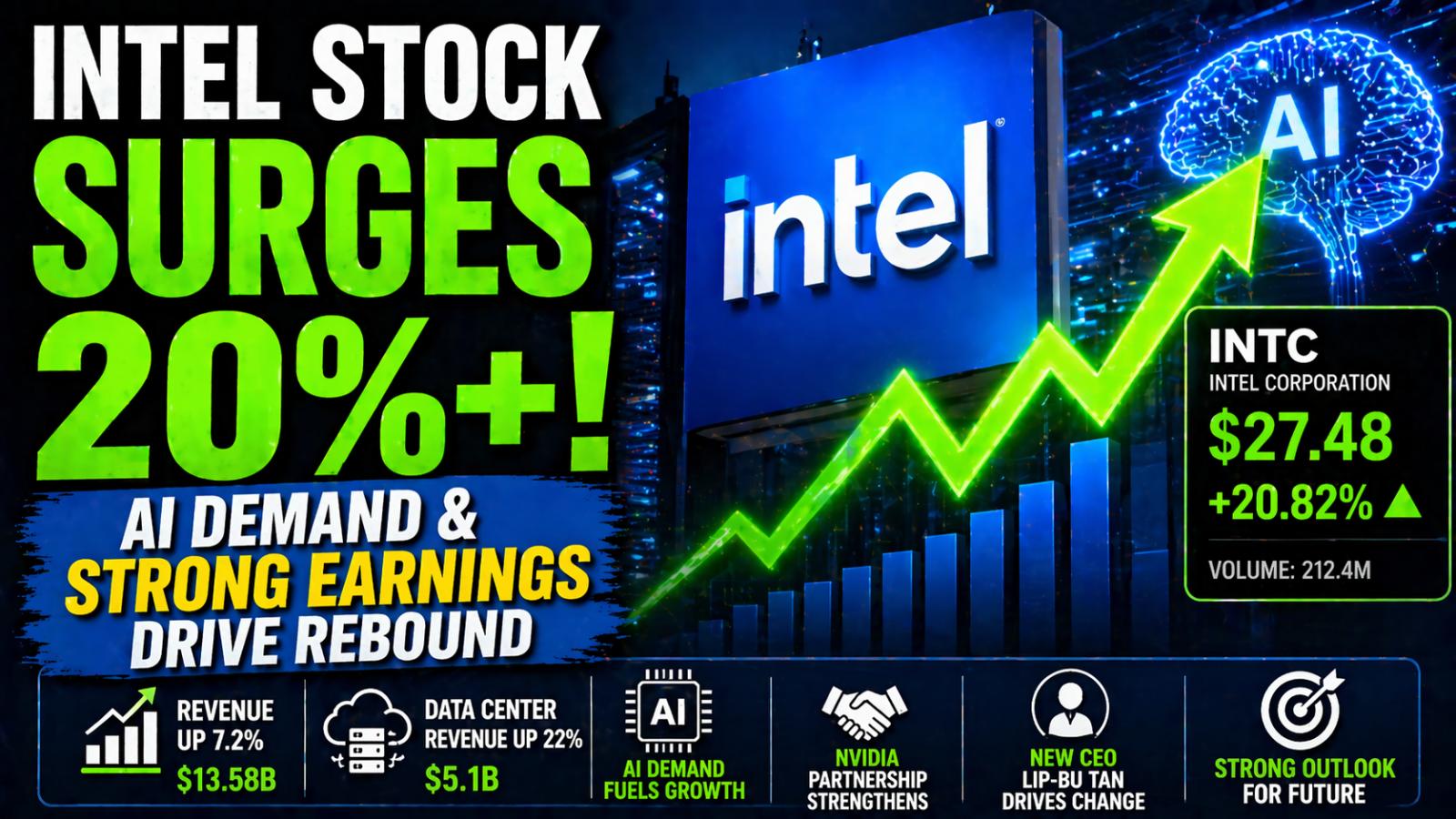
Why did Intel shares surge over 20%? AI demand and leadership changes drive rebound
Strong market reaction to earnings and AI momentum Shares of Intel surged more than 20% during trading hours on Friday, reflecting renewed investor confidence driven by rising artificial intelligence demand and stronger-than-expected financial results. By early afternoon, the stock had climbed approximately 22%, putting it on track for its best single-day performance in d
Why did Intel shares surge over 20%? AI demand and leadership changes drive rebound
Strong market reaction to earnings and AI momentum Shares of Intel surged more than 20% during trading hours on Friday, reflecting renewed investor confidence driven by rising artificial intelligence demand and stronger-than-expected financial results. By early afternoon, the stock had climbed approximately 22%, putting it on track for its best single-day performance in d
Dow Jones Industrial Average, Nasdaq Composite Highlights: S&P 500 Hits Record High as Oil Prices Slide
US stock markets surged to fresh record highs as easing geopolitical tensions triggered a sharp decline in oil prices, boosting investor confidence across global markets. Sentiment improved after reports of the reopening of the Strait of Hormuz, easing concerns over potential disruptions to global oil supply. The rally was led by the
Dow Jones Industrial Average, Nasdaq Composite Highlights: S&P 500 Hits Record High as Oil Prices Slide
US stock markets surged to fresh record highs as easing geopolitical tensions triggered a sharp decline in oil prices, boosting investor confidence across global markets. Sentiment improved after reports of the reopening of the Strait of Hormuz, easing concerns over potential disruptions to global oil supply. The rally was led by the
Gautam Adani Beats Mukesh Ambani in Billionaire Race 2026
Gautam Adani has overtaken Mukesh Ambani to become Asia’s richest individual, according to the latest Bloomberg Billionaires Index. Adani’s net worth has risen to $92.6 billion, placing him 19th globally, while Ambani now stands at $90.8 billion, ranking 20th worldwide. The shift reflects the dynamic nature of global wealth rankings, where even small market movements can alter positions at
Gautam Adani Beats Mukesh Ambani in Billionaire Race 2026
Gautam Adani has overtaken Mukesh Ambani to become Asia’s richest individual, according to the latest Bloomberg Billionaires Index. Adani’s net worth has risen to $92.6 billion, placing him 19th globally, while Ambani now stands at $90.8 billion, ranking 20th worldwide. The shift reflects the dynamic nature of global wealth rankings, where even small market movements can alter positions at
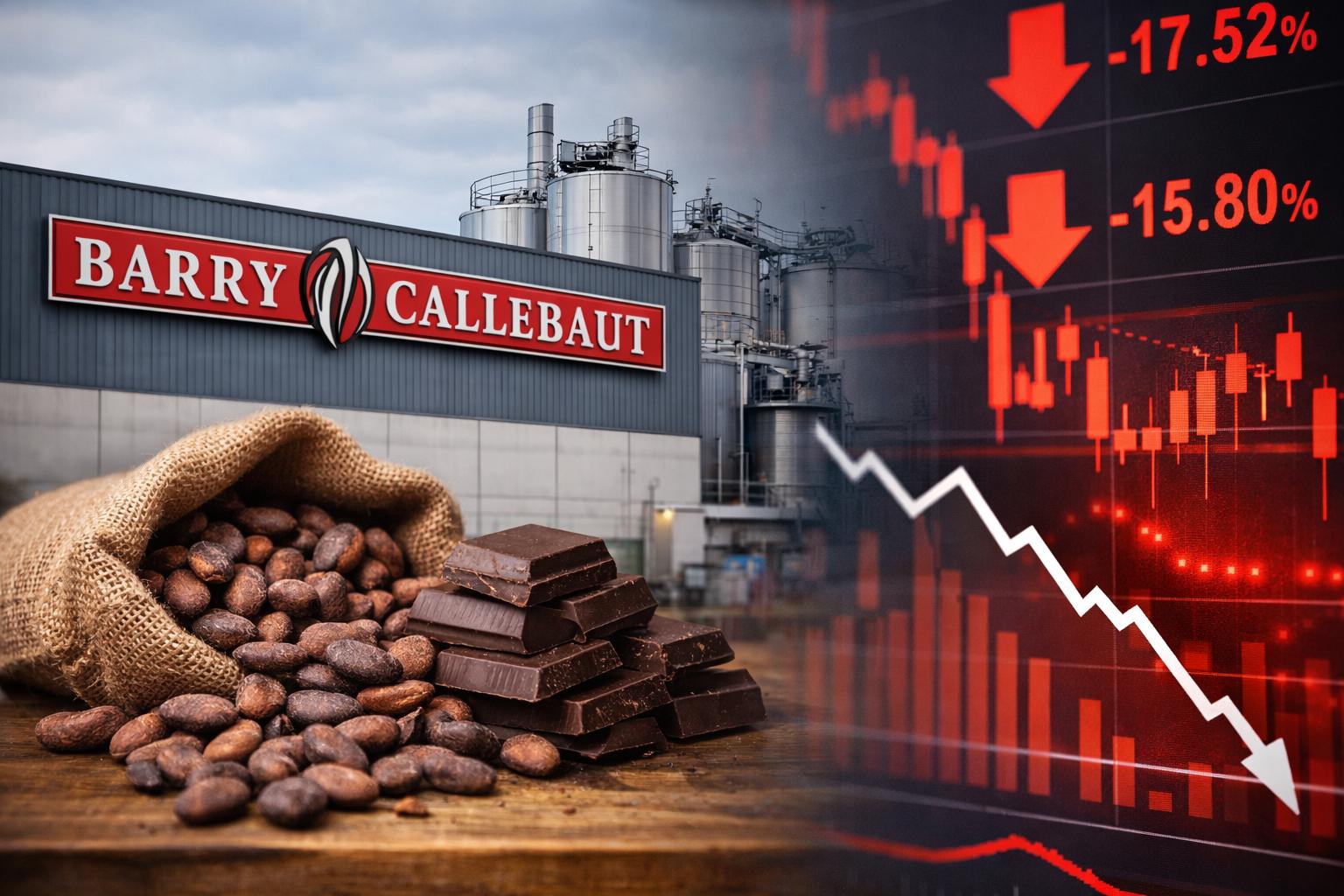
Barry Callebaut cuts profit outlook amid cocoa price drop and supply risks
Barry Callebaut, the world’s largest chocolate producer, announced on Thursday, April 16, 2026, that it has lowered its operating profit forecast for the 2025–2026 fiscal year, citing falling cocoa prices, industry overcapacity, and potential supply disruptions linked to geopolitical tensions involving Iran. The Zurich-based company now expects earnings before interest and tax (EBIT)
Barry Callebaut cuts profit outlook amid cocoa price drop and supply risks
Barry Callebaut, the world’s largest chocolate producer, announced on Thursday, April 16, 2026, that it has lowered its operating profit forecast for the 2025–2026 fiscal year, citing falling cocoa prices, industry overcapacity, and potential supply disruptions linked to geopolitical tensions involving Iran. The Zurich-based company now expects earnings before interest and tax (EBIT)
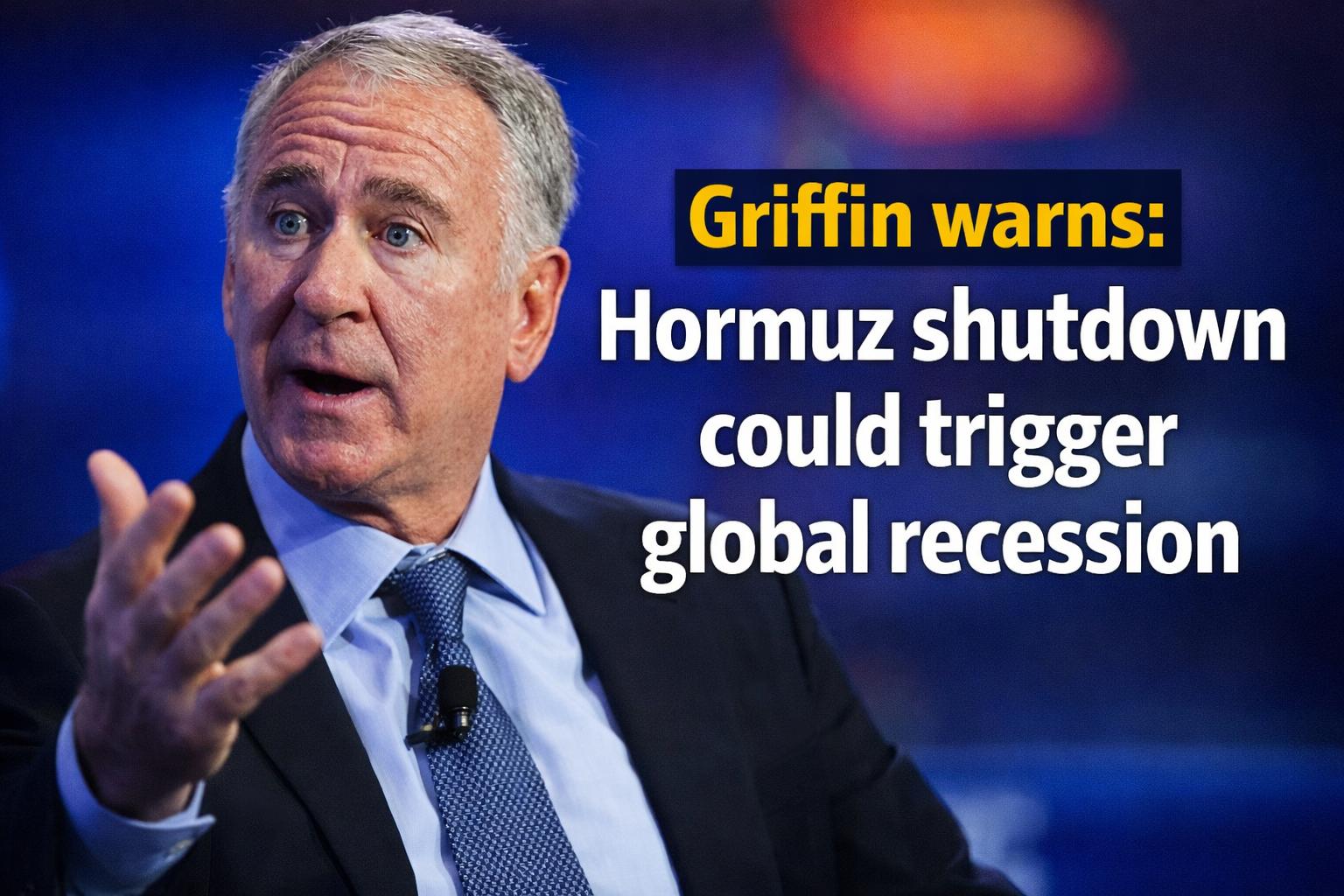
Ken Griffin warns prolonged Hormuz closure could trigger global recession
Ken Griffin, founder and chief executive of Citadel, warned that a prolonged closure of the Strait of Hormuz could push the global economy into a recession, underscoring the fragile balance of energy markets and geopolitical stability. Speaking at the Semafor World Economy conference in Washington, D.C., on Tuesday, April 14, 2026, Griffin said that if the critical shipping route remains shut for an extended period, the economic consequences would be unavoidable. He noted that a disruption lasting between six and 12 months would almost certainly result in a global downturn, given the strait’s importance as a key transit point for oil shipments. The Strait of Hormuz handles a significant portion of the world’s crude oil supply, and any sustained blockage would likely drive oil prices higher, intensifying inflationary pressures across major economies. While oil prices have eased slightly from peak levels reached during recent tensions, they remain elevated at around $100 per barrel, compared to under $70 before the conflict began. Griffin emphasized that global markets have so far shown resilience, with stock prices recovering to levels seen prior to earlier U.S. military actions in the region. However, he cautioned that investor confidence remains highly dependent on the duration and scope of the conflict. Many market participants, he said, may be underestimating the risk of further escalation and its potential impact on global growth. He also pointed to heightened vulnerability in Asian economies, which rely heavily on energy imports and are particularly sensitive to oil price fluctuations. A sustained increase in fuel costs could slow industrial output and consumer demand across the region. At the same time, Griffin suggested that prolonged disruption could accelerate a structural shift toward alternative energy sources, including wind, solar, and nuclear power, as countries seek to reduce reliance on volatile supply routes. His remarks highlight growing concerns among financial leaders that geopolitical instability in critical energy corridors could have far-reaching consequences for global economic stability.
Ken Griffin warns prolonged Hormuz closure could trigger global recession
Ken Griffin, founder and chief executive of Citadel, warned that a prolonged closure of the Strait of Hormuz could push the global economy into a recession, underscoring the fragile balance of energy markets and geopolitical stability. Speaking at the Semafor World Economy conference in Washington, D.C., on Tuesday, April 14, 2026, Griffin said that if the critical shipping route remains shut for an extended period, the economic consequences would be unavoidable. He noted that a disruption lasting between six and 12 months would almost certainly result in a global downturn, given the strait’s importance as a key transit point for oil shipments. The Strait of Hormuz handles a significant portion of the world’s crude oil supply, and any sustained blockage would likely drive oil prices higher, intensifying inflationary pressures across major economies. While oil prices have eased slightly from peak levels reached during recent tensions, they remain elevated at around $100 per barrel, compared to under $70 before the conflict began. Griffin emphasized that global markets have so far shown resilience, with stock prices recovering to levels seen prior to earlier U.S. military actions in the region. However, he cautioned that investor confidence remains highly dependent on the duration and scope of the conflict. Many market participants, he said, may be underestimating the risk of further escalation and its potential impact on global growth. He also pointed to heightened vulnerability in Asian economies, which rely heavily on energy imports and are particularly sensitive to oil price fluctuations. A sustained increase in fuel costs could slow industrial output and consumer demand across the region. At the same time, Griffin suggested that prolonged disruption could accelerate a structural shift toward alternative energy sources, including wind, solar, and nuclear power, as countries seek to reduce reliance on volatile supply routes. His remarks highlight growing concerns among financial leaders that geopolitical instability in critical energy corridors could have far-reaching consequences for global economic stability.
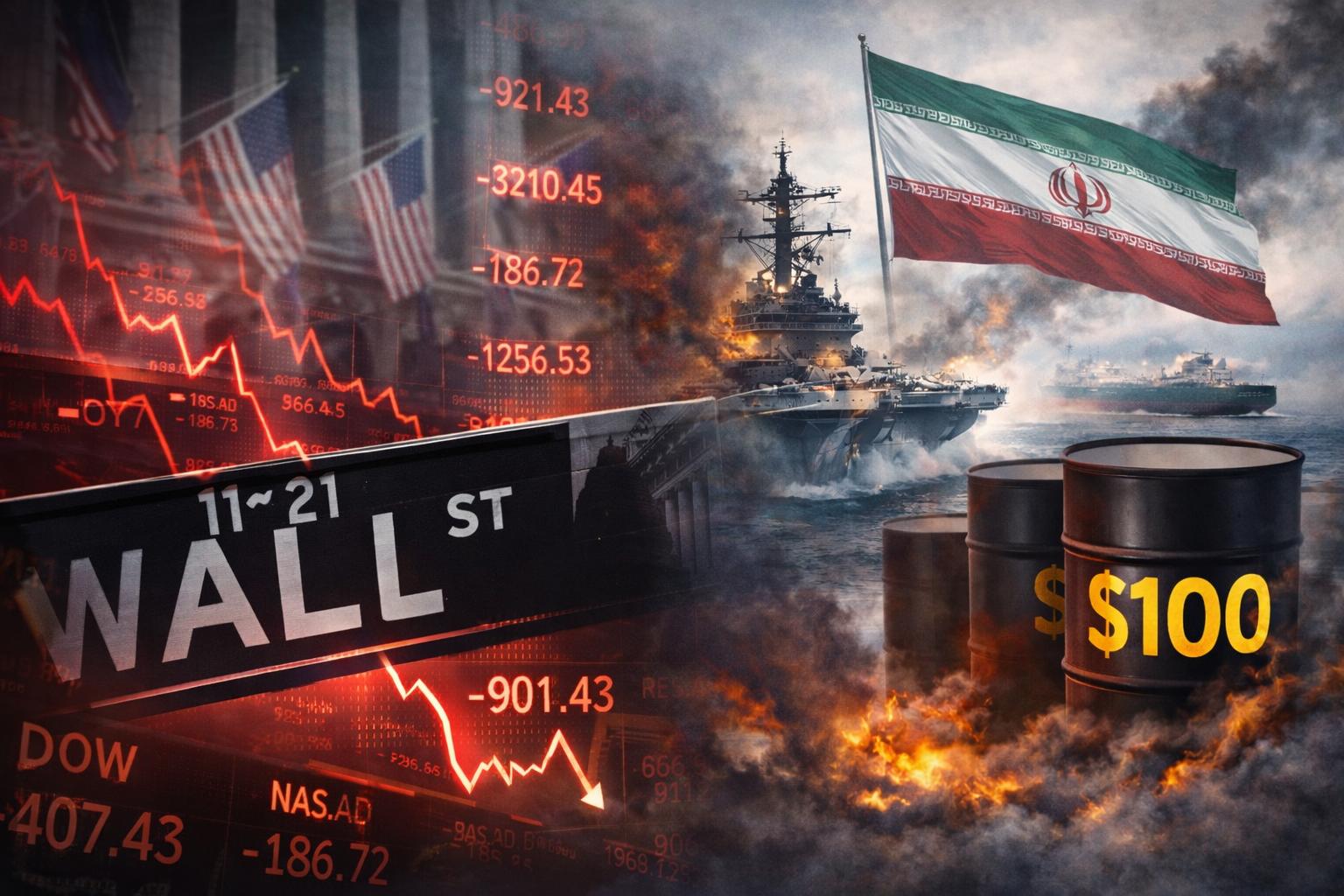
Wall Street falls as Iran talks collapse and oil tops $100
U.S. stock markets opened lower on Monday, April 13, 2026, as investor sentiment weakened following the collapse of high-stakes negotiations between the United States and Iran and a sharp rebound in global oil prices. The downturn reflected rising geopolitical uncertainty after talks aimed at easing tensions ended without agreement over the weekend. As of 9:40 AM ET on April 13, 2026, the Dow Jones Industrial Average fell 0.72 percent, while the S&P 500 declined 0.33 percent and the Nasdaq Composite dropped 0.36 percent. At the same time, oil markets surged, with Brent crude rising nearly 6 percent to above $100 per barrel and U.S. West Texas Intermediate also climbing past the $100 mark, signaling renewed pressure on global energy markets. Market volatility increased as the CBOE Volatility Index rose to 20.61, indicating heightened investor caution. Analysts noted a shift toward a “risk-off” environment, as traders reacted to escalating tensions in the Strait of Hormuz, a critical channel for global oil supply. The market reaction followed the U.S. Navy’s move to begin restricting maritime activity linked to Iran after negotiations held in Islamabad failed to produce a ceasefire or nuclear agreement. The blockade targets vessels associated with Iranian ports, intensifying concerns over potential disruptions to global trade and energy flows. Despite the geopolitical strain, some analysts said the market response remained relatively contained compared to the scale of the crisis. However, the continued rise in oil prices and uncertainty over supply routes could pose longer-term risks for both equity markets and the broader global economy.

Wall Street falls as Iran talks collapse and oil tops $100
U.S. stock markets opened lower on Monday, April 13, 2026, as investor sentiment weakened following the collapse of high-stakes negotiations between the United States and Iran and a sharp rebound in global oil prices. The downturn reflected rising geopolitical uncertainty after talks aimed at easing tensions ended without agreement over the weekend. As of 9:40 AM ET on April 13, 2026, the Dow Jones Industrial Average fell 0.72 percent, while the S&P 500 declined 0.33 percent and the Nasdaq Composite dropped 0.36 percent. At the same time, oil markets surged, with Brent crude rising nearly 6 percent to above $100 per barrel and U.S. West Texas Intermediate also climbing past the $100 mark, signaling renewed pressure on global energy markets. Market volatility increased as the CBOE Volatility Index rose to 20.61, indicating heightened investor caution. Analysts noted a shift toward a “risk-off” environment, as traders reacted to escalating tensions in the Strait of Hormuz, a critical channel for global oil supply. The market reaction followed the U.S. Navy’s move to begin restricting maritime activity linked to Iran after negotiations held in Islamabad failed to produce a ceasefire or nuclear agreement. The blockade targets vessels associated with Iranian ports, intensifying concerns over potential disruptions to global trade and energy flows. Despite the geopolitical strain, some analysts said the market response remained relatively contained compared to the scale of the crisis. However, the continued rise in oil prices and uncertainty over supply routes could pose longer-term risks for both equity markets and the broader global economy.

Software stocks rebound as Oracle leads gains amid AI concerns
Shares of major U.S. software companies moved sharply higher as investors returned to a sector that has faced sustained pressure amid concerns about artificial intelligence disrupting traditional business models. Oracle led the gains, with its stock rising 11%, helping drive a broader recovery across technology equities that had experienced steep declines earlier in the year. Other prominent
Software stocks rebound as Oracle leads gains amid AI concerns
Shares of major U.S. software companies moved sharply higher as investors returned to a sector that has faced sustained pressure amid concerns about artificial intelligence disrupting traditional business models. Oracle led the gains, with its stock rising 11%, helping drive a broader recovery across technology equities that had experienced steep declines earlier in the year. Other prominent
Trump praises Palantir as AI stock faces sharp weekly decline
Shares of Palantir Technologies declined sharply over the week ending Friday, April 10, 2026, even as Donald Trump publicly praised the company’s role in defense technology. The stock fell approximately 15% during the week, reflecting broader pressure across the software and artificial intelligence sectors. In a post on Truth Social on Friday, April 10, 2026, Trump highlighted Palantir’s capabilities, stating that the company has demonstrated strong “war fighting capabilities and equipment.” His remarks come as reports indicate that the U.S. military is using Palantir’s AI-powered Maven Smart System platform to assist with target identification in operations in the Middle East. The company derives a significant portion of its U.S. revenue from government contracts, including work with the Pentagon and immigration enforcement agencies. Palantir CEO Alex Karp has consistently supported the use of advanced technology in defense, aligning more closely with current administration policies despite previously backing Joe Biden. Karp has also defended the company against criticism over surveillance concerns involving both immigrants and U.S. citizens. The company’s political positioning has drawn internal and external scrutiny. In October 2025, a senior communications executive described the firm’s perceived political shift as “concerning,” though related public footage was later removed from online platforms. Palantir’s partnerships in the AI sector have also raised questions. Its platform integrates models from multiple labs, including Anthropic, which has faced restrictions from the Department of Defense due to concerns over potential misuse in autonomous weapons and surveillance. Although Karp previously indicated plans to phase out Anthropic’s models, no such move has yet been confirmed. Market sentiment toward AI stocks weakened further after Anthropic introduced a new model with limited release, citing risks of misuse. This has fueled broader concerns that rapid AI advancements could disrupt traditional software business models. Investor skepticism has also been amplified by Michael Burry, who has taken bearish positions on several AI-related companies, including Palantir. In recent commentary, Burry suggested the stock may experience short-term gains but maintained that its fundamental value remains significantly lower than current levels. Following the week’s decline, Palantir shares were trading near $128, reflecting ongoing volatility in the AI-driven technology sector.
Trump praises Palantir as AI stock faces sharp weekly decline
Shares of Palantir Technologies declined sharply over the week ending Friday, April 10, 2026, even as Donald Trump publicly praised the company’s role in defense technology. The stock fell approximately 15% during the week, reflecting broader pressure across the software and artificial intelligence sectors. In a post on Truth Social on Friday, April 10, 2026, Trump highlighted Palantir’s capabilities, stating that the company has demonstrated strong “war fighting capabilities and equipment.” His remarks come as reports indicate that the U.S. military is using Palantir’s AI-powered Maven Smart System platform to assist with target identification in operations in the Middle East. The company derives a significant portion of its U.S. revenue from government contracts, including work with the Pentagon and immigration enforcement agencies. Palantir CEO Alex Karp has consistently supported the use of advanced technology in defense, aligning more closely with current administration policies despite previously backing Joe Biden. Karp has also defended the company against criticism over surveillance concerns involving both immigrants and U.S. citizens. The company’s political positioning has drawn internal and external scrutiny. In October 2025, a senior communications executive described the firm’s perceived political shift as “concerning,” though related public footage was later removed from online platforms. Palantir’s partnerships in the AI sector have also raised questions. Its platform integrates models from multiple labs, including Anthropic, which has faced restrictions from the Department of Defense due to concerns over potential misuse in autonomous weapons and surveillance. Although Karp previously indicated plans to phase out Anthropic’s models, no such move has yet been confirmed. Market sentiment toward AI stocks weakened further after Anthropic introduced a new model with limited release, citing risks of misuse. This has fueled broader concerns that rapid AI advancements could disrupt traditional software business models. Investor skepticism has also been amplified by Michael Burry, who has taken bearish positions on several AI-related companies, including Palantir. In recent commentary, Burry suggested the stock may experience short-term gains but maintained that its fundamental value remains significantly lower than current levels. Following the week’s decline, Palantir shares were trading near $128, reflecting ongoing volatility in the AI-driven technology sector.
US stocks rally as ceasefire with Iran lifts market sentiment
US equities surged sharply on Wednesday as investor sentiment improved following President Donald Trump’s announcement of a temporary two-week ceasefire with Iran. The development eased fears of a prolonged conflict in the Middle East, triggering a broad rally across major indexes and sectors while simultaneously pushing oil prices lower. The Dow Jones Industrial Average climbed 1,109 points to close at 47,693.76, driven by gains in technology, industrial, and financial stocks. Companies such as Intel, Home Depot, and Caterpillar contributed significantly to the upward momentum, reflecting renewed confidence among investors. The S&P 500 rose 2.21%, supported by widespread gains across both growth and cyclical sectors, although energy stocks lagged due to declining crude prices. The Nasdaq Composite advanced 2.48%, led by strong performance in semiconductor and technology stocks, signaling optimism around artificial intelligence and chip demand. The NYSE Composite also gained 1.79%, highlighting strength in large-cap industrial and financial shares. Market sentiment shifted notably after the ceasefire announcement, as earlier concerns about escalating tensions had driven oil prices higher and weighed on equities. Investors responded positively to the prospect of reduced geopolitical risk and the potential reopening of the Strait of Hormuz, a critical shipping route responsible for roughly 20% of global oil supply. Oil prices fell sharply in response, easing inflation concerns. West Texas Intermediate crude declined 17% to $93.42 per barrel, while Brent crude dropped 16% to $91.65 per barrel. The decline in energy costs provided additional support to equities, reinforcing expectations of reduced inflationary pressure and improved economic stability. Overall, the ceasefire announcement acted as a key catalyst for markets, with investors viewing it as a step toward stabilizing global energy flows and reducing geopolitical uncertainty.
US stocks rally as ceasefire with Iran lifts market sentiment
US equities surged sharply on Wednesday as investor sentiment improved following President Donald Trump’s announcement of a temporary two-week ceasefire with Iran. The development eased fears of a prolonged conflict in the Middle East, triggering a broad rally across major indexes and sectors while simultaneously pushing oil prices lower. The Dow Jones Industrial Average climbed 1,109 points to close at 47,693.76, driven by gains in technology, industrial, and financial stocks. Companies such as Intel, Home Depot, and Caterpillar contributed significantly to the upward momentum, reflecting renewed confidence among investors. The S&P 500 rose 2.21%, supported by widespread gains across both growth and cyclical sectors, although energy stocks lagged due to declining crude prices. The Nasdaq Composite advanced 2.48%, led by strong performance in semiconductor and technology stocks, signaling optimism around artificial intelligence and chip demand. The NYSE Composite also gained 1.79%, highlighting strength in large-cap industrial and financial shares. Market sentiment shifted notably after the ceasefire announcement, as earlier concerns about escalating tensions had driven oil prices higher and weighed on equities. Investors responded positively to the prospect of reduced geopolitical risk and the potential reopening of the Strait of Hormuz, a critical shipping route responsible for roughly 20% of global oil supply. Oil prices fell sharply in response, easing inflation concerns. West Texas Intermediate crude declined 17% to $93.42 per barrel, while Brent crude dropped 16% to $91.65 per barrel. The decline in energy costs provided additional support to equities, reinforcing expectations of reduced inflationary pressure and improved economic stability. Overall, the ceasefire announcement acted as a key catalyst for markets, with investors viewing it as a step toward stabilizing global energy flows and reducing geopolitical uncertainty.
The Impact of Global Tensions and Falling Crude Prices on India’s Sensex Surge
On April 8, 2026, India’s stock markets experienced a remarkable surge, with the BSE Sensex climbing over 2,700 points, marking a 3.66% increase, and the Nifty rising by more than 3.4%. Investor wealth swelled by over Rs 14 lakh crore during the early trade, signaling a sharp recovery after a period of volatility. This rally was fueled by multiple factors, including easing global geopolitical tensions, softer crude prices, and an increase in investor confidence. The biggest trigge
The Impact of Global Tensions and Falling Crude Prices on India’s Sensex Surge
On April 8, 2026, India’s stock markets experienced a remarkable surge, with the BSE Sensex climbing over 2,700 points, marking a 3.66% increase, and the Nifty rising by more than 3.4%. Investor wealth swelled by over Rs 14 lakh crore during the early trade, signaling a sharp recovery after a period of volatility. This rally was fueled by multiple factors, including easing global geopolitical tensions, softer crude prices, and an increase in investor confidence. The biggest trigge
SpaceX plans $1 trillion IPO in historic public listing move
Elon Musk’s SpaceX has taken a major step toward becoming a publicly traded company, filing confidentially for an initial public offering on Wednesday, April 1, 2026. The move could position the aerospace and technology firm among the most valuable companies globally, with an expected valuation exceeding $1 trillion. The IPO filing allows SpaceX to begin discussions with regulators while keeping detailed financial disclosures private during the early stages. Reports indicate the c

SpaceX plans $1 trillion IPO in historic public listing move
Elon Musk’s SpaceX has taken a major step toward becoming a publicly traded company, filing confidentially for an initial public offering on Wednesday, April 1, 2026. The move could position the aerospace and technology firm among the most valuable companies globally, with an expected valuation exceeding $1 trillion. The IPO filing allows SpaceX to begin discussions with regulators while keeping detailed financial disclosures private during the early stages. Reports indicate the c