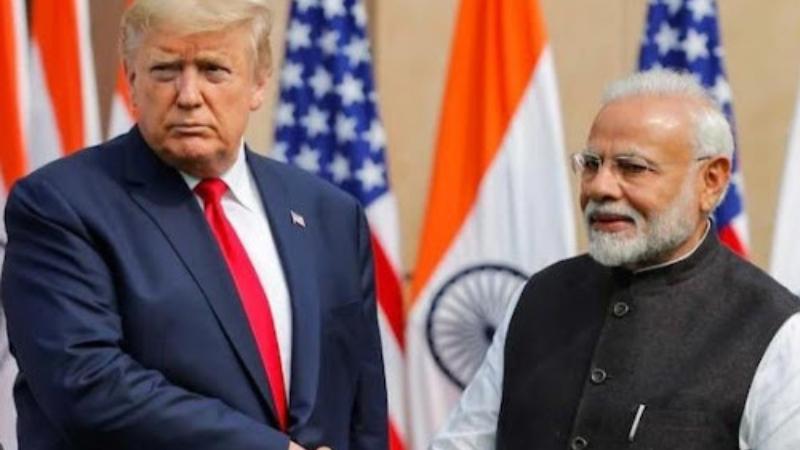
Indian Prime Minister Narendra Modi has reaffirmed India’s firm stance on the Kashmir issue during a phone conversation with US President Donald Trump, categorically rejecting any possibility of third-party mediation. India’s foreign secretary Vikram Misri confirmed that Modi strongly conveyed to Trump that Delhi will not accept any external involvement in the matter of Kashmir, which it considers strictly bilateral. This reiteration came amidst a renewed push by Trump to mediate in the long-standing conflict between India and Pakistan, which saw a sharp escalation during a brief military flare-up in May.
During their conversation, Modi also clarified that there were no discussions with the US administration regarding a trade deal or mediation on the Kashmir matter while the conflict with Pakistan was underway. India continues to deny that the ceasefire was facilitated by the United States, directly contradicting both Trump’s public remarks and claims made by Pakistani officials. According to Misri, any talks about halting military actions were strictly conducted through established military communication channels between India and Pakistan, without external involvement.
The Kashmir issue, a deeply sensitive and long-standing territorial dispute between India and Pakistan, has once again taken center stage in South Asian geopolitics. Both countries claim the region in full but govern it in parts. While Pakistan has been open to international mediation, India maintains that Kashmir is an integral part of its territory and rules out any foreign role in resolving the matter. This latest development follows a sharp spike in tensions after a deadly attack on Indian tourists in Kashmir in April, which India attributed to Pakistan. The ensuing military response included Indian airstrikes on what it called terrorist camps inside Pakistani territory, triggering a four-day escalation that saw both countries accuse each other of targeting military installations.
Trump has repeatedly asserted that the US played a critical role in brokering a ceasefire between the two nuclear-armed neighbors. Speaking at various forums, including his social media platform, Trump claimed he leveraged trade negotiations to push both nations toward de-escalation. He said he had told both sides that unless they stopped hostilities, trade discussions with the US would be halted. He also suggested that he knew the location of Prime Minister Modi during the conflict and made veiled remarks about not taking action against him “for now.” These statements, though dramatic, have not been acknowledged or validated by the Indian government.
Further complicating the narrative, Trump’s mediation claims were backed by Pakistani officials who said that multiple countries were involved in the diplomatic efforts that led to the ceasefire. On the contrary, India has maintained that the de-escalation was bilateral and conducted entirely within the military protocols already in place between the two nations. The Indian administration has consistently emphasized that such matters must remain free from foreign intervention and that bilateralism is the only path forward when dealing with Pakistan.
Delhi has long urged its Western allies to view India and Pakistan as unequal actors on the global stage, stressing India's larger economic and strategic importance. This perspective stands in contrast to Trump’s public statements, which often present India and Pakistan as equals, a stance that has caused unease within diplomatic circles in New Delhi. Furthermore, Modi’s government discourages simultaneous visits to both India and Pakistan by Western leaders, viewing such actions as attempts to equate the two countries diplomatically.
Analysts believe Trump’s repeated and highly public statements about the Kashmir issue may be testing India’s diplomatic red lines. While these developments have not yet derailed ongoing trade negotiations between India and the United States, there is concern in some quarters that continuing to link the sensitive Kashmir issue with trade talks could complicate bilateral relations. India is currently working to finalize a trade agreement with the Trump administration before a 90-day pause on increased tariffs ends on July 9, making the timing of these exchanges particularly delicate.
The Kashmir conflict remains one of the most volatile and unresolved issues in the region. Despite multiple rounds of talks over the years, no resolution has been achieved, and the issue continues to spark periodic tensions between India and Pakistan. As both countries navigate the complexities of national security, diplomacy, and international pressure, India’s message to the US remains clear: Kashmir is off-limits to third-party mediation. How this position affects future diplomatic and trade engagements with Washington remains to be seen, but for now, India stands firm in guarding what it sees as its sovereign right to manage internal affairs on its own terms.