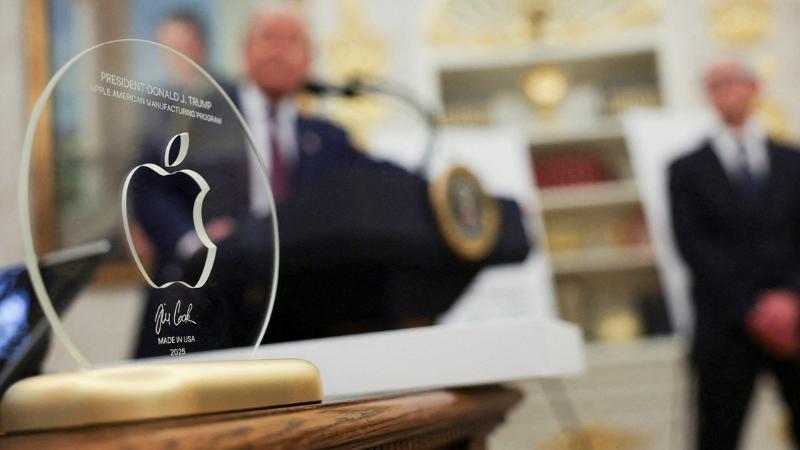
In a major economic policy move, United States President Donald Trump announced on Wednesday, August 6 (local time), a new plan to impose a sweeping 100 percent tariff on imported computer chips and semiconductors, while providing full exemption for companies that manufacture them within the United States. The decision is seen as a strategic attempt to force global chipmakers to relocate or expand operations within American borders, even at the cost of short-term disruptions and potential inflationary pressure on a wide range of consumer and industrial goods. The president made the announcement from the Oval Office, emphasizing that while imported chips will face the new levy, companies building semiconductors in the US will be spared. According to Trump, this move is necessary to eliminate America’s dependence on foreign chip production and to ensure long-term technological sovereignty.
The announcement comes at a time when semiconductor demand is soaring across the globe, especially after the recent global chip shortage that emerged during the Covid-19 pandemic. That shortage had already pushed car prices up and disrupted supply chains for electronics, appliances, and even defense systems. The World Semiconductor Trade Statistics organization reported a 19.6 percent rise in global semiconductor sales in the twelve months ending June, a sign of the growing importance of chips in every corner of the global economy. With this tariff announcement, Trump has taken a significantly more aggressive route than existing policies, which have largely focused on incentivizing domestic chip production through subsidies and grants. Rather than encouraging investment with carrots, Trump has opted for the stick approach, making it economically unfavorable for companies to continue relying on foreign-made chips.
The ripple effects of this move are expected to be wide-reaching. Prices for smartphones, televisions, home appliances, electric vehicles, and even basic household gadgets may increase as a result of the costlier components. The tariff also threatens to impact US-based manufacturers that rely on imported chips to assemble their products. While the Trump administration is betting that such pressure will ultimately drive companies to localize production, there are concerns among economists and tech analysts that this could backfire if companies pass the costs onto consumers or delay major investments due to uncertain profitability. Furthermore, this decision has added another layer to the brewing trade tensions between the US, India, and Russia.
In a related announcement, Trump has also imposed an additional 25 percent tariff on Indian goods as a punitive measure over India’s ongoing oil trade with Russia. This action effectively raises the total tariff on several Indian imports to 50 percent, just weeks after US officials had cautioned India over deepening its energy ties with Russia. The administration has given a 21-day window before these tariffs take effect, providing an opportunity for both India and Russia to engage in negotiations with Washington to potentially avert the full impact of the duties. This time frame also serves as a notice period for American industries and importers to prepare for the upcoming cost adjustments. Many analysts view the twin tariffs as part of a broader strategy by Trump to reassert US dominance in both technology and geopolitics.
The semiconductor tariff, in particular, is being described by White House officials as a “game-changer” in how America approaches economic security. With semiconductors serving as the backbone of nearly every modern technological product, the move signals a shift toward making the US not just a consumer of technology but also a principal producer. While the long-term effects remain to be seen, one immediate consequence will be felt in pricing and supply chains. Manufacturers dependent on Taiwanese, South Korean, or Chinese chip suppliers may have to reconsider their procurement strategies. Companies like Apple, Tesla, and countless appliance and gadget makers may face mounting pressure to either absorb the costs or increase prices.
Critics argue that without sufficient infrastructure and skilled labor ready in the US, the plan may face executional hurdles. The process of building semiconductor fabs is expensive, time-consuming, and requires a complex ecosystem of suppliers and engineers. The risk, some experts suggest, is that US consumers may pay higher prices without the immediate benefit of increased domestic production. However, supporters of the policy maintain that the short-term pain is worth the long-term gain in independence and resilience. Whether this policy succeeds in transforming the American tech industry or triggers broader trade retaliation remains to be seen, but it has undeniably reignited debates over the best path forward for US economic and national security.