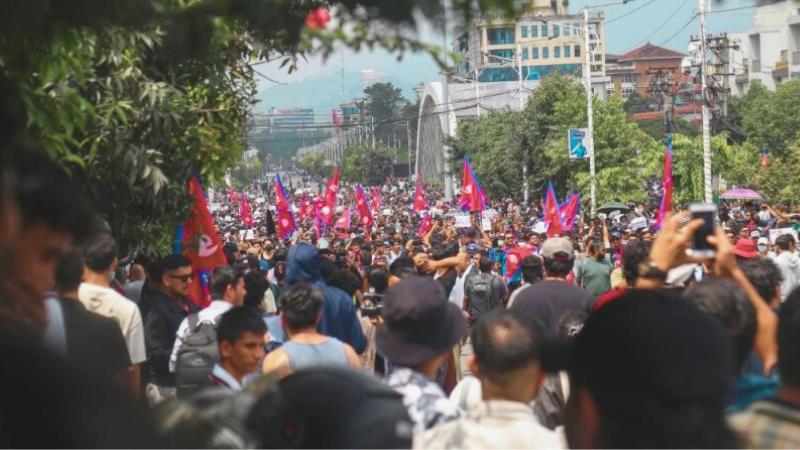
Nepal witnessed its deadliest unrest in years as at least three people were killed and more than 100 injured during violent clashes in Kathmandu on Monday. The protests, largely led by Generation Z demonstrators, erupted after the government banned 26 unregistered social media platforms, including Facebook, YouTube, and X. The ban, seen by many as an attack on free expression, quickly spiraled into a broader anti-corruption movement targeting Prime Minister KP Sharma Oli’s government.
Authorities imposed an emergency curfew across high-security zones in the capital after protesters stormed restricted areas near the Federal Parliament. The curfew, running from 12:30 PM to 10:00 PM, covers the President’s residence at Shital Niwas, the Vice-President’s residence in Lainchaur, Singha Durbar, the Prime Minister’s residence in Baluwatar, and other sensitive areas.
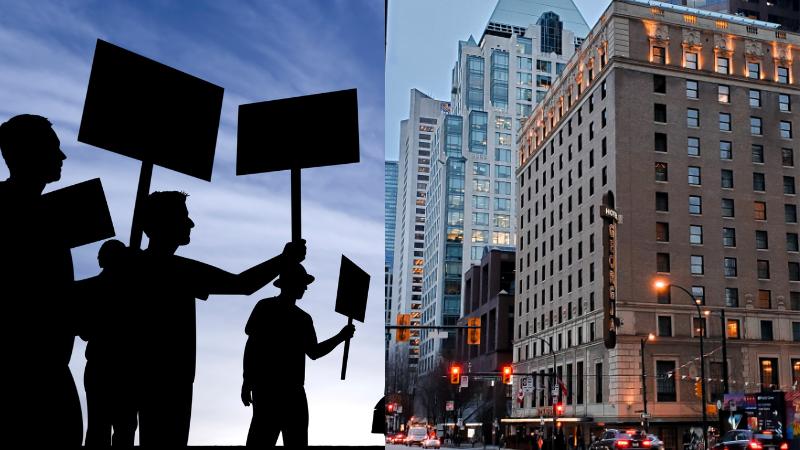
Protesters clashed with police after breaking barricades, throwing bottles and branches, and chanting anti-government slogans. Security forces responded with water cannons, teargas, and rubber bullets. Reports confirmed that two people were injured directly from rubber bullet fire, including Kantipur TV journalist Shyam Shrestha, who is undergoing treatment. Another incident in Damak, PM Oli’s hometown, saw protesters injured as unrest spread beyond Kathmandu.
The Nepal Army was deployed in the capital as authorities struggled to contain the situation. Demonstrators briefly entered the Parliament compound, escalating fears of further chaos. Authorities justified the army’s mobilization as necessary to prevent a complete breakdown of law and order.
While the immediate spark was the government’s decision to ban social media platforms for non-registration, the movement reflects wider frustrations with corruption, nepotism, and authoritarian governance. Young protesters argue that corruption has become institutionalized in Nepal, with stark contrasts between struggling citizens and the lavish lifestyles of politicians’ families fueling public anger. Viral TikTok videos highlighting these inequalities intensified outrage.
Protesters like Yujan Rajbhandari, 24, and Ikshama Tumrok, 20, described the unrest as more than a reaction to the ban calling it a generational fight for change. We want to see change. Others have endured this, but it has to end with our generation, Tumrok told AFP.
The Nepali government defended its move, stating that companies had failed to register locally, appoint grievance officers, and comply with Supreme Court orders. Officials insisted they were committed to safeguarding free speech while enforcing necessary regulation. Nepal has a history of blocking apps, including Telegram and TikTok, citing fraud and non-compliance.
With lives lost and youth anger boiling over, the government faces mounting pressure at home and abroad to address corruption and restore digital freedoms. For now, Kathmandu remains tense under army presence, with the future course of Nepal’s democracy hanging in the balance.