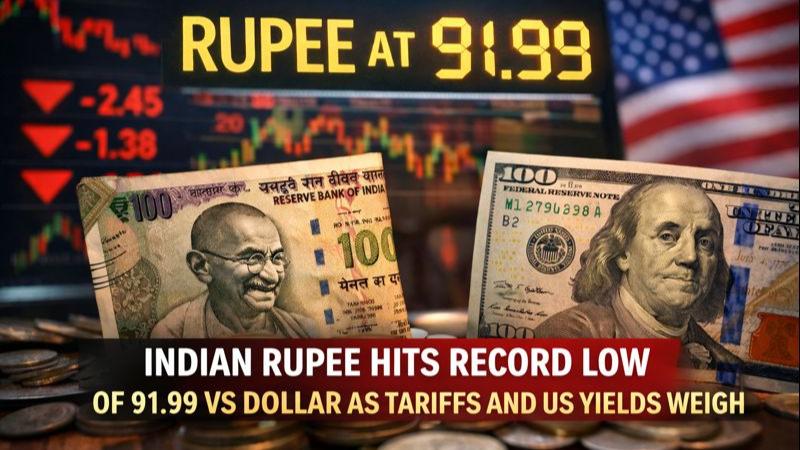
The Indian rupee weakened to a fresh all-time low of 91.99 against the US dollar on January 29, extending its recent slide amid persistent pressure from global and domestic factors. The currency has now fallen 2 percent so far this year and nearly 5 percent since the United States imposed higher tariffs on Indian merchandise exports. The sharp decline reflects continued weakness in foreign capital inflows and a surge in corporate demand for dollar hedging, which have outweighed the positive impact of India’s strong economic growth.
Market participants said the Reserve Bank of India likely intervened in the currency market before the local spot session began. The move was aimed at slowing the rupee’s fall as it approached the key psychological level of 92 per dollar. Traders noted that the central bank appeared focused on managing volatility rather than defending a specific exchange rate. The rupee’s slide has been swift, reaching near-92 levels just days after breaking past the 91 mark for the first time.
Global developments have added to the pressure on the Indian currency. The dollar index edged higher after the US Federal Reserve acknowledged that inflation remains elevated and the labor market continues to stabilize. This pushed US Treasury yields higher, making dollar assets more attractive to global investors and putting pressure on emerging market currencies, including the rupee. Asian currencies broadly weakened during the session as rising US yields reduced appetite for riskier assets.
Foreign portfolio investors have remained cautious, leading to steady capital outflows from Indian markets. At the same time, Indian companies with foreign currency exposure have increased hedging activity to protect against further depreciation. Importers have also stepped up dollar purchases, while exporters have slowed dollar sales, tightening dollar supply in the market and adding further strain on the rupee.
The Reserve Bank of India has consistently maintained that it does not target any fixed level or trading band for the rupee. Instead, it intervenes only to curb excessive volatility and ensure orderly market conditions. Traders believe this approach allows the currency to adjust to global realities while preventing abrupt and disruptive movements.
Analysts expect the rupee to remain sensitive to global interest rate trends, US policy signals, and trade-related developments. With US tariffs continuing to affect export sentiment and global yields remaining elevated, the rupee may stay under pressure in the near term. While RBI intervention could limit sharp swings, sustained improvement in capital flows and global risk sentiment will be key to stabilizing the currency in the months ahead.