#financialmarkets
Gold and Silver Slip – Tuesday, May 26, 2026
Gold and silver prices moved lower in the latest market update. Currency rates remained steady for conversion reference. Gold Price Gold (per oz): $4,524.80 (↓) Gold 24K (per 10g): ₹139,193 approx Gold 22K (per 10g): ₹127,500 approx Silver Price Silver (per oz): $76.33 (↓) (₹7,304 approx)
Gold and Silver Slip – Tuesday, May 26, 2026
Gold and silver prices moved lower in the latest market update. Currency rates remained steady for conversion reference. Gold Price Gold (per oz): $4,524.80 (↓) Gold 24K (per 10g): ₹139,193 approx Gold 22K (per 10g): ₹127,500 approx Silver Price Silver (per oz): $76.33 (↓) (₹7,304 approx)
Trump interest rate controversy: Warsh denies pressure in explosive testimony
The Trump interest rate controversy has taken a new turn after Kevin Warsh firmly denied being pressured by US President Donald Trump regarding monetary policy. His testimony has sparked fresh debate over the independence of the Federal Reserve and political influence on economic decisions. What happened and why it matters On April 22, 2026, Kevin Warsh s
Trump interest rate controversy: Warsh denies pressure in explosive testimony
The Trump interest rate controversy has taken a new turn after Kevin Warsh firmly denied being pressured by US President Donald Trump regarding monetary policy. His testimony has sparked fresh debate over the independence of the Federal Reserve and political influence on economic decisions. What happened and why it matters On April 22, 2026, Kevin Warsh s
RBI Keeps Repo Rate Steady at 5.25% in First FY27 Monetary Policy
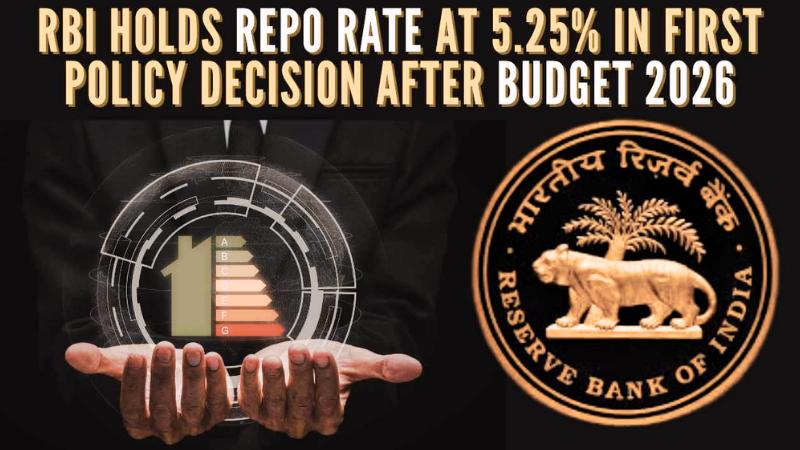
The Reserve Bank of India has kept the policy repo rate unchanged at 5.25% in its first monetary policy announcement for the financial year 2026–27. The decision was announced by RBI Governor Sanjay Malhotra following a detaile
RBI Keeps Repo Rate Steady at 5.25% in First FY27 Monetary Policy
The Reserve Bank of India has kept the policy repo rate unchanged at 5.25% in its first monetary policy announcement for the financial year 2026–27. The decision was announced by RBI Governor Sanjay Malhotra following a detaile
Gold and Silver Lose $2 Trillion: A Look into the $2 Trillion Market Wipeout
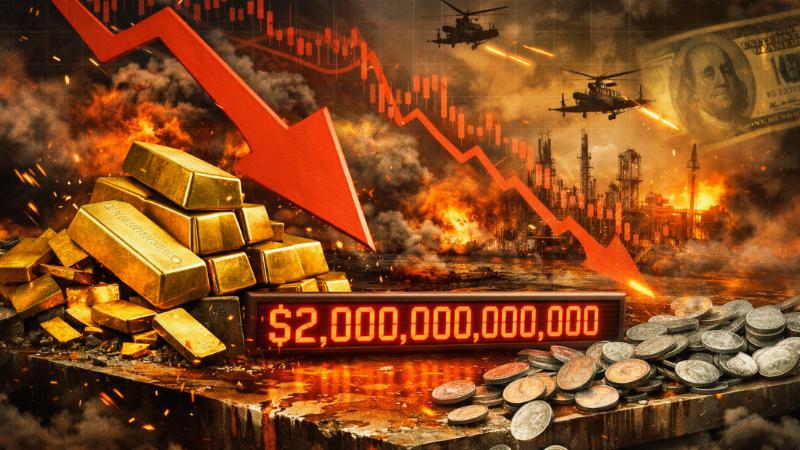
In a stunning turn of events, the global precious metals market witnessed a staggering $2 trillion wipeout, a rare occurrence that has rattled financial markets. This unprecedented crash occurred in just hours, disrupting the long-held belief that metals like gold and silver serve as ultimate safe-havens, especially during times of crisis. What makes this even more perplexing is that the meltdown happened amid an escalating war, with oil prices still elevated and investors seeking refuge in c
Gold and Silver Lose $2 Trillion: A Look into the $2 Trillion Market Wipeout
In a stunning turn of events, the global precious metals market witnessed a staggering $2 trillion wipeout, a rare occurrence that has rattled financial markets. This unprecedented crash occurred in just hours, disrupting the long-held belief that metals like gold and silver serve as ultimate safe-havens, especially during times of crisis. What makes this even more perplexing is that the meltdown happened amid an escalating war, with oil prices still elevated and investors seeking refuge in c
Bitcoin slides below $80,000 as global markets weaken and liquidations surge
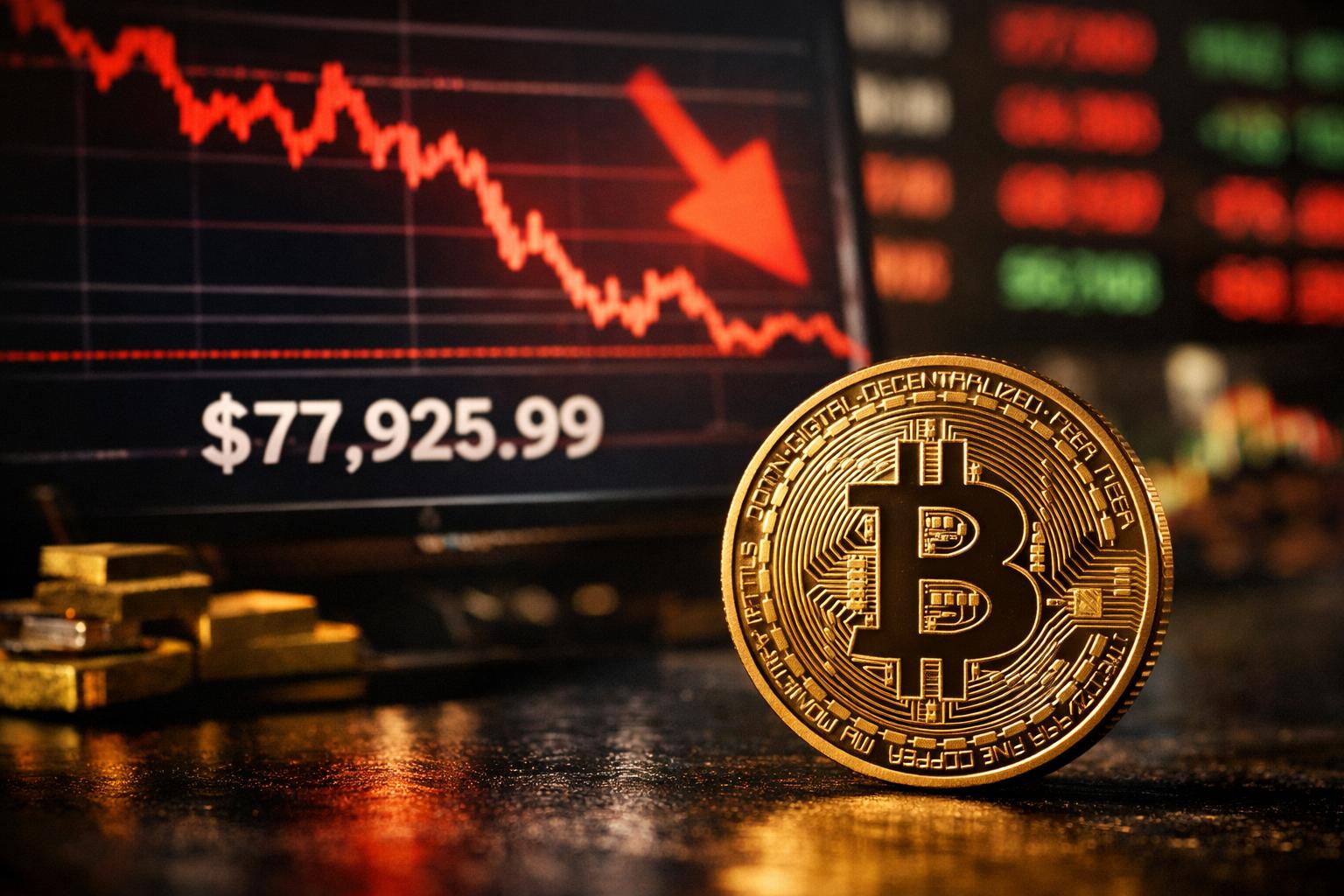
Bitcoin traded slightly higher on Monday after falling below the $80,000 mark for the first time since April 2025, as a broad risk-off move across global markets weighed heavily on digital assets. The world’s largest cryptocurrency was priced at $77,925.99 as of 8:37 a.m. Eastern Time, reflecting a modest rebound of about 1% following sharp losses over the weekend. Earlier in the session, Bitcoin briefly touched a low of $74,876 before recovering part of its decline. The recent se
Bitcoin slides below $80,000 as global markets weaken and liquidations surge
Bitcoin traded slightly higher on Monday after falling below the $80,000 mark for the first time since April 2025, as a broad risk-off move across global markets weighed heavily on digital assets. The world’s largest cryptocurrency was priced at $77,925.99 as of 8:37 a.m. Eastern Time, reflecting a modest rebound of about 1% following sharp losses over the weekend. Earlier in the session, Bitcoin briefly touched a low of $74,876 before recovering part of its decline. The recent se
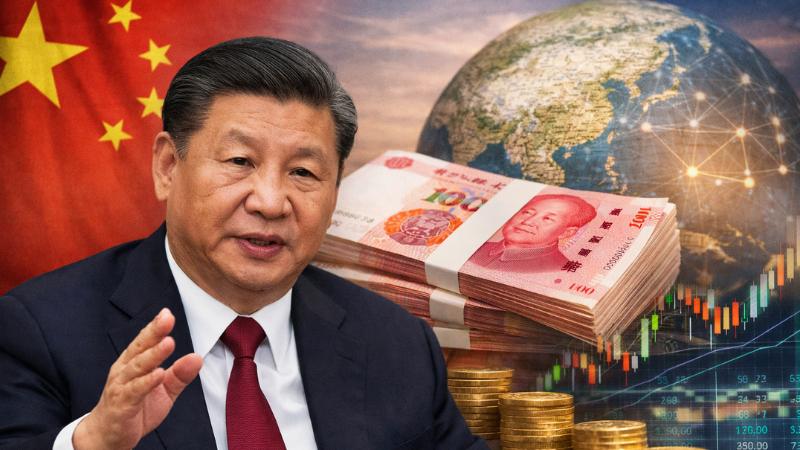
China seeks stronger yuan as Xi Jinping outlines push for global reserve currency
Amid continuing global economic uncertainty and renewed debate over the stability of major reserve currencies, Chinese President Xi Jinping has reiterated China’s ambition to build a “strong currency” and gradually elevate the yuan’s status in the global financial system. Xi said China aims to expand the use of the yuan in international trade, investment, and foreign exchange markets, underscoring a long-standing policy goal to strengthen the country’s financial influence worldwide. Xi’s remarks were outlined in a speech delivered in 2024 to senior provincial and ministerial officials and later published on Saturday in Qiushi, the Communist Party’s leading theoretical journal. The publication of excerpts from the address comes at a time of heightened volatility in global markets and growing scrutiny of the dominance of the US dollar, adding significance to Beijing’s renewed emphasis on currency strength and financial resilience. In the speech, Xi set out what he described as the essential characteristics of a global financial powerhouse. These included a solid economic foundation, world-leading technological and industrial capabilities, and a widely accepted and credible currency. He argued that currency strength was inseparable from broader national competitiveness and institutional capacity, noting that financial influence must be supported by real economic and technological power rather than short-term market movements. Xi also stressed the importance of a capable and independent central bank able to implement effective monetary policy and macroprudential management. He said globally competitive financial institutions, along with influential international financial centres, were necessary to attract global capital and exert pricing power in international markets. According to Xi, these elements must be matched with strong regulation, a reliable legal framework, and a deep pool of skilled financial professionals to ensure long-term stability and credibility. While acknowledging China’s scale in global finance, Xi noted that the country still faced structural limitations. He said China ranked among the world’s largest economies in terms of banking assets, foreign exchange reserves, and capital market size, but remained “big but not strong” overall. Transforming China into a true global financial powerhouse, he added, would be a gradual and long-term undertaking rather than an immediate achievement. Beijing has promoted the internationalisation of the yuan for more than a decade, with measurable progress in its use for cross-border trade settlement. The currency’s role in global markets, however, remains limited when compared with established reserve currencies. China’s Cross-Border Interbank Payment System currently clears an average of about 700 billion yuan, or roughly 100 billion US dollars, in transactions each day. This figure remains well below the nearly 2 trillion US dollars cleared daily through the dollar-based Clearing House Interbank Payments System. Yuan-denominated debt issuance in international markets also accounts for a small share of global activity, representing less than one percent of total issuance. These figures highlight the gap between China’s ambitions and the yuan’s current global footprint, despite steady domestic financial expansion. In recent months, the yuan has generally held firm against the US dollar, even amid trade tensions and uneven global growth. This stability contrasts with the sharper depreciation seen during former US President Donald Trump’s first term, when market observers speculated that Chinese authorities tolerated a weaker currency to offset the impact of tariffs. International investment banks continue to argue that the yuan remains below its long-term fair value, reflecting both policy controls and cautious foreign investor sentiment. The republication of Xi’s speech signals continuity in China’s financial strategy rather than a sudden shift. As global markets navigate uncertainty and reassess existing monetary structures, Beijing appears intent on steadily advancing its vision of a stronger yuan and a more influential role in the international financial system over the long term.
China seeks stronger yuan as Xi Jinping outlines push for global reserve currency
Amid continuing global economic uncertainty and renewed debate over the stability of major reserve currencies, Chinese President Xi Jinping has reiterated China’s ambition to build a “strong currency” and gradually elevate the yuan’s status in the global financial system. Xi said China aims to expand the use of the yuan in international trade, investment, and foreign exchange markets, underscoring a long-standing policy goal to strengthen the country’s financial influence worldwide. Xi’s remarks were outlined in a speech delivered in 2024 to senior provincial and ministerial officials and later published on Saturday in Qiushi, the Communist Party’s leading theoretical journal. The publication of excerpts from the address comes at a time of heightened volatility in global markets and growing scrutiny of the dominance of the US dollar, adding significance to Beijing’s renewed emphasis on currency strength and financial resilience. In the speech, Xi set out what he described as the essential characteristics of a global financial powerhouse. These included a solid economic foundation, world-leading technological and industrial capabilities, and a widely accepted and credible currency. He argued that currency strength was inseparable from broader national competitiveness and institutional capacity, noting that financial influence must be supported by real economic and technological power rather than short-term market movements. Xi also stressed the importance of a capable and independent central bank able to implement effective monetary policy and macroprudential management. He said globally competitive financial institutions, along with influential international financial centres, were necessary to attract global capital and exert pricing power in international markets. According to Xi, these elements must be matched with strong regulation, a reliable legal framework, and a deep pool of skilled financial professionals to ensure long-term stability and credibility. While acknowledging China’s scale in global finance, Xi noted that the country still faced structural limitations. He said China ranked among the world’s largest economies in terms of banking assets, foreign exchange reserves, and capital market size, but remained “big but not strong” overall. Transforming China into a true global financial powerhouse, he added, would be a gradual and long-term undertaking rather than an immediate achievement. Beijing has promoted the internationalisation of the yuan for more than a decade, with measurable progress in its use for cross-border trade settlement. The currency’s role in global markets, however, remains limited when compared with established reserve currencies. China’s Cross-Border Interbank Payment System currently clears an average of about 700 billion yuan, or roughly 100 billion US dollars, in transactions each day. This figure remains well below the nearly 2 trillion US dollars cleared daily through the dollar-based Clearing House Interbank Payments System. Yuan-denominated debt issuance in international markets also accounts for a small share of global activity, representing less than one percent of total issuance. These figures highlight the gap between China’s ambitions and the yuan’s current global footprint, despite steady domestic financial expansion. In recent months, the yuan has generally held firm against the US dollar, even amid trade tensions and uneven global growth. This stability contrasts with the sharper depreciation seen during former US President Donald Trump’s first term, when market observers speculated that Chinese authorities tolerated a weaker currency to offset the impact of tariffs. International investment banks continue to argue that the yuan remains below its long-term fair value, reflecting both policy controls and cautious foreign investor sentiment. The republication of Xi’s speech signals continuity in China’s financial strategy rather than a sudden shift. As global markets navigate uncertainty and reassess existing monetary structures, Beijing appears intent on steadily advancing its vision of a stronger yuan and a more influential role in the international financial system over the long term.
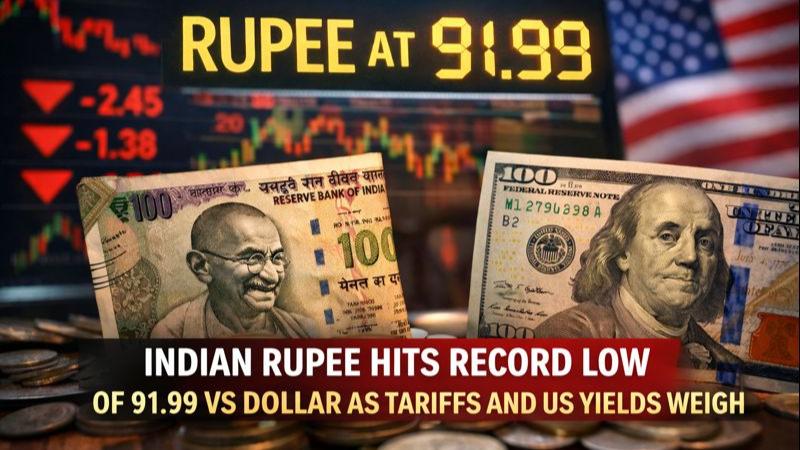
Indian rupee hits record low of 91.99 vs dollar as tariffs and US yields weigh
The Indian rupee weakened to a fresh all-time low of 91.99 against the US dollar on January 29, extending its recent slide amid persistent pressure from global and domestic factors. The currency has now fallen 2 percent so far this year and nearly 5 percent since the United States imposed higher tariffs on Indian merchandise exports. The sharp decline reflects continued weakness in foreign capital inflows and a surge in corporate demand for dollar hedging, which have outweighed the positive i
Indian rupee hits record low of 91.99 vs dollar as tariffs and US yields weigh
The Indian rupee weakened to a fresh all-time low of 91.99 against the US dollar on January 29, extending its recent slide amid persistent pressure from global and domestic factors. The currency has now fallen 2 percent so far this year and nearly 5 percent since the United States imposed higher tariffs on Indian merchandise exports. The sharp decline reflects continued weakness in foreign capital inflows and a surge in corporate demand for dollar hedging, which have outweighed the positive i
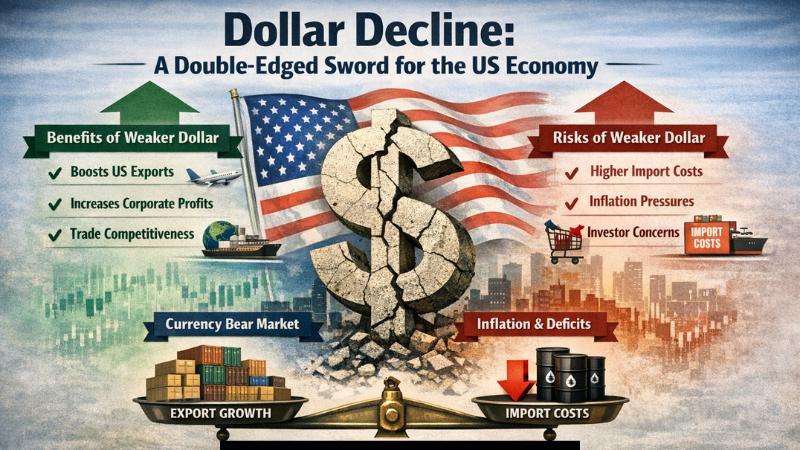
Dollar decline creates double-edged sword for US economy
The U.S. dollar has continued its recent decline, extending a trend that presents both opportunities and challenges for the American economy. President Donald Trump described the currency as “doing great,” reflecting his view that a moderately weaker dollar can provide strategic benefits in international trade. Despite this optimism, economists warn that the weakening greenback represents a “double-edged sword,” offering advantages to exporters while introducing risks related to inflatio
Dollar decline creates double-edged sword for US economy
The U.S. dollar has continued its recent decline, extending a trend that presents both opportunities and challenges for the American economy. President Donald Trump described the currency as “doing great,” reflecting his view that a moderately weaker dollar can provide strategic benefits in international trade. Despite this optimism, economists warn that the weakening greenback represents a “double-edged sword,” offering advantages to exporters while introducing risks related to inflatio
Gold Prices Hit Record Highs: What’s Fueling The Rally And What Lies Ahead
Gold prices are hovering near record highs across both global and domestic markets, supported by a rare convergence of powerful macroeconomic and geopolitical factors. Investors tracking precious metals are increasingly questioning whether the rally still has momentum left or if prices are nearing exhaustion after a sharp multi-year run. Market experts say the surge in gold prices is not being driven by a single trigger. Instead, a combination of safe-haven demand, aggressive centra
Gold Prices Hit Record Highs: What’s Fueling The Rally And What Lies Ahead
Gold prices are hovering near record highs across both global and domestic markets, supported by a rare convergence of powerful macroeconomic and geopolitical factors. Investors tracking precious metals are increasingly questioning whether the rally still has momentum left or if prices are nearing exhaustion after a sharp multi-year run. Market experts say the surge in gold prices is not being driven by a single trigger. Instead, a combination of safe-haven demand, aggressive centra
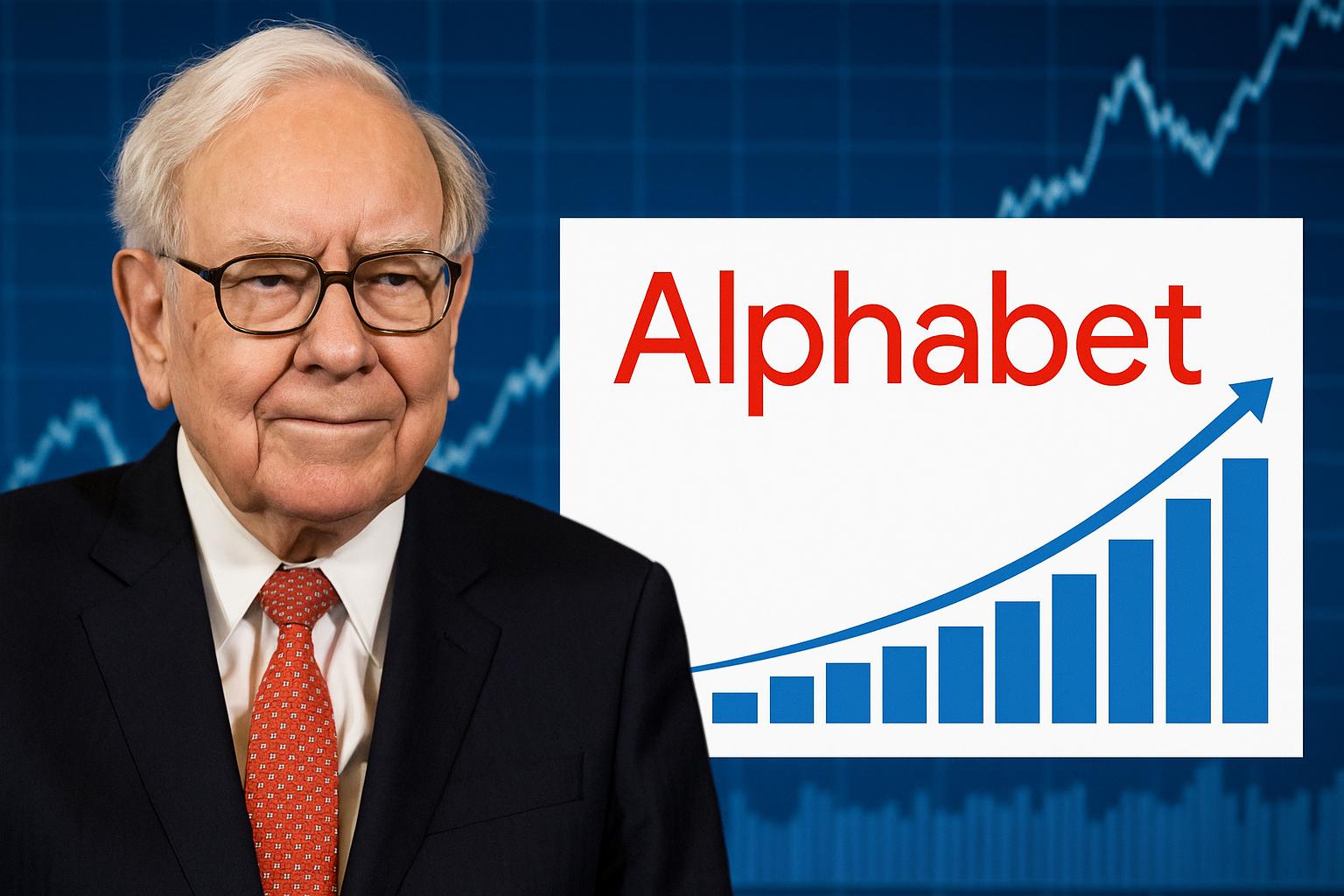
Buffett finally buys into Google parent Alphabet with multibillion-dollar stake
Warren Buffett has long admitted that one of his biggest investing oversights was failing to buy shares of Google in its early years. Two decades later, that regret has turned into action. Berkshire Hathaway has disclosed a new position in Alphabet Inc valued at approximately 4.3 billion US dollars, marking one of the most notable shifts in the firm’s long-standing investment philosophy. The announcement immediately boosted market sentiment around Alphabet, with shares rising after the fili
Buffett finally buys into Google parent Alphabet with multibillion-dollar stake
Warren Buffett has long admitted that one of his biggest investing oversights was failing to buy shares of Google in its early years. Two decades later, that regret has turned into action. Berkshire Hathaway has disclosed a new position in Alphabet Inc valued at approximately 4.3 billion US dollars, marking one of the most notable shifts in the firm’s long-standing investment philosophy. The announcement immediately boosted market sentiment around Alphabet, with shares rising after the fili