The Trump interest rate controversy has taken a new turn after Kevin Warsh firmly denied being pressured by US President Donald Trump regarding monetary policy. His testimony has sparked fresh debate over the independence of the Federal Reserve and political influence on economic decisions.
What happened and why it matters
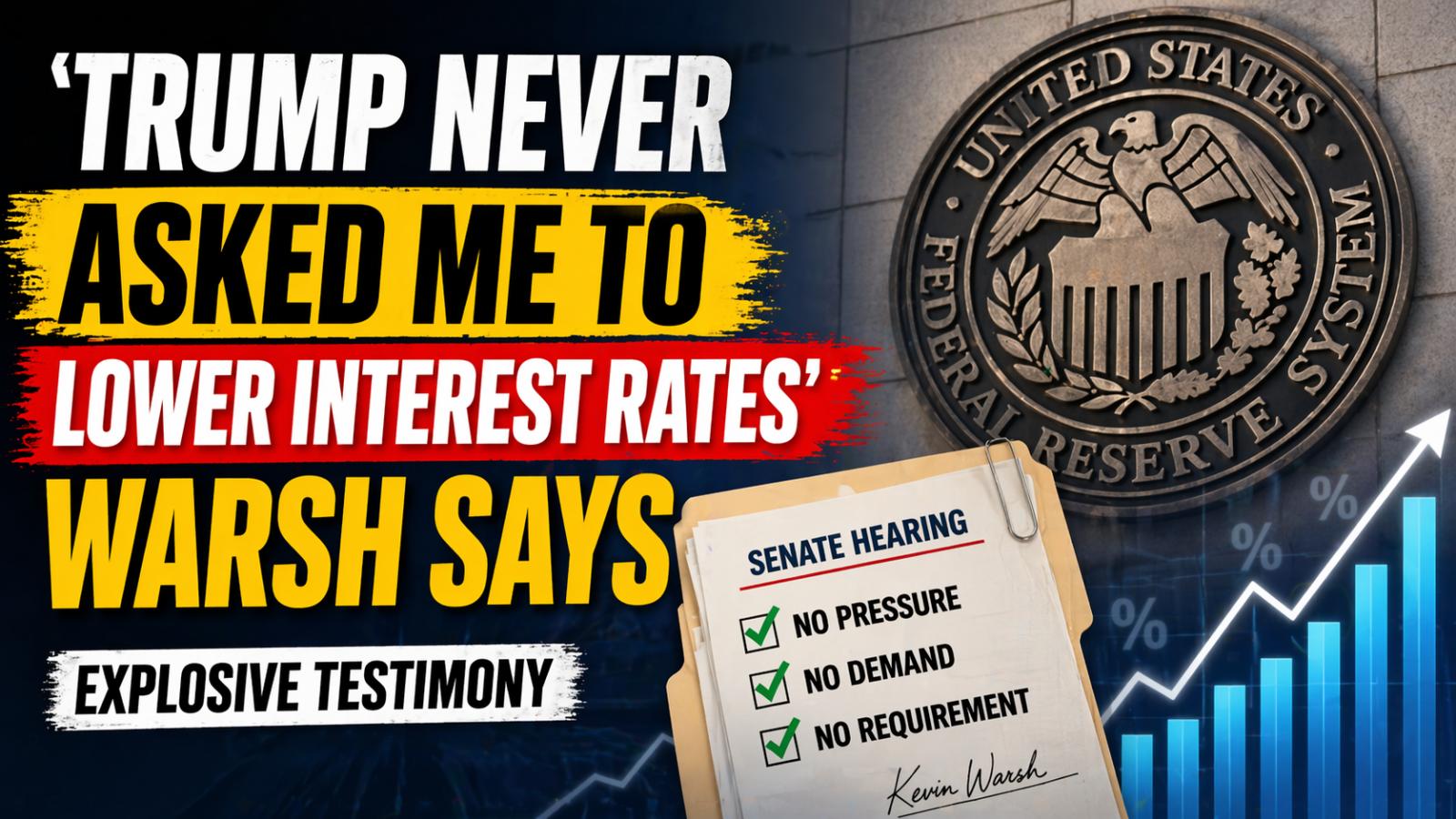
On April 22, 2026, Kevin Warsh stated during sworn testimony that Donald Trump never asked him to lower interest rates. Warsh made it clear that at no point did the president attempt to influence his decisions regarding monetary policy. This statement directly contradicts a recent report that suggested Trump had urged Warsh to cut rates if he were appointed as Federal Reserve chair. Responding to the claim, Warsh dismissed the report and questioned the credibility of the sources behind it. He emphasized that Trump neither demanded nor required any such action, adding that even if asked, he would not have complied.
Why this matters globally
The issue goes beyond political disagreement and touches on the credibility of the US financial system. The Federal Reserve plays a crucial role in managing inflation, employment, and economic stability. Any suggestion of political interference can impact investor confidence, financial markets, and global economic perceptions. Countries and markets worldwide closely watch US monetary policy, making such controversies highly significant. Maintaining the independence of the Federal Reserve is considered essential for ensuring stable and unbiased economic decisions.
Key details and background
During his testimony, Warsh strongly defended his position, stating that the president did not pressure him in any way. He also criticized the media report that claimed otherwise, suggesting inaccuracies in its sourcing. The exchange gained attention when Senator Ruben Gallego referenced the report, questioning Warsh about the alleged pressure. Warsh responded firmly, rejecting the claim and reinforcing his stance. Historically, tensions between political leaders and the Federal Reserve are not new. Past administrations have also faced scrutiny over attempts to influence monetary policy decisions.
What happens next
The controversy is likely to continue as lawmakers and analysts examine the broader implications of Warsh’s testimony. If further evidence emerges, it could either support or challenge his claims. The discussion may also influence future appointments to the Federal Reserve, as policymakers emphasize the need for independence and transparency.For now, the focus remains on whether this issue will have any lasting impact on public trust in economic institutions.
Expert insight / unique angle
From a broader perspective, this situation highlights the ongoing tension between politics and economic governance. While elected leaders may have policy preferences, institutions like the Federal Reserve are designed to operate independently. The debate also reflects growing public scrutiny of financial decision-making and the role of transparency in maintaining trust.In conclusion, the Trump interest rate controversy underscores the importance of protecting the independence of key economic institutions. Kevin Warsh’s testimony has added a new dimension to the debate, but questions remain. As discussions continue, the outcome could shape how political influence over monetary policy is viewed in the future.