#interestrates
Kevin Warsh Takes Over as Fed Chair as Trump Urges Independence
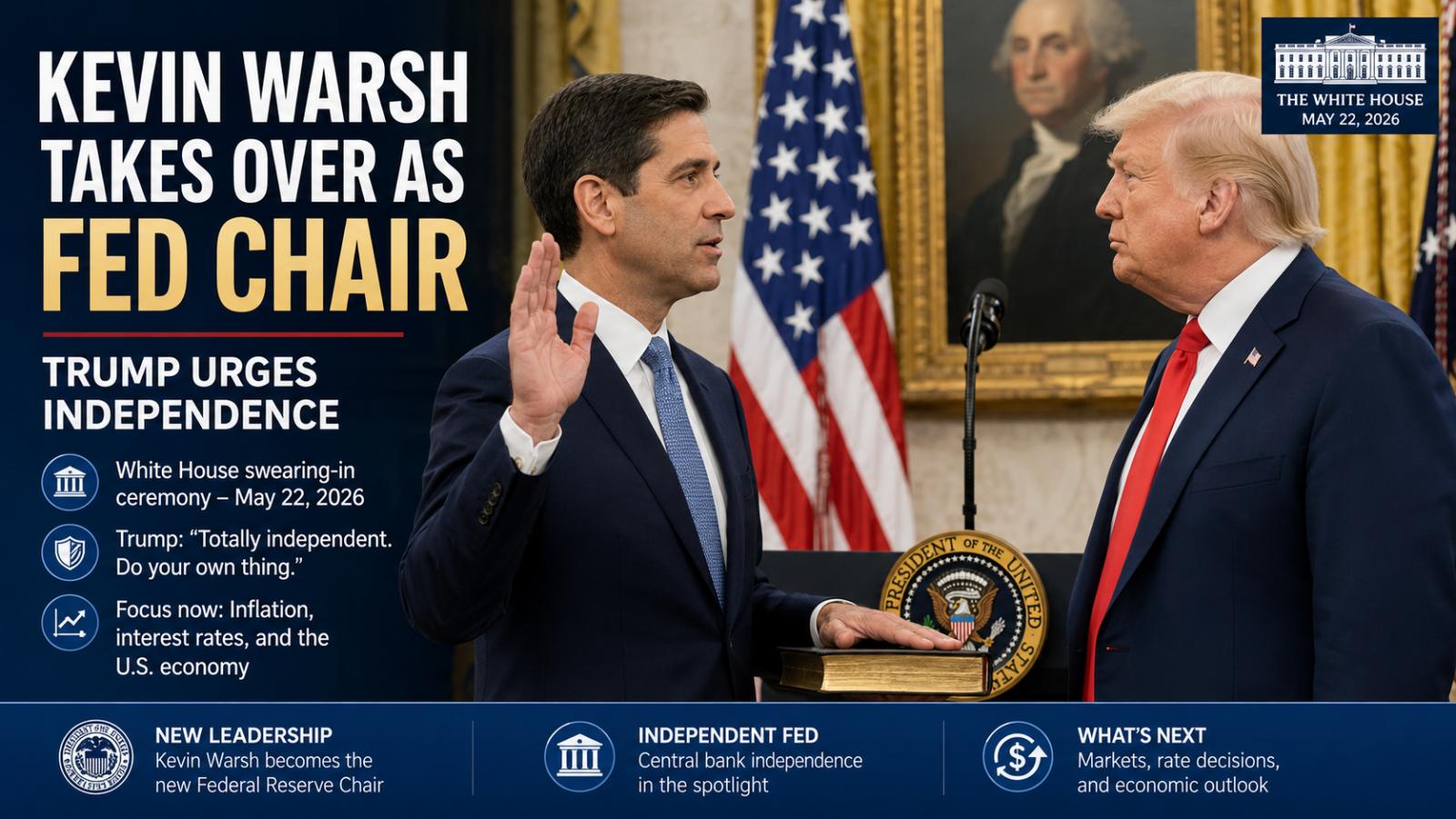
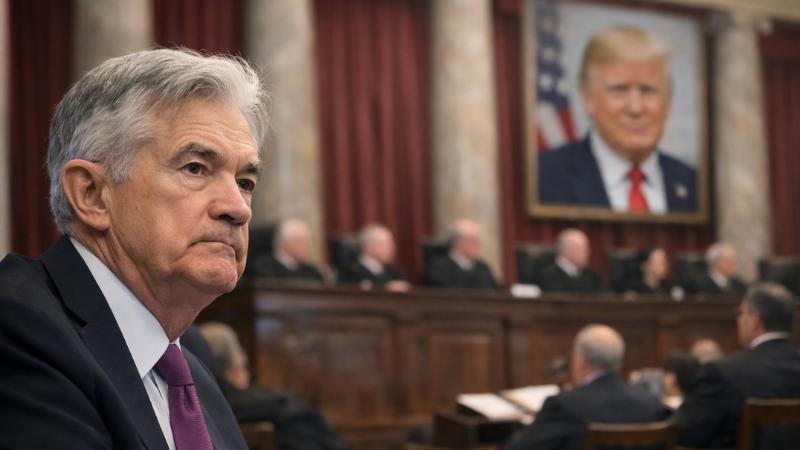
Kevin Warsh took over as Federal Reserve chair at a White House swearing-in ceremony on Friday, May 22, 2026, as President Donald Trump publicly urged him to lead the central bank independently. The transition places Warsh at the center of a politically sensitive moment for the Federal Reserve, with inflation, interest rates and central bank independence all under close national scrutiny. Trump Says Warsh Should Lead Without Political Pressure
Kevin Warsh Takes Over as Fed Chair as Trump Urges Independence
Kevin Warsh took over as Federal Reserve chair at a White House swearing-in ceremony on Friday, May 22, 2026, as President Donald Trump publicly urged him to lead the central bank independently. The transition places Warsh at the center of a politically sensitive moment for the Federal Reserve, with inflation, interest rates and central bank independence all under close national scrutiny. Trump Says Warsh Should Lead Without Political Pressure
Yen strengthens as Japan signals decisive currency action
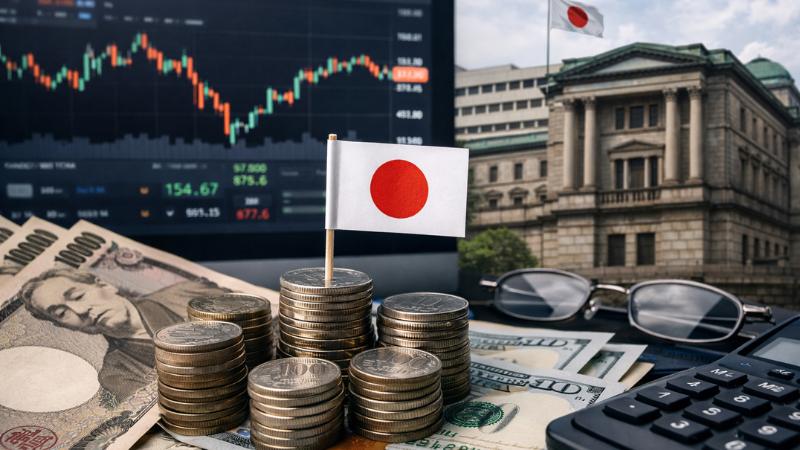
The Japanese yen recorded a sharp rise against the US dollar for the second consecutive day, drawing significant attention from global financial markets already focused on geopolitical tensions and rising oil prices. In early Asian trading on Monday, the yen surged nearly 0.9 percent within minutes of market opening, suggesting strong intervention signals from Japanese authorities. Market reports indicate that Japan may have injected approximately 5.48 trillion yen, equivalent to ab
Yen strengthens as Japan signals decisive currency action
The Japanese yen recorded a sharp rise against the US dollar for the second consecutive day, drawing significant attention from global financial markets already focused on geopolitical tensions and rising oil prices. In early Asian trading on Monday, the yen surged nearly 0.9 percent within minutes of market opening, suggesting strong intervention signals from Japanese authorities. Market reports indicate that Japan may have injected approximately 5.48 trillion yen, equivalent to ab
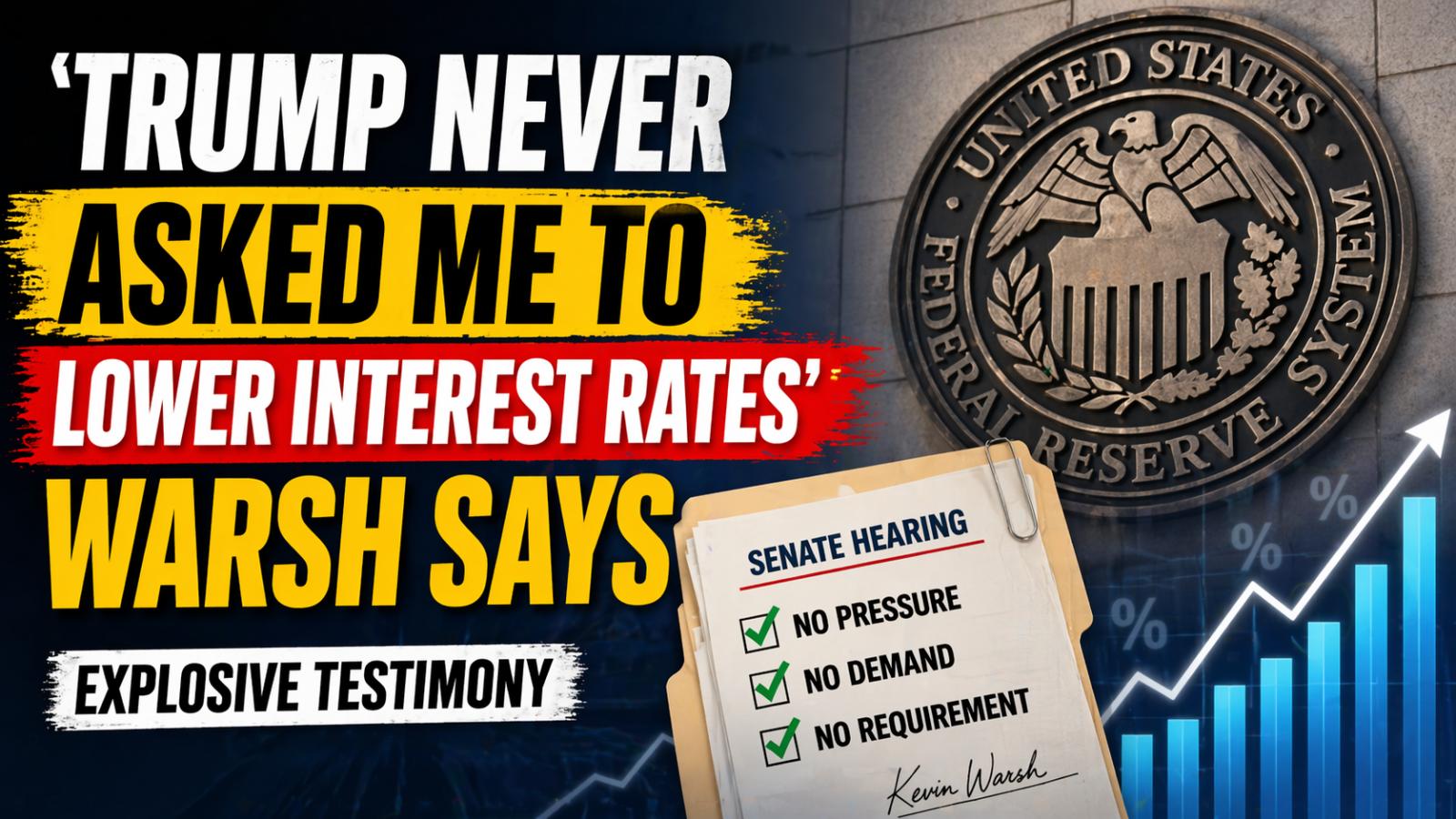
Trump interest rate controversy: Warsh denies pressure in explosive testimony
The Trump interest rate controversy has taken a new turn after Kevin Warsh firmly denied being pressured by US President Donald Trump regarding monetary policy. His testimony has sparked fresh debate over the independence of the Federal Reserve and political influence on economic decisions. What happened and why it matters On April 22, 2026, Kevin Warsh s
Trump interest rate controversy: Warsh denies pressure in explosive testimony
The Trump interest rate controversy has taken a new turn after Kevin Warsh firmly denied being pressured by US President Donald Trump regarding monetary policy. His testimony has sparked fresh debate over the independence of the Federal Reserve and political influence on economic decisions. What happened and why it matters On April 22, 2026, Kevin Warsh s
RBI Keeps Repo Rate Steady at 5.25% in First FY27 Monetary Policy
The Reserve Bank of India has kept the policy repo rate unchanged at 5.25% in its first monetary policy announcement for the financial year 2026–27. The decision was announced by RBI Governor Sanjay Malhotra following a detaile
RBI Keeps Repo Rate Steady at 5.25% in First FY27 Monetary Policy
The Reserve Bank of India has kept the policy repo rate unchanged at 5.25% in its first monetary policy announcement for the financial year 2026–27. The decision was announced by RBI Governor Sanjay Malhotra following a detaile
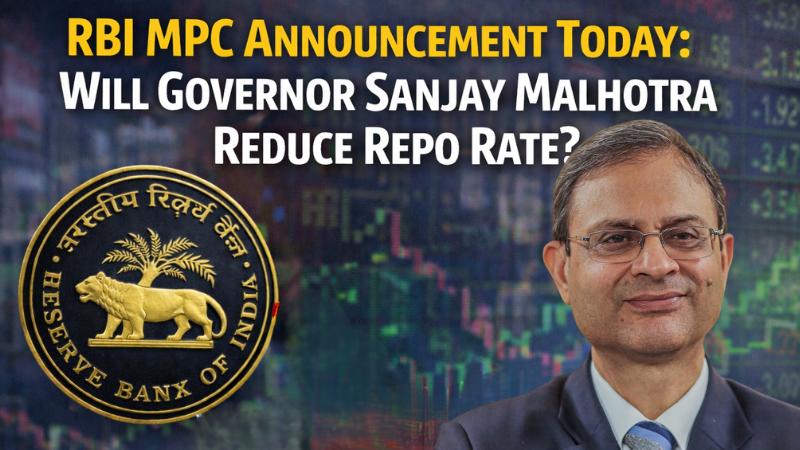
RBI MPC Announcement Today: Will Governor Sanjay Malhotra Reduce Repo Rate?
The Reserve Bank of India (RBI) will announce its latest monetary policy decision today, February 6, 2026, with markets largely expecting the central bank to keep the repo rate unchanged. This announcement follows a series of rate cuts, with the last one made in December 2025, reducing the repo rate from 5.50% to 5.25%. Experts predict that the RBI will maintain a pause in rate cuts as it assesses the impacts of the previous changes on inflation and growth. RBI Governor Sanjay Malho
RBI MPC Announcement Today: Will Governor Sanjay Malhotra Reduce Repo Rate?
The Reserve Bank of India (RBI) will announce its latest monetary policy decision today, February 6, 2026, with markets largely expecting the central bank to keep the repo rate unchanged. This announcement follows a series of rate cuts, with the last one made in December 2025, reducing the repo rate from 5.50% to 5.25%. Experts predict that the RBI will maintain a pause in rate cuts as it assesses the impacts of the previous changes on inflation and growth. RBI Governor Sanjay Malho
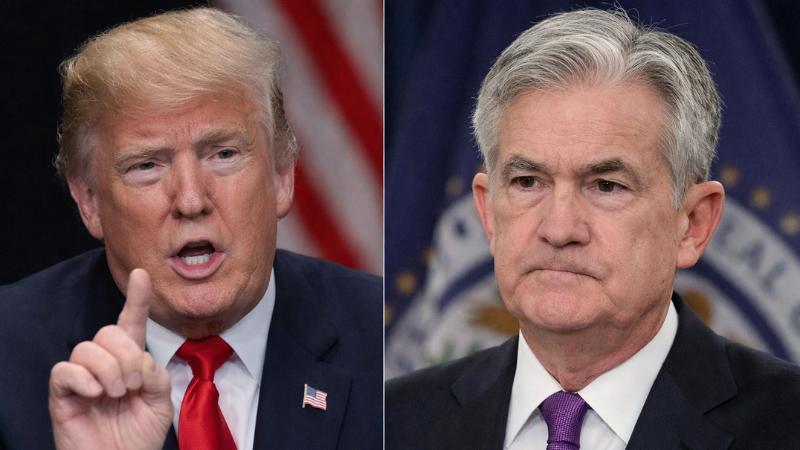
Trump criticizes Fed chair Powell over interest rates after FOMC decision
US President Donald Trump sharply criticized Federal Reserve Chair Jerome Powell on Thursday following the central bank’s decision to leave interest rates unchanged, accusing him of delaying necessary rate cuts and undermining the nation’s economic strength, national security and global competitiveness. The comments came shortly after the Federal Open Market Committee announced it would maintain its benchmark interest rate, a move that aligned with market expectations but drew strong poli
Trump criticizes Fed chair Powell over interest rates after FOMC decision
US President Donald Trump sharply criticized Federal Reserve Chair Jerome Powell on Thursday following the central bank’s decision to leave interest rates unchanged, accusing him of delaying necessary rate cuts and undermining the nation’s economic strength, national security and global competitiveness. The comments came shortly after the Federal Open Market Committee announced it would maintain its benchmark interest rate, a move that aligned with market expectations but drew strong poli
Fed chair to attend Supreme Court arguments in Trump challenge over governor removal
Federal Reserve Chair Jerome Powell is expected to attend oral arguments at the Supreme Court on Wednesday in a closely watched case challenging President Donald Trump’s authority to remove a sitting member of the central bank’s governing board. The case centers on Trump’s attempt to dismiss Federal Reserve Governor Lisa Cook, a move that has raised fundamental questions about the independence of the nation’s monetary policymaker. Powell’s decision to be present for the arguments is unusual for a sitting Fed chair, underscoring the significance the central bank places on the outcome. Within the Federal Reserve, the dispute is widely viewed as having far-reaching implications for the institution’s autonomy and its ability to conduct monetary policy without political interference. The case asks whether a president can remove a Federal Reserve governor outside the narrow circumstances traditionally allowed by law. The backdrop to the Supreme Court proceedings includes heightened scrutiny of Powell himself. Earlier this year, the Fed chair disclosed that he is the subject of a criminal investigation by the U.S. Attorney’s Office related to a multi-billion-dollar renovation of the Federal Reserve’s headquarters and statements he made to Congress about the project. Powell has said the investigation is being used as a pretext tied to policy disagreements, particularly the Fed’s refusal to reduce interest rates as aggressively as the White House sought last year. In a rare public statement issued in January, Powell argued that the threat of criminal charges stems from the Federal Reserve’s mandate to set interest rates based on its assessment of what best serves the public interest, rather than political preferences. He emphasized that the central bank’s decisions are made collectively by the Board of Governors and are guided by economic data and long-term stability considerations. The legal fight began after Trump announced in August that he was firing Cook from the seven-member Federal Reserve Board, alleging mortgage fraud connected to two homes she owns. Cook has denied any wrongdoing and has not been charged with a crime. She subsequently filed suit in federal court in Washington, seeking to block her removal and arguing that the president lacked cause under the law to dismiss her. A federal district judge issued an injunction in September preventing Cook’s removal while the case proceeds, a decision later upheld by a federal appeals court. Those rulings kept Cook in her post and set the stage for the administration’s appeal to the Supreme Court. In filings before the high court, the Department of Justice has argued that the lower court orders amount to improper judicial interference with the president’s removal authority. The government contends that the Constitution grants the president broad power to remove executive branch officials, including members of the Federal Reserve Board, for cause. Opponents of that view warn that allowing such removals could undermine the central bank’s independence and expose monetary policy to political pressure. The Supreme Court’s decision could therefore reshape the balance of power between the White House and the Federal Reserve, with potential consequences for interest rate policy, financial markets, and the broader economy. As the justices prepare to hear arguments, Powell’s attendance signals how consequential the case is for the Federal Reserve’s leadership. The ruling, expected later this year, is likely to define the limits of presidential authority over one of the country’s most influential economic institutions.
Fed chair to attend Supreme Court arguments in Trump challenge over governor removal
Federal Reserve Chair Jerome Powell is expected to attend oral arguments at the Supreme Court on Wednesday in a closely watched case challenging President Donald Trump’s authority to remove a sitting member of the central bank’s governing board. The case centers on Trump’s attempt to dismiss Federal Reserve Governor Lisa Cook, a move that has raised fundamental questions about the independence of the nation’s monetary policymaker. Powell’s decision to be present for the arguments is unusual for a sitting Fed chair, underscoring the significance the central bank places on the outcome. Within the Federal Reserve, the dispute is widely viewed as having far-reaching implications for the institution’s autonomy and its ability to conduct monetary policy without political interference. The case asks whether a president can remove a Federal Reserve governor outside the narrow circumstances traditionally allowed by law. The backdrop to the Supreme Court proceedings includes heightened scrutiny of Powell himself. Earlier this year, the Fed chair disclosed that he is the subject of a criminal investigation by the U.S. Attorney’s Office related to a multi-billion-dollar renovation of the Federal Reserve’s headquarters and statements he made to Congress about the project. Powell has said the investigation is being used as a pretext tied to policy disagreements, particularly the Fed’s refusal to reduce interest rates as aggressively as the White House sought last year. In a rare public statement issued in January, Powell argued that the threat of criminal charges stems from the Federal Reserve’s mandate to set interest rates based on its assessment of what best serves the public interest, rather than political preferences. He emphasized that the central bank’s decisions are made collectively by the Board of Governors and are guided by economic data and long-term stability considerations. The legal fight began after Trump announced in August that he was firing Cook from the seven-member Federal Reserve Board, alleging mortgage fraud connected to two homes she owns. Cook has denied any wrongdoing and has not been charged with a crime. She subsequently filed suit in federal court in Washington, seeking to block her removal and arguing that the president lacked cause under the law to dismiss her. A federal district judge issued an injunction in September preventing Cook’s removal while the case proceeds, a decision later upheld by a federal appeals court. Those rulings kept Cook in her post and set the stage for the administration’s appeal to the Supreme Court. In filings before the high court, the Department of Justice has argued that the lower court orders amount to improper judicial interference with the president’s removal authority. The government contends that the Constitution grants the president broad power to remove executive branch officials, including members of the Federal Reserve Board, for cause. Opponents of that view warn that allowing such removals could undermine the central bank’s independence and expose monetary policy to political pressure. The Supreme Court’s decision could therefore reshape the balance of power between the White House and the Federal Reserve, with potential consequences for interest rate policy, financial markets, and the broader economy. As the justices prepare to hear arguments, Powell’s attendance signals how consequential the case is for the Federal Reserve’s leadership. The ruling, expected later this year, is likely to define the limits of presidential authority over one of the country’s most influential economic institutions.
Japan central bank eyes rate increase amid inflation and weak growth
Japan’s central bank on Thursday began its final policy meeting of the year, with markets widely expecting a further increase in benchmark interest rates as officials continue the gradual shift away from years of ultra-loose monetary policy. The decision, scheduled to be announced on Friday, could mark the highest borrowing costs Japan has seen in three decades, underscoring the Bank of Japan’s determination to normalize policy amid persistent inflation pressures. Market pricing

Japan central bank eyes rate increase amid inflation and weak growth
Japan’s central bank on Thursday began its final policy meeting of the year, with markets widely expecting a further increase in benchmark interest rates as officials continue the gradual shift away from years of ultra-loose monetary policy. The decision, scheduled to be announced on Friday, could mark the highest borrowing costs Japan has seen in three decades, underscoring the Bank of Japan’s determination to normalize policy amid persistent inflation pressures. Market pricing

Gold Prices Dip From Record High As Dollar Gains And Fed Signals Stir Market
Gold, the most closely watched safe-haven asset, slipped from its record peak this week, sparking fresh debate among investors and traders. The decline in 22-carat and 24-carat gold prices has been tied to three key factors: the strengthening US dollar, cautious Federal Reserve signals, and anticipation around upcoming economic data. Despite the retreat, gold remains under the spotlight as global uncertainty keeps demand resilient.
Gold Prices Dip From Record High As Dollar Gains And Fed Signals Stir Market
Gold, the most closely watched safe-haven asset, slipped from its record peak this week, sparking fresh debate among investors and traders. The decline in 22-carat and 24-carat gold prices has been tied to three key factors: the strengthening US dollar, cautious Federal Reserve signals, and anticipation around upcoming economic data. Despite the retreat, gold remains under the spotlight as global uncertainty keeps demand resilient.
Appeals court rules Lisa Cook can stay at Federal Reserve despite Trump effort to remove her
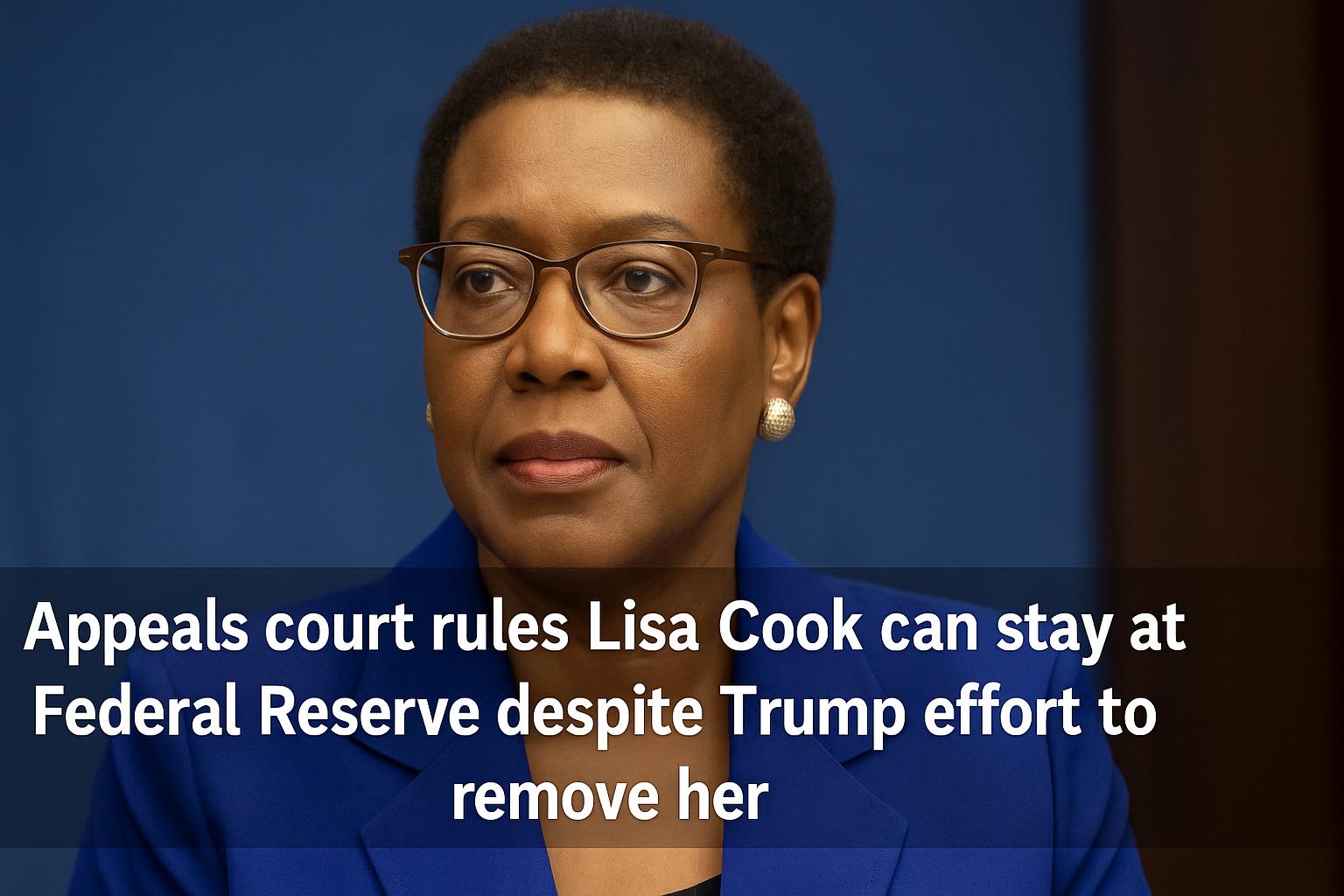
A federal appeals court has ruled that Lisa Cook, a governor at the United States Federal Reserve, will remain in her position for now despite efforts by former President Donald Trump to remove her. The ruling from the US Court of Appeals for the District of Columbia Circuit came just before a major Federal Reserve meeting scheduled to begin on Tuesday, where policymakers are expected to weigh critical decisions on interest rates. Trump has sought to dismiss Cook from her role, accu
Appeals court rules Lisa Cook can stay at Federal Reserve despite Trump effort to remove her
A federal appeals court has ruled that Lisa Cook, a governor at the United States Federal Reserve, will remain in her position for now despite efforts by former President Donald Trump to remove her. The ruling from the US Court of Appeals for the District of Columbia Circuit came just before a major Federal Reserve meeting scheduled to begin on Tuesday, where policymakers are expected to weigh critical decisions on interest rates. Trump has sought to dismiss Cook from her role, accu
US-China 90-day tariff truce lifts global markets as inflation data weakens dollar
Markets across the globe rallied after a major breakthrough in US-China trade relations led to a temporary easing of tariffs, injecting optimism into an environment recently weighed down by economic uncertainty. A new agreement between the two economic giants saw both sides commit to a 90-day reduction in tariffs, effectively pausing years of escalating trade hostilities. The United States agreed to cut tariffs on Chinese imports from 145% to 30%, while China responded by lowering its tariffs on
US-China 90-day tariff truce lifts global markets as inflation data weakens dollar
Markets across the globe rallied after a major breakthrough in US-China trade relations led to a temporary easing of tariffs, injecting optimism into an environment recently weighed down by economic uncertainty. A new agreement between the two economic giants saw both sides commit to a 90-day reduction in tariffs, effectively pausing years of escalating trade hostilities. The United States agreed to cut tariffs on Chinese imports from 145% to 30%, while China responded by lowering its tariffs on
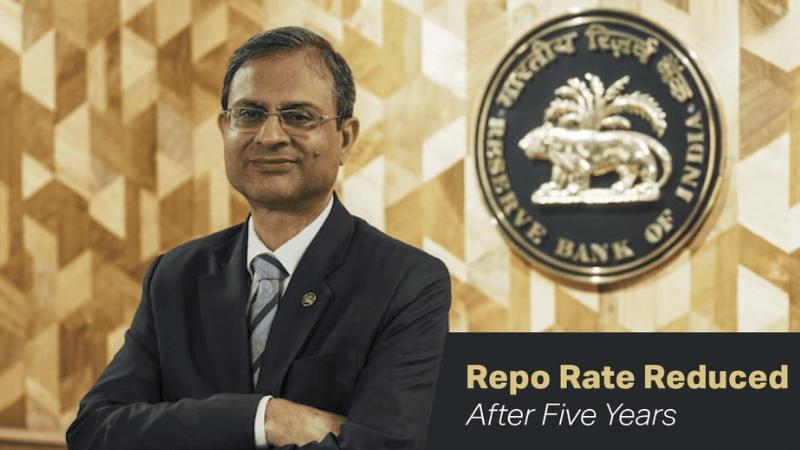
RBI Cuts Interest Rate by 25 bps: Impact on Markets, Banking & Economy
The Reserve Bank of India (RBI) announced a 25 basis points cut in the benchmark interest rate, marking its first reduction in five years. The decision, led by Governor Sanjay Malhotra, aims to boost economic activity but was met with mixed reactions from investors. Despite expectations of a rate cut, the market remained cautious as the RBI maintained a neutral stance without introducing additional liquidity measures. Foreign Institutional Investors (FIIs) continued outflows amid concerns ove
RBI Cuts Interest Rate by 25 bps: Impact on Markets, Banking & Economy
The Reserve Bank of India (RBI) announced a 25 basis points cut in the benchmark interest rate, marking its first reduction in five years. The decision, led by Governor Sanjay Malhotra, aims to boost economic activity but was met with mixed reactions from investors. Despite expectations of a rate cut, the market remained cautious as the RBI maintained a neutral stance without introducing additional liquidity measures. Foreign Institutional Investors (FIIs) continued outflows amid concerns ove