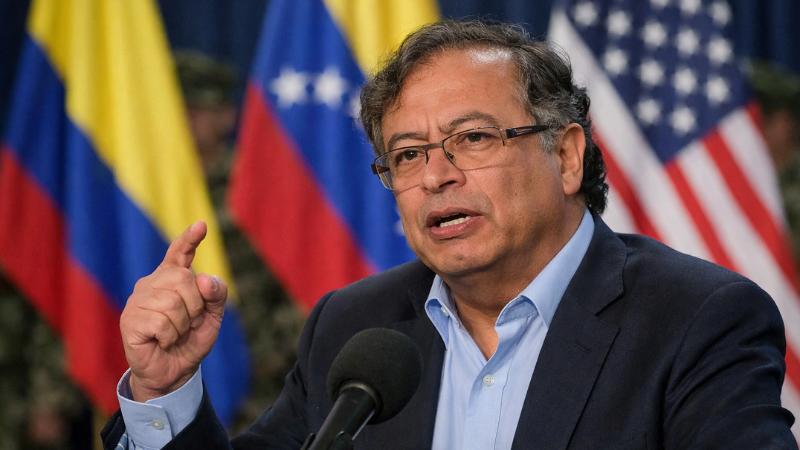
Colombian President Gustavo Petro on Monday issued a sharp response following reports that United States forces had captured Venezuelan President Nicolas Maduro, escalating already heightened tensions across Latin America. Petro’s remarks came in the wake of renewed warnings and threats from US President Donald Trump toward Venezuela, a country that has remained at the center of prolonged geopolitical friction in the region.
In a message posted on social media, Petro suggested he was prepared to take extreme measures in defense of regional sovereignty, stating that although he had once sworn never to bear arms again, he would reconsider that stance in defense of his homeland. The statement marked one of Petro’s most forceful reactions to Washington’s policies toward Venezuela and underscored the growing strain between Colombia and the United States.
The Colombian leader has repeatedly criticized what he views as unilateral American actions in Latin America, particularly those involving military force. Petro has argued that such interventions undermine international law and threaten the fragile stability of neighboring nations. His comments reflect broader concerns among several regional governments that the situation in Venezuela could trigger wider instability and civilian harm.
In a joint statement issued by the governments of Brazil, Chile, Colombia, Mexico, Uruguay, and Spain, regional leaders collectively expressed deep concern and rejection of the military actions carried out on Venezuelan territory. The statement emphasized that such actions contravene fundamental principles of international law, including the prohibition of the use or threat of force and the obligation to respect national sovereignty and territorial integrity as outlined in the Charter of the United Nations.
The declaration further warned that unilateral military interventions set a dangerous precedent for peace and regional security, placing civilian populations at heightened risk. The signatories reaffirmed Latin America and the Caribbean as a zone of peace, built on mutual respect, non-intervention, and the peaceful resolution of disputes. They also called for unity among regional governments, urging cooperation beyond political differences when faced with actions that could destabilize the region.
Petro reiterated that the crisis in Venezuela must be resolved exclusively through peaceful means. He stressed the importance of dialogue, negotiation, and respect for the will of the Venezuelan people, arguing that external interference only deepens divisions and prolongs conflict. According to the Colombian president, any sustainable and democratic outcome must emerge from an inclusive political process led by Venezuelans themselves and grounded in respect for human dignity.
As diplomatic reactions continue to unfold, Petro’s statements highlight the growing unease across Latin America regarding foreign military involvement and its potential consequences. The situation remains fluid, with regional leaders urging restraint and renewed diplomatic engagement to prevent further escalation and to safeguard long-term peace and stability in the hemisphere.