US President Donald Trump on Tuesday said that tariff threats played a decisive role in resolving several international conflicts during his tenure, claiming that economic pressure through trade measures helped prevent violence and bring rival nations to the negotiating table. In an interview with Fox Business, Trump asserted that at least six of what he described as eight wars were settled after he warned countries that they would face higher tariffs if hostilities continued.
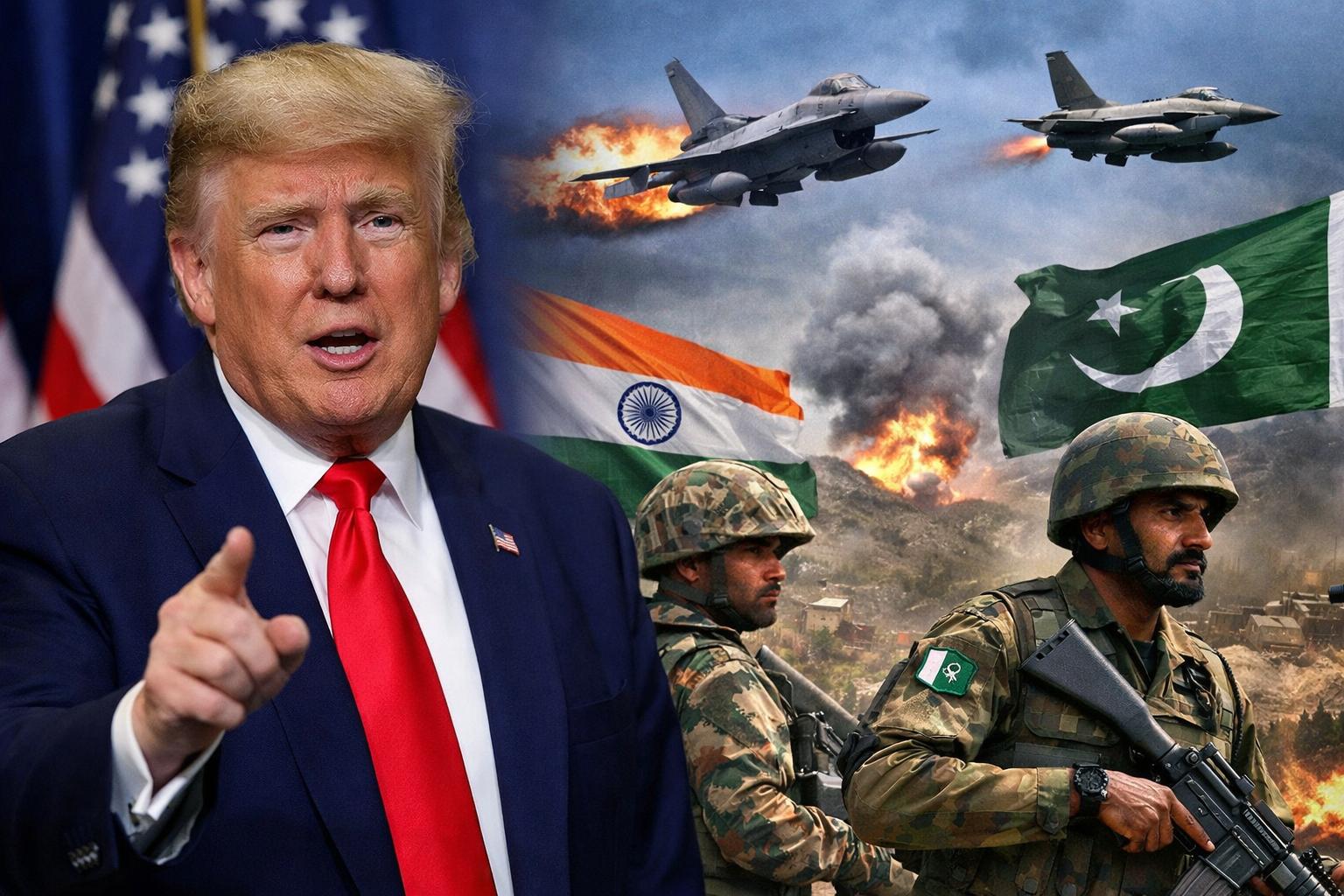
Among the examples he highlighted was the recent cross-border confrontation between nuclear-armed neighbors India and Pakistan. Trump maintained that the fighting, which lasted four days and included aerial engagements, was paused after he signaled potential trade penalties. According to the president, he told both sides that tariffs would be imposed if the violence did not stop, adding that he did not want to see further casualties or escalation.
Trump suggested that the standoff could have spiraled into a larger, potentially nuclear conflict without outside intervention. He claimed that multiple aircraft were shot down during the clashes and described the situation as rapidly intensifying before diplomatic efforts took hold. Even before the two governments formally announced a ceasefire, Trump said he shared news of a pause in fighting on social media and has since repeatedly cited the episode as evidence of his approach to trade diplomacy.
While Pakistan’s leadership has publicly acknowledged Trump’s role, with Prime Minister Shehbaz Sharif reportedly crediting the US president with saving lives, India has distanced itself from those assertions. New Delhi has maintained that its decisions were made independently and has not confirmed that tariff threats influenced its actions.
Trump framed the use of tariffs as a broader foreign policy tool, arguing that economic leverage can be more effective than military intervention. “If you don’t settle this war, you’re going to be charged,” he said, describing the strategy as a straightforward method to push adversaries toward negotiations. He added that without such measures, conflicts might have continued longer or escalated further.
The president’s remarks are consistent with a pattern of emphasizing trade as a mechanism for diplomacy. Observers note that Trump frequently repeats references to the India-Pakistan episode in public appearances, underscoring his belief that tariff pressure can deliver rapid outcomes. He also linked these efforts to his broader record on international peace, citing them as part of his pitch for recognition on the global stage, though the Nobel Peace Prize ultimately went to Venezuelan opposition leader María Corina Machado.
As debates continue over the effectiveness of tariffs in shaping geopolitical outcomes, Trump’s comments have renewed discussion about the role of economic tools in conflict resolution and the limits of trade-based diplomacy in managing complex regional tensions.