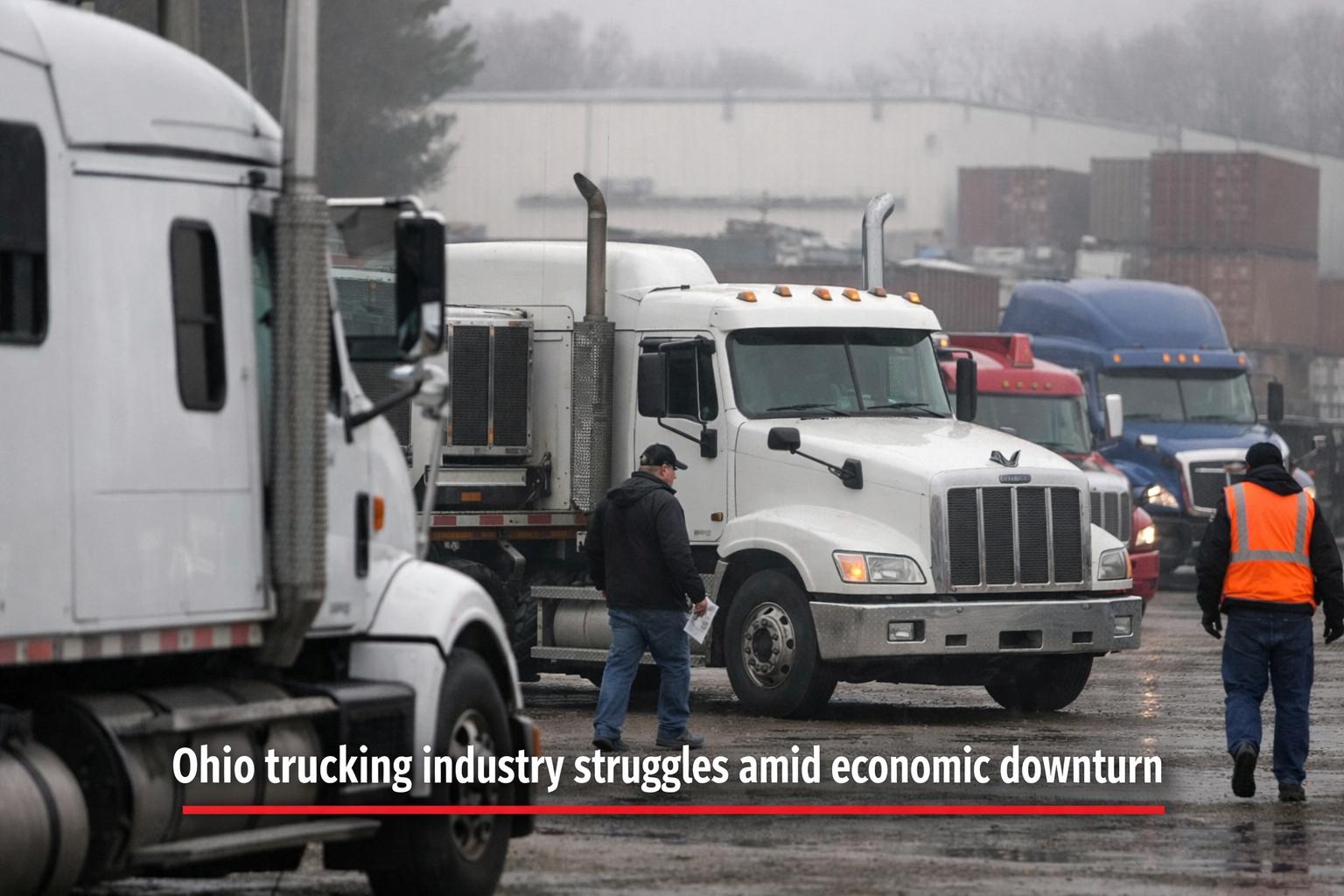
COLUMBUS, Ohio — Ohio’s central geographic position has long made it a cornerstone of the U.S. logistics network, with industry data indicating that nearly one in 14 jobs in the state is tied to trucking. More than 43,000 trucking companies operate across Ohio, reinforcing its role as a critical hub for freight movement and supply chain activity nationwide.
Industry leaders describe trucking as a demanding and highly competitive field, with relatively low barriers to entry allowing individuals and small operators to quickly launch businesses. While this accessibility has fueled growth, it has also raised concerns about safety standards and operational consistency across the sector.
The industry experienced a significant surge during the COVID-19 pandemic in 2020, when lockdowns drove unprecedented demand for shipping and freight services. As consumer demand increased, many new operators entered the market to capitalize on rising freight rates. However, as pandemic restrictions eased in 2021, market conditions shifted sharply.
Executives across the logistics sector say the industry has since entered a prolonged downturn, often described as a trucking recession now extending into its fourth year. The imbalance between available trucks and freight demand has driven rates downward, with some companies reporting earnings reductions of 10% to 25% compared to pre-pandemic levels.
Rising operational costs, including fuel, insurance, and equipment maintenance, have further strained profitability. Industry leaders also point to the presence of operators cutting corners on safety and insurance requirements, offering lower prices that undercut compliant businesses and intensify competition.
Tariff policies have added another layer of uncertainty, with shifting trade conditions impacting shipping costs and business planning. Executives note that unclear policy direction can cause companies to delay investments or expansion decisions, further slowing growth in the logistics sector.
By the first half of 2024, more than 10,000 U.S. trucking carriers had gone out of business, with closures continuing into 2025, though at a slower pace. Despite this contraction, many companies report that financial pressures remain high, with revenues struggling to keep pace with rising expenses.
Industry experts emphasize that trucking remains a foundational component of the U.S. economy, responsible for moving goods essential to daily life. Even amid ongoing challenges, the sector’s performance continues to reflect broader economic conditions, underscoring its importance to national supply chains and consumer markets.
Industry leaders describe trucking as a demanding and highly competitive field, with relatively low barriers to entry allowing individuals and small operators to quickly launch businesses. While this accessibility has fueled growth, it has also raised concerns about safety standards and operational consistency across the sector.
The industry experienced a significant surge during the COVID-19 pandemic in 2020, when lockdowns drove unprecedented demand for shipping and freight services. As consumer demand increased, many new operators entered the market to capitalize on rising freight rates. However, as pandemic restrictions eased in 2021, market conditions shifted sharply.
Executives across the logistics sector say the industry has since entered a prolonged downturn, often described as a trucking recession now extending into its fourth year. The imbalance between available trucks and freight demand has driven rates downward, with some companies reporting earnings reductions of 10% to 25% compared to pre-pandemic levels.
Rising operational costs, including fuel, insurance, and equipment maintenance, have further strained profitability. Industry leaders also point to the presence of operators cutting corners on safety and insurance requirements, offering lower prices that undercut compliant businesses and intensify competition.
Tariff policies have added another layer of uncertainty, with shifting trade conditions impacting shipping costs and business planning. Executives note that unclear policy direction can cause companies to delay investments or expansion decisions, further slowing growth in the logistics sector.
By the first half of 2024, more than 10,000 U.S. trucking carriers had gone out of business, with closures continuing into 2025, though at a slower pace. Despite this contraction, many companies report that financial pressures remain high, with revenues struggling to keep pace with rising expenses.
Industry experts emphasize that trucking remains a foundational component of the U.S. economy, responsible for moving goods essential to daily life. Even amid ongoing challenges, the sector’s performance continues to reflect broader economic conditions, underscoring its importance to national supply chains and consumer markets.