Tier-II and Tier-III Cities Power India’s Consumer Growth
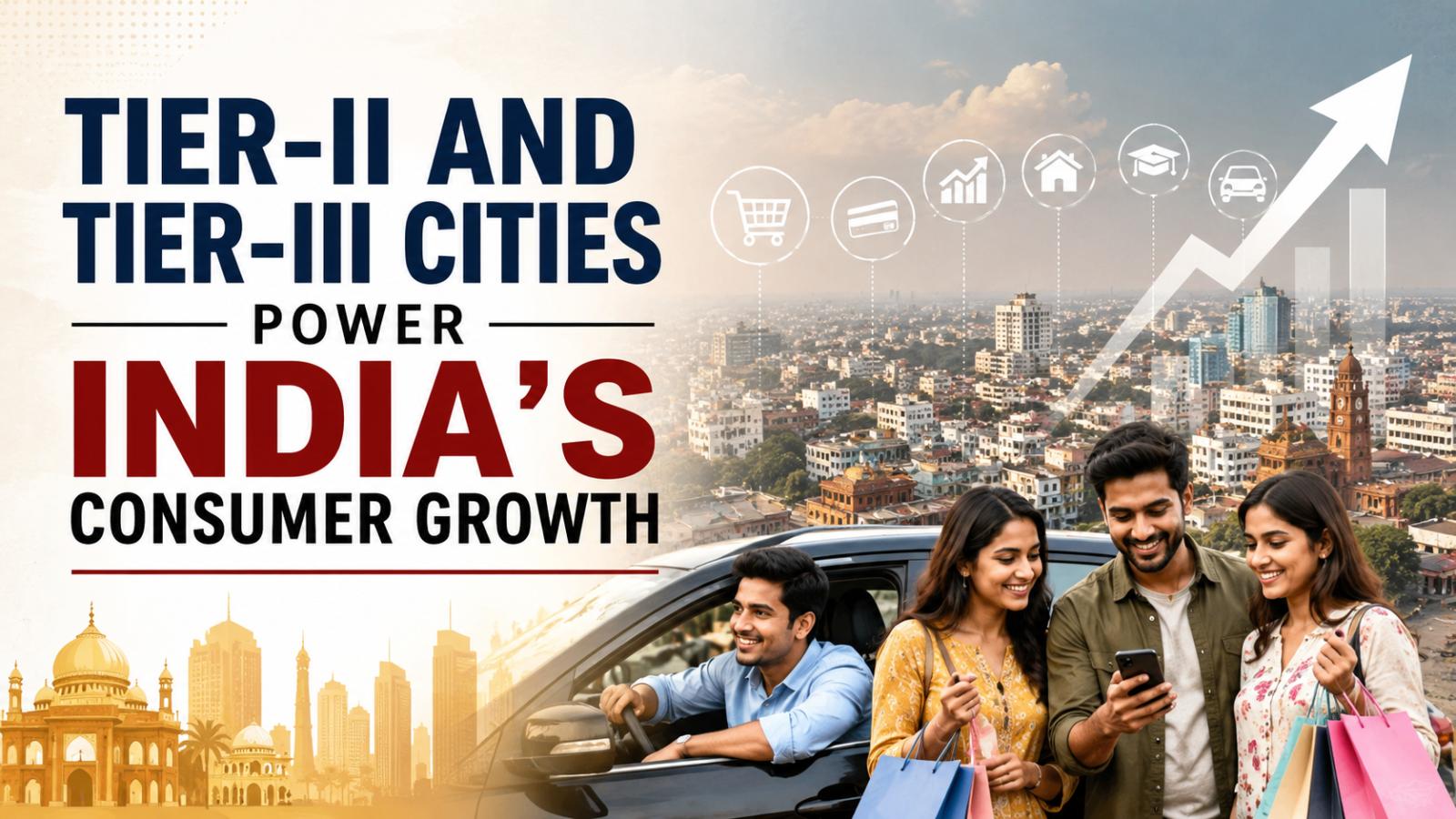
Tier-II and Tier-III cities are becoming major centres of India’s consumer economy. Cities such as Lucknow, Jaipur, Indore, Surat, Patna and Bhopal are developing distinct spending patterns shaped by rising incomes, better employment opportunities and changing aspirations. Demand is growing across automobiles, housing, healthcare, education, financial services and travel. According to the Urban Bharat – India’s Consumption Story report by Dainik Bhaskar Group and Kantar, nearly one-third of urban Indians live in Urban Bharat markets. The affluent population in these cities has grown by 76% in six years, while the share of affluent households has increased from 26% to 41%. Nearly 60% of the population is below 35, creating a large base of young consumers in their prime earning and spending years.
Digital adoption has accelerated this shift. Debit and credit card ownership has more than doubled in six years, and one in three Urban Bharat consumers now shops online. Digital payments, banking apps, investment platforms, e-commerce and regional-language services have expanded access to products and financial tools. Technology is also creating new income opportunities through online selling, freelancing, content creation and small businesses. Premium spending is rising as consumers increasingly choose branded fashion, electronics, vehicles, beauty products and travel experiences, while remaining focused on value and quality.
Housing and education are also major spending priorities. Property prices in several smaller-city markets have increased two to three times over the past decade, supported by strong demand for homeownership and improved living standards. More than 27% of households spend over 10% of their income on education, showing a strong willingness to invest in schools, coaching and professional courses. The Urban Bharat City Opportunity Index, which ranks 50 major consumption markets, shows why companies can no longer rely only on metro-focused strategies. Brands that use regional-language communication, affordable premium products, strong digital distribution and localised marketing will be better placed to benefit from India’s next consumption boom.