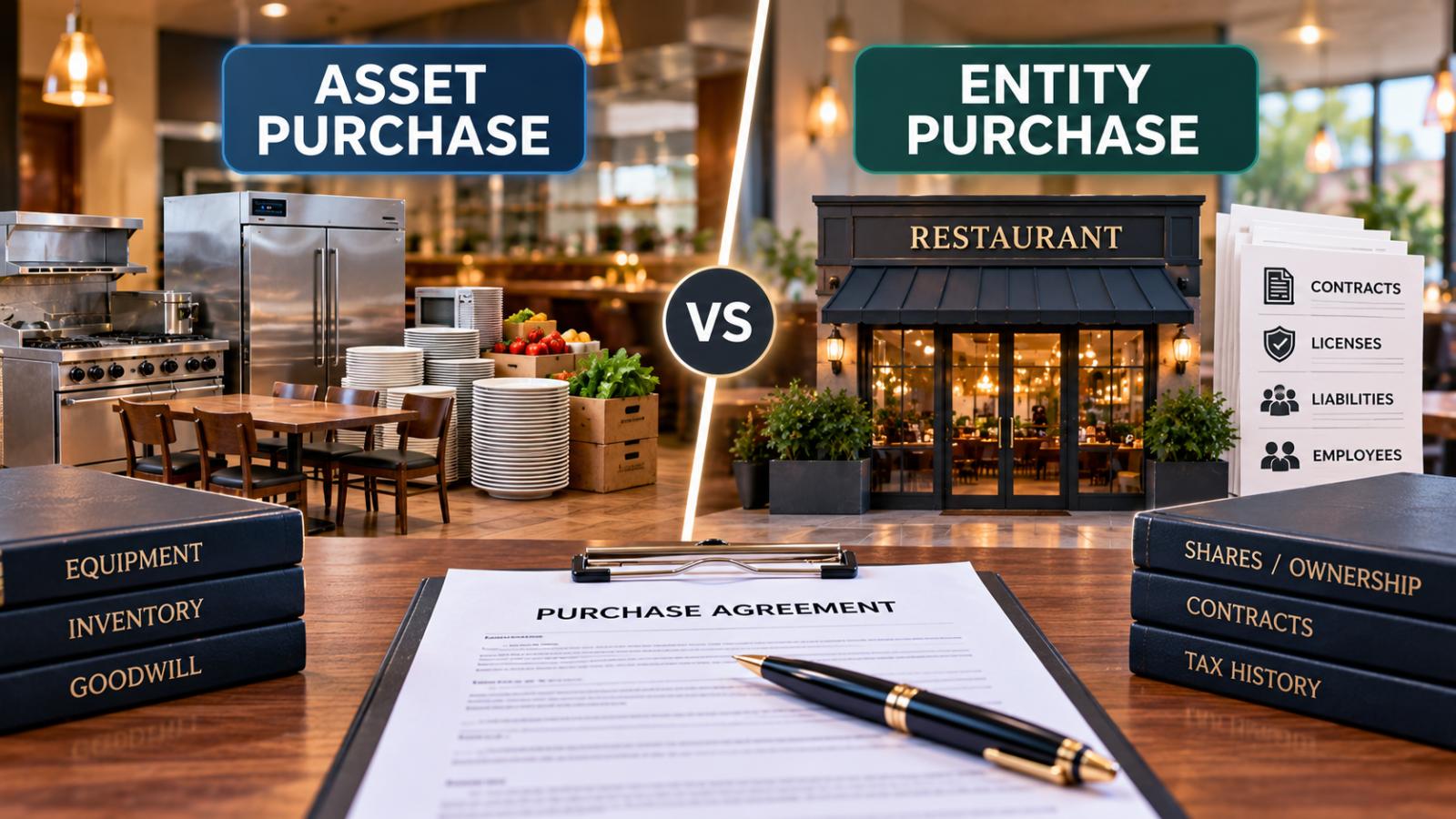
Restaurant asset purchase vs entity purchase can significantly change what an NRI buyer acquires. Equipment, inventory, goodwill, contracts, liabilities and tax treatment must be identified before closing an existing U.S. restaurant acquisition.
A restaurant advertised “for sale” does not necessarily mean every buyer is purchasing the same thing. The transaction may involve selected business assets or ownership interests in the company operating the restaurant, and buyers should understand the distinction before signing.
What Is a Restaurant Asset Purchase?
In an asset purchase, the agreement identifies the assets the buyer will acquire. These can include kitchen equipment, furniture, inventory, intellectual property, goodwill and other agreed business assets.
For federal tax purposes, the IRS generally treats the sale of a business as the sale of its individual assets rather than one single asset. Different assets can receive different tax treatment.
A buyer should verify exactly which assets are included and whether leases, contracts, licenses or other rights require separate transfer or approval.
What Is an Entity Purchase?
An entity purchase generally involves acquiring ownership interests in the existing company, such as corporate shares or LLC membership interests, rather than separately purchasing selected restaurant assets.
Because the operating company continues to exist, buyers must examine its debts, tax history, contracts, employee obligations and other potential liabilities carefully. The transaction structure and state law can affect the final result, making legal due diligence particularly important.
Purchase Price Allocation Matters
When qualifying business assets are transferred in an applicable asset acquisition, the IRS requires the consideration to be allocated among different asset classes using the residual method.
Equipment, inventory, certain intangible assets and goodwill may therefore receive separate allocations. The buyer and seller generally report qualifying allocations on Form 8594, Asset Acquisition Statement.
Check Contracts, Leases and Licenses
Buying restaurant equipment does not necessarily mean every operating right automatically transfers. Buyers should investigate the lease, supplier agreements, licenses, permits, existing cash flow and inventory.
The Small Business Administration recommends reviewing these areas and conducting a thorough investigation before purchasing an existing business. It also recommends considering professional assistance from an attorney and accountant.
The Purchase Agreement Must Be Specific
The agreement should clearly describe what is being purchased, how the price is allocated, which obligations are assumed and what must happen before closing.
For an NRI restaurant buyer, choosing between an asset and entity transaction should follow financial, tax and legal review rather than relying on how the seller describes the business listing.