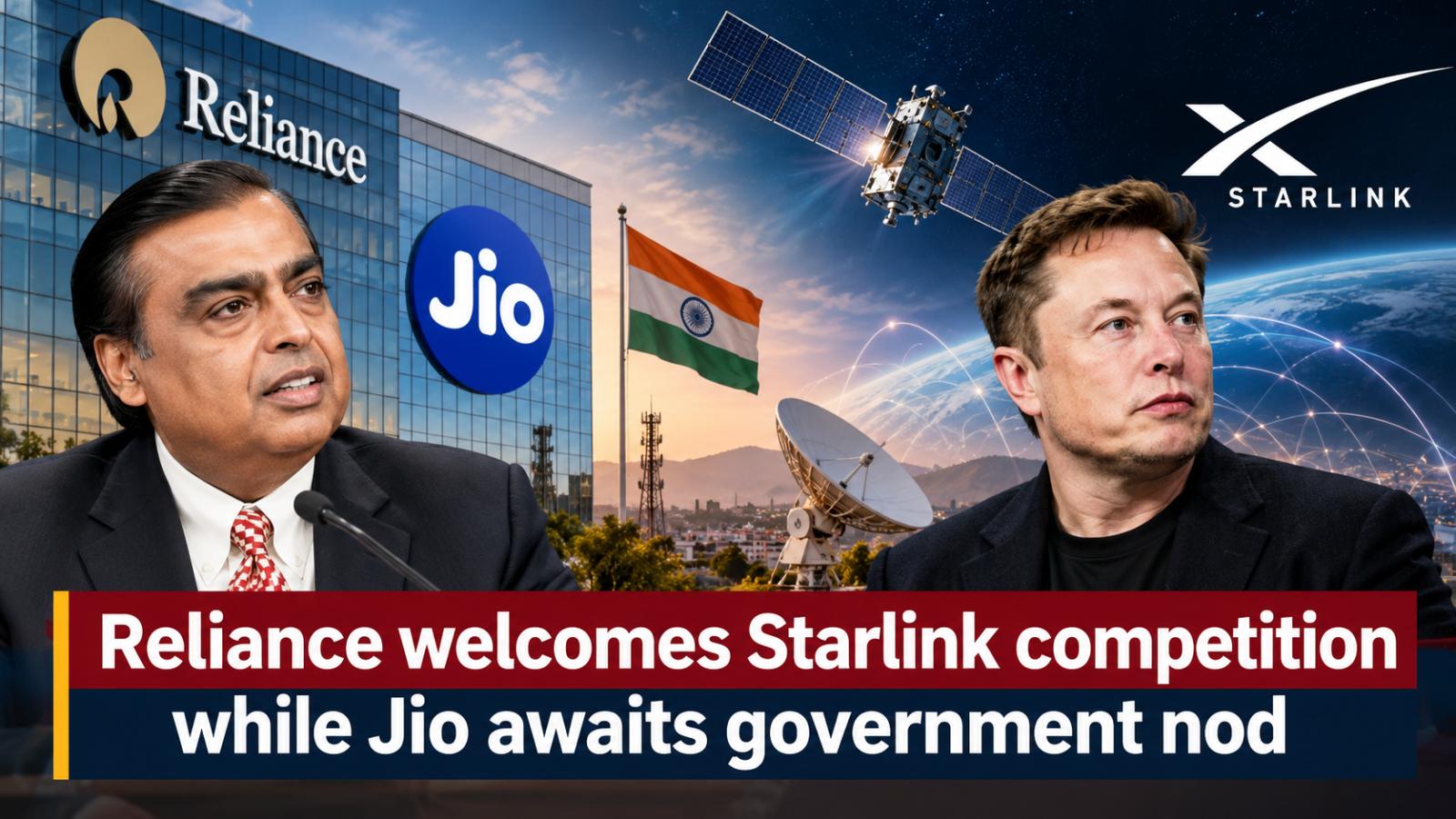
Reliance Industries has made its position clear on Elon Musk's Starlink entering India, saying it welcomes competition in the country's growing satellite internet market. The company also revealed that its own Jio satellite services are awaiting government clearances, emphasizing that all operators must follow the same regulations.
The statement, released on October 16, 2026, comes after Musk accused powerful business interests of creating obstacles to Starlink's commercial launch in India. Reliance rejected the suggestion that it fears competition, arguing that fair market access and compliance with Indian laws must go hand in hand.
The exchange has brought fresh attention to India's satellite broadband sector, where global technology companies and established telecom operators are preparing to compete for customers.
Starlink India launch dispute puts telecom competition in focus
The ongoing disagreement between Elon Musk and Reliance Industries has raised questions about competition in India's telecommunications industry.Musk recently criticized what he described as attempts to prevent Starlink from competing with established telecom companies. He argued that allowing additional providers into the market would give Indian consumers more choices and potentially improve broadband connectivity.
The SpaceX chief executive also questioned whether influential domestic business interests were contributing to delays in Starlink's commercial rollout.Responding to these allegations, Reliance Industries said it has never been afraid of competition. The company pointed to Jio's entry into India's telecom market in 2016, when it began operations without an established customer base.
According to Reliance, Jio has since expanded to more than 530 million customers, supported by major investments in telecommunications infrastructure and affordable mobile data services.The company maintained that competition encourages businesses to improve their services and deliver greater value to consumers.
Reliance also emphasized that India has welcomed both domestic and international investment, but companies operating in the country must respect its laws and regulatory requirements.Its response comes at a time when satellite internet is attracting considerable interest because of its potential to connect remote villages, mountainous regions and underserved communities.Unlike conventional broadband networks that depend heavily on terrestrial infrastructure, satellite internet can extend connectivity to locations where laying fiber-optic cables or constructing mobile towers is challenging.
However, wider availability does not automatically guarantee lower prices. Equipment costs, subscription charges, network capacity and government regulations will influence how affordable these services become for Indian households.
Jio satellite approval and India satcom rules remain key challenges
While the public debate has largely focused on Starlink, Reliance has highlighted that Jio's satellite communication services are also waiting for regulatory approval.The Indian government has maintained that satellite broadband companies must satisfy security conditions and operational requirements before launching commercial services.
Union Communications Minister Jyotiraditya Scindia has stated that the government does not support monopolies in satellite communications and expects operators to follow established procedures.Officials have also indicated that Starlink must address outstanding regulatory requirements, including arrangements for domestic infrastructure and local base stations.These facilities are important for supporting satellite connectivity and allowing authorities to oversee compliance with telecommunications and national security regulations.
Starlink, Reliance Jio and Eutelsat OneWeb are among the companies seeking to establish commercial satellite communication services in India.
Bharti Enterprises Chairman Sunil Bharti Mittal has suggested that Eutelsat OneWeb could receive the necessary approval before Starlink because its application was submitted earlier.
Meanwhile, the government is working on the pricing framework for satellite communication services, which could play an important role in determining the industry's commercial future.
For consumers, the entry of multiple satellite broadband providers could offer alternatives in areas where existing internet services are unreliable or unavailable.Businesses operating in rural regions, educational institutions and remote healthcare facilities could also benefit from improved connectivity if satellite services become accessible and affordable.
Nevertheless, several questions remain unanswered, particularly regarding commercial launch dates, subscription pricing and the cost of customer equipment.Reliance's latest statement signals its willingness to compete with Starlink while reinforcing its position that every operator should meet India's regulatory standards.
As the industry awaits final government decisions, the competition between Jio, Starlink and OneWeb could become an important development in India's expanding digital infrastructure.Ultimately, the companies that deliver reliable connectivity at competitive prices while meeting regulatory requirements will be best positioned to attract customers.