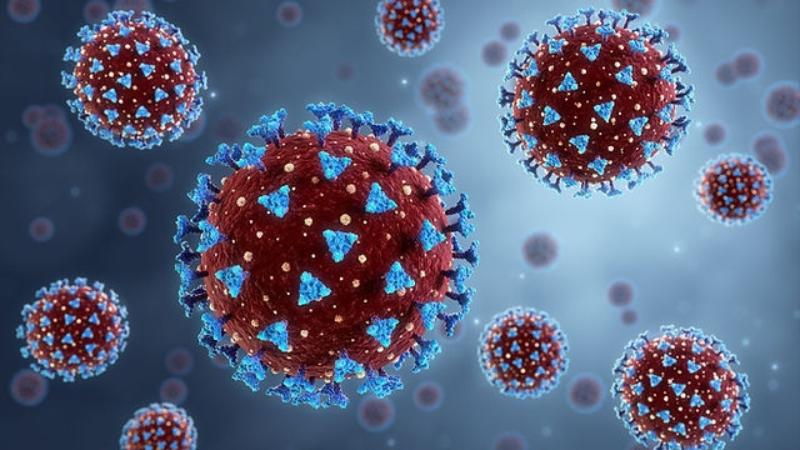
A new COVID-19 variant, NB.1.8.1, is now emerging in the United States after becoming dominant in China and causing a significant rise in cases across Asia. U.S. health officials, including the Centers for Disease Control and Prevention (CDC), are monitoring the variant closely as scientists continue to analyze whether NB.1.8.1 poses greater risks in terms of transmission, severity, and resistance to existing vaccines.
The variant was initially identified in Asia, particularly in China, Taiwan, and Hong Kong, where it has led to increased emergency room visits and hospitalizations. Recently, through the CDC's airport surveillance and sequencing program in collaboration with Ginkgo Bioworks, multiple cases have been detected among international travelers arriving at major U.S. airports. Locations reporting cases include California, Washington state, Virginia, and the New York City area. Additional community-based cases have now been reported in Ohio, Rhode Island, and Hawaii.
According to data submitted to the GISAID database, the variant has been traced to travelers from a wide range of countries, such as China, Taiwan, Japan, South Korea, Thailand, France, Vietnam, Spain, and the Netherlands. The earliest recorded U.S. cases go back to late March and early April.
Despite its rapid spread, early indications from Hong Kong and Chinese health officials suggest that NB.1.8.1 is not necessarily more severe than earlier variants. However, its ability to attach more effectively to human cells could make it more transmissible. As a result, some Asian regions, including Hong Kong, have reinstated mask advisories in crowded public spaces and transit systems to curb its transmission.
In Taiwan, health authorities have noted a troubling increase in severe cases and COVID-related fatalities. While this has led to increased concern, there is no strong evidence so far to suggest that NB.1.8.1 is significantly more lethal than other Omicron subvariants.
The CDC and U.S. Food and Drug Administration (FDA) are currently evaluating which strains should be targeted in updated vaccines. While NB.1.8.1 itself has not yet been confirmed as the primary focus, it shares genetic lineage with the JN.1 family, which is under serious consideration for the next booster updates. Experts at a recent advisory panel largely agreed that new vaccine formulations should be aligned with the JN.1 lineage to offer broader protection.
As of now, existing vaccines may still offer some level of defense, particularly if updated formulations target variants closely related to NB.1.8.1. Research is ongoing to determine how well current and next-generation vaccines perform against this variant.
Despite the concerns, there is no current indication that NB.1.8.1 will cause a wave as disruptive as those seen in earlier pandemic phases. Still, officials are urging the public to remain cautious, especially as travel and summer gatherings increase. Masking in crowded places, staying up to date on vaccinations, and avoiding travel when ill are simple but effective measures to limit transmission.
While NB.1.8.1 is a variant to watch, especially due to its increased spread in both Asia and the United States, it has not yet shown signs of being more deadly than previous strains. Vigilance, continued research, and timely vaccination updates remain the most critical tools in managing this evolving public health concern.