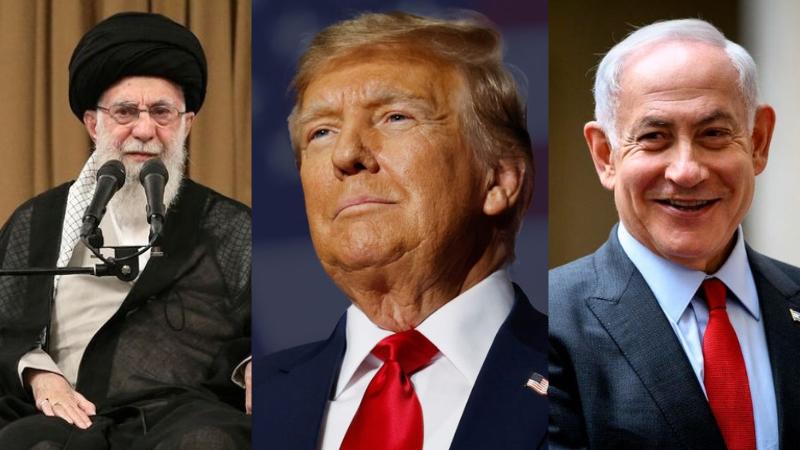
Grand Ayatollah Naser Makarem Shirazi, one of Iran's most senior religious authorities, has issued a powerful fatwa condemning any threats against the nation's Supreme Leader Ayatollah Ali Khamenei and other top Shia clerics. The religious ruling, delivered in Arabic and widely circulated in Iran’s clerical and political circles, firmly states that such threats are not only unlawful but are considered a serious religious offense. The fatwa emphasizes that protecting the leadership of the Islamic Republic is a religious duty incumbent upon all Muslims.
Ayatollah Shirazi, known for his influential position within Shia Islamic jurisprudence, directed his condemnation towards foreign figures, specifically targeting current US President Donald Trump and Israeli Prime Minister Benjamin Netanyahu. He labeled both leaders as open enemies of Islam and declared that their hostile policies and rhetoric against Iran should be met with religious resistance. In his statement, Shirazi extended this beyond mere political disagreement, asserting that opposition to the Islamic Republic’s leadership equates to opposition against divine order. According to the ruling, such threats undermine the very foundation of Islamic governance and the spiritual integrity of the Shia community.
The fatwa makes it clear that the Supreme Leader and the Marja’iyyat—the religious leadership council—are not just political figures, but sacred institutions that must be defended. Shirazi wrote that safeguarding them is not optional but a mandatory religious obligation. He warned that those who remain silent or fail to support Iran’s leadership during times of external threats are equally complicit and liable to face divine consequences. This positioning reinforces the religious establishment’s central role in Iran’s political structure and the expectation of loyalty from both the general public and the broader Islamic world.
Further intensifying the message, the fatwa denounces any form of cooperation with foreign adversaries, especially the United States and Israel, as haram, meaning religiously prohibited. Shirazi stated that any Muslim—whether an individual or a nation—who assists or aligns with these countries is betraying Islamic values. Such actions, he warned, are not only morally condemnable but invite divine punishment. He also invoked the term “Muharib,” a grave label in Islamic law for someone considered to be at war with God, typically reserved for those seen as committing treason against the Islamic order. The use of this term indicates the severe religious weight of the ruling and its potential implications for anyone perceived as aiding enemies of the state.
Shirazi’s fatwa is not merely a religious opinion but a clear political signal that Iran’s religious leadership is prepared to resist any perceived threats from foreign powers through both spiritual and ideological means. It frames the Iranian leadership, particularly the Supreme Leader, as not just a political figurehead but a guardian of faith, whose defense is synonymous with the defense of Islam itself. This rhetoric transforms any attack on Iran’s clerical elite into an attack on religion, thus broadening the scope of accountability and justifying strict responses under Islamic law.
The fatwa also urges Islamic solidarity, calling on Muslims globally to unite in defense of Iran’s spiritual and political leadership. Shirazi positions Iran’s clerical system as a pillar of global Islamic guidance and calls on believers to reject Western influences that threaten its stability. He argues that preserving Iran's religious leadership is essential to protecting Islamic values worldwide and that failure to do so would lead to spiritual degradation and political chaos.
As tensions between Iran and Western powers continue to rise, particularly in light of ongoing sanctions, military threats, and political isolation, this fatwa highlights the deep entanglement of religion and politics in Iran. It also serves as a stark warning that any attempt to undermine Iran’s leadership will be met not just with political resistance, but with a religiously framed counter-narrative that positions such threats as blasphemy. In doing so, Ayatollah Shirazi strengthens the ideological and theological justification for Iran’s defiance against perceived foreign aggression and reasserts the centrality of clerical authority in shaping the country’s domestic and foreign policy.
This religious ruling reflects a broader trend within Iran’s governance, where spiritual decrees often shape national policy and serve as a rallying cry for unity and resistance. With mounting global scrutiny and pressure on Iran, Shirazi’s fatwa sends a clear message that the country’s religious leadership remains steadfast, framing its struggle not as one of mere national sovereignty, but of divine preservation and religious righteousness.