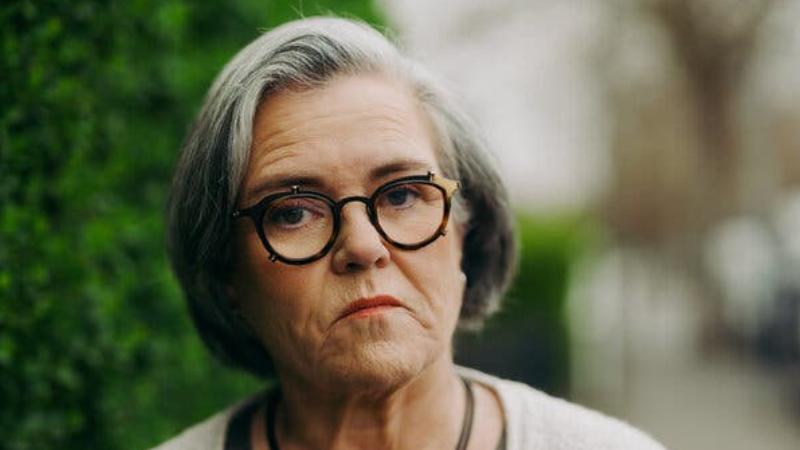
In a dramatic escalation of his long-running public feud with comedian and talk show host Rosie O'Donnell, President Donald Trump posted on social media this weekend that he is seriously considering revoking her U.S. citizenship. The comments, made on his Truth Social platform, have sparked a wave of concern and debate over constitutional protections, presidential power, and the increasingly personal nature of political rivalries.
“Because of the fact that Rosie O'Donnell is not in the best interests of our great country, I am giving serious consideration to taking away her citizenship,” President Trump wrote. “She is a threat to humanity and should remain in the wonderful country of Ireland, if they want her. God bless America!”
O'Donnell, a vocal critic of President Trump for years, responded with a flurry of posts on social media, accusing the president of dishonesty, criminal behavior, and failure in leadership. In a TikTok video filmed in Dublin, Ireland, she blamed President Trump for the deadly flash floods that recently struck Central Texas, which have claimed over 100 lives so far. In the video, she suggested that the president’s past decisions to cut funding for weather-related government programs contributed to the scale of the disaster.
"And, you know, when the president guts all of the early warning systems and the weather-forecasting abilities of the government, these are the results," she said, criticizing the lack of preparedness and oversight that may have worsened the flood’s impact.
While O’Donnell’s criticism was fiery, President Trump’s suggestion to revoke her citizenship has raised significant constitutional alarms. Legal experts point to the 14th Amendment of the U.S. Constitution, which guarantees that all persons born or naturalized in the United States are citizens and cannot be stripped of that status by executive whim. The Constitution provides no mechanism by which a president can unilaterally revoke someone’s citizenship, especially in response to political speech or criticism.
The statement has been widely interpreted as symbolic and rhetorical, meant to rally President Trump’s supporters and further vilify a known adversary. Nonetheless, it serves as a stark reminder of how political discourse has devolved into personal attacks and extreme suggestions that test the boundaries of law and governance.
Constitutional scholars emphasize that even if O’Donnell held dual citizenship with Ireland, as some speculated due to her video from Dublin, it would not change her rights as a natural-born or naturalized U.S. citizen. The Supreme Court has repeatedly ruled that American citizenship cannot be revoked without due process and only under very specific and rare conditions, none of which include criticism of a political figure.
Meanwhile, experts familiar with the causes of the Texas floods have clarified that while political decisions can influence emergency preparedness, several other factors played a role in the disaster. These included inaccurate forecasting models, an insufficient warning system, and the unfortunate timing of the storm’s peak during hours when many residents were unprepared. Neil Jacobs, who served as President Trump’s nominee to lead the National Oceanic and Atmospheric Administration, recently acknowledged the need for improved forecasting technology and better communication of weather-related risks during a Senate hearing.
The incident reflects the continued volatility of President Trump’s public engagements, where his presence on social media and ongoing political influence are frequently marked by controversial statements and confrontations with critics. While his remarks about O’Donnell are unlikely to carry any legal weight, they continue to shape the tone of political conversation and highlight the growing polarization in American public life.
Neither the White House nor O’Donnell’s representatives have issued official statements in response to the latest exchange, though the topic has generated extensive discussion online and among political analysts. The controversy underscores the broader challenges facing the country as it attempts to navigate a deeply divided media landscape where constitutional rights, civic discourse, and public accountability are regularly tested.
As the fallout continues, legal experts, political commentators, and civil rights advocates are urging for a return to respectful dialogue and for all leaders—past and present—to uphold the principles of the Constitution, especially when it comes to freedom of speech and the protections afforded to American citizens, regardless of their political opinions.