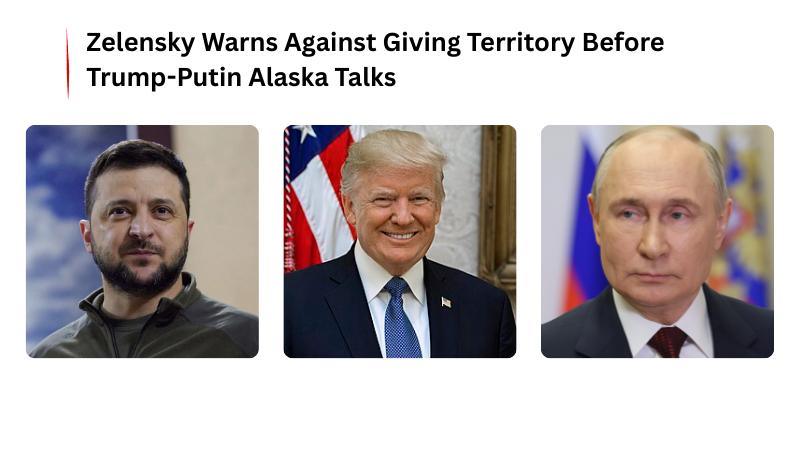
As the highly anticipated Alaska summit between United States President Donald Trump and Russian President Vladimir Putin approaches, tensions over the ongoing Russia-Ukraine conflict have intensified. Ukrainian President Volodymyr Zelensky has firmly reiterated that his country will not give up any land to Moscow, rejecting the idea of territorial concessions in exchange for a potential ceasefire. His comments come amid reports from US officials suggesting that Putin’s plan to halt the war could involve Kyiv ceding significant portions of its territory currently under Russian control.
Speaking ahead of the meeting, Zelensky was emphatic about protecting Ukraine’s sovereignty. He stressed that surrendering eastern regions such as Donbas would not bring peace but instead open the door for future escalations. According to him, giving up these territories could create conditions for Russia to initiate another conflict, which he described as “starting a third war” in the region. Ukraine has endured more than three and a half years of a full-scale invasion, and the president’s remarks underscored the nation’s steadfast refusal to compromise on its territorial integrity.
Russia currently controls approximately 18 percent of Ukraine’s land, a situation that began with the 2014 annexation of Crimea. That event saw Russian-backed separatists take control of key parts of the Donbas region, setting the stage for years of instability. In February 2022, Russia launched its largest military offensive in decades, advancing deep into Ukrainian territory. While Ukrainian forces have reclaimed large areas in the north since then, the war has settled into a brutal stalemate with both sides suffering heavy losses.
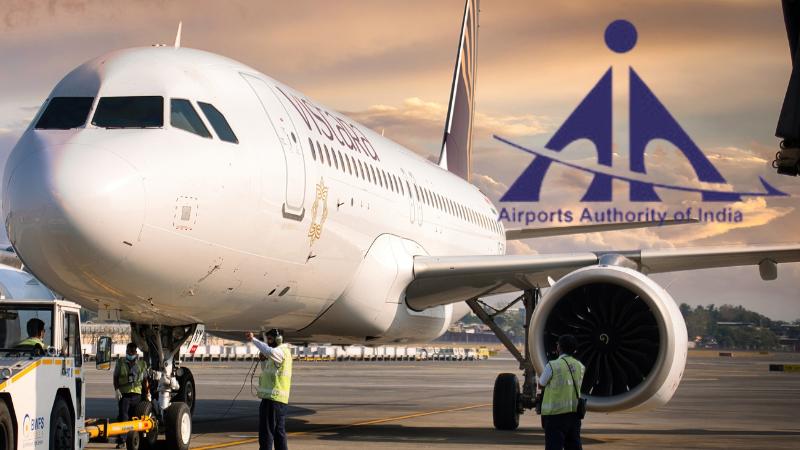
The Alaska summit, scheduled for August 15, will bring Trump and Putin face to face in an attempt to address the conflict’s future. The arrival of a Kremlin government aircraft at Anchorage International Airport marks a significant step in preparations. The plane departed Moscow early in the morning, entering US airspace before landing in Alaska with a high-level Russian delegation on board.
The Russian delegation includes Foreign Minister Sergey Lavrov, Defence Minister Andrey Belousov, Finance Minister Anton Siluanov, Kremlin foreign policy adviser Yury Ushakov, and presidential envoy for international investment and economic cooperation Kirill Dmitriev. These figures are expected to be key participants in the discussions, which may also cover broader issues in US-Russia relations.
For Ukraine, the stakes could not be higher. The outcome of the Alaska talks will be closely monitored not only by Kyiv but also by its allies in Europe and beyond. Any proposal involving the surrender of Ukrainian territory is likely to meet fierce resistance from both the Ukrainian government and its people, many of whom have endured years of displacement, economic hardship, and the trauma of war.
The war’s trajectory over the past decade has been shaped by pivotal moments: Crimea’s annexation in 2014, the outbreak of full-scale conflict in 2022, and the subsequent entrenchment of Russian control over large swathes of Ukrainian land. The Alaska summit represents a rare opportunity for dialogue between Washington and Moscow, but whether it will lead to a breakthrough or simply reinforce existing positions remains uncertain.
For now, President Zelensky’s message is clear: Ukraine’s sovereignty is not negotiable, and any peace agreement must respect its internationally recognized borders. As world leaders converge in Alaska, the future of one of the most significant conflicts of the 21st century hangs in the balance.