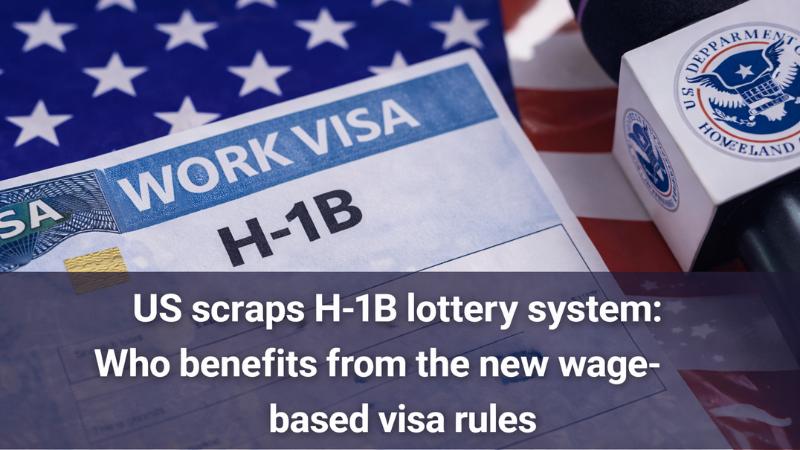
The United States has announced a major overhaul of its H-1B visa programme, scrapping the long-running lottery-based selection system in favour of a wage-weighted model that prioritises higher-paid and higher-skilled foreign workers. The new rule, issued by the Department of Homeland Security, will come into effect on February 27, 2026, and will apply to the FY 2027 H-1B cap registration cycle, with registrations expected to open in March 2026 for jobs beginning on October 1.
While the overall number of H-1B visas will remain unchanged, capped at 65,000 under the regular quota with an additional 20,000 reserved for applicants holding US advanced degrees, the way these visas are allocated will change significantly. Instead of random selection, applications will now be weighted based on offered wages and employer filings, marking one of the biggest shifts in US employment-based immigration policy in recent years.
Under the revised framework, registrations will no longer have equal chances of selection. Applications offering higher wages will receive stronger odds, while lower-paid roles will still be eligible but face reduced chances of being selected. The government says this approach is designed to discourage duplicate filings, reduce system manipulation, and ensure that the programme better reflects its original intent of attracting specialised talent.
According to the DHS, the earlier lottery system had become vulnerable to abuse, with some employers submitting multiple low-wage applications to increase selection odds. Officials argue that the wage-weighted process will push companies to offer competitive salaries and focus on genuinely skilled positions rather than volume-based filings.
The department said the new rule aims to protect American workers from wage undercutting while still allowing employers to access global talent in sectors such as technology, engineering, healthcare, and research, where labour shortages persist. Authorities also indicated that the system may be further refined after its impact is reviewed.
The policy shift is particularly significant for Indian professionals, who account for a large share of H-1B approvals each year. Highly skilled workers with advanced degrees, specialised expertise, and higher salary offers are expected to benefit the most under the new system. Major technology firms and employers hiring for senior or niche roles may also see improved selection chances. On the other hand, entry-level applicants, lower-paid roles, and employers relying on volume-based filings are likely to face tougher odds. Smaller firms and outsourcing companies that historically depended on the lottery system may need to rethink their hiring strategies.
The move aligns with broader immigration measures introduced by the US administration, including stricter compliance checks and proposals requiring certain employers to pay significantly higher fees per visa. Officials say these steps are intended to reinforce programme integrity and ensure the H-1B system strengthens US competitiveness rather than distorting local labour markets. As the US transitions away from the lottery model, the H-1B programme is set to become more selective, more salary-driven, and more aligned with skill-based immigration goals. For global professionals eyeing US opportunities, the message is clear: higher skills and higher wages will matter more than ever.