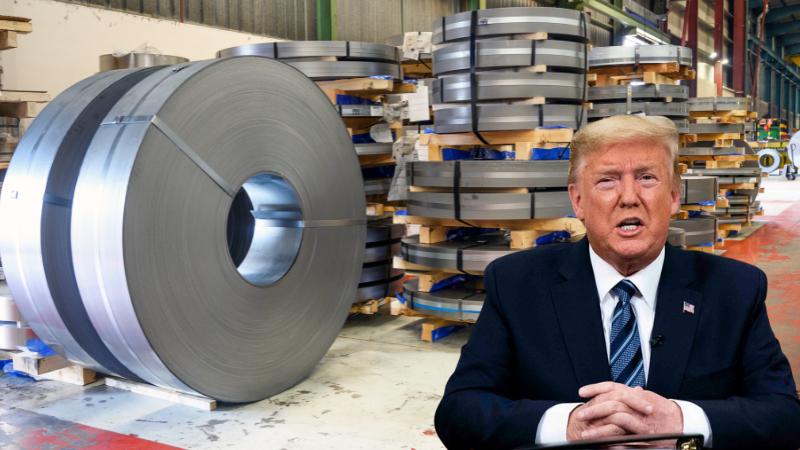
President Donald Trump has announced plans to double tariffs on steel imports to 50%, up from the existing 25%, as part of his administration’s effort to reinforce domestic manufacturing and ensure long-term industrial independence. Speaking to American steelworkers during a visit to a steel facility in Pennsylvania, Trump emphasized that his administration remains committed to policies that protect American jobs and prevent foreign dominance in vital sectors.
Trump’s declaration underscores his belief that U.S. industrial strength depends on shielding key industries from foreign competition. According to the president, the tariff increase is not only a matter of economics but of national security and sovereignty. He argued that strong, independent steel production is essential to the country’s infrastructure, defense, and long-term growth, and that imported steel poses a risk to that foundation.
The timing of the announcement is significant, as it coincides with growing attention on a pending deal involving the future of U.S. Steel. The company is in discussions to be acquired by a major Japanese steel producer. However, Trump characterized the arrangement not as a full acquisition but as a strategic investment partnership. He stated that the company’s headquarters would remain in Pittsburgh and that the investment would total $14 billion over 14 months. Trump emphasized that while foreign capital may be involved, decision-making and control would remain with the United States.
Despite Trump’s reassurances, earlier disclosures suggest that the transaction could result in U.S. Steel becoming a wholly owned subsidiary of a foreign entity, though it would still operate as a distinct brand. Trump attempted to clarify the structure, describing it as a form of partial ownership with American oversight. His administration has yet to release full details about the oversight mechanisms, but the president made it clear that U.S. control would not be compromised.
This represents a shift from the position taken by the prior administration, which had blocked a similar deal on national security grounds. That move was made out of concern that foreign ownership could place critical supply chains and manufacturing capacity at risk. Trump, however, appears confident that the new deal can achieve both economic growth and national security objectives, provided it is structured properly and U.S. interests remain at the helm.
The president’s comments have drawn mixed reactions. Industry supporters and many steelworkers welcomed the tariff hike and Trump’s emphasis on American control. They see these measures as a long-overdue step to reverse decades of industrial decline and offshoring. Others, however, have raised concerns about potential retaliation from trade partners and the impact higher tariffs could have on domestic manufacturers who rely on imported steel for their operations.
Analysts agree that a 50% steel tariff would be among the highest imposed in modern trade policy and could significantly alter the pricing dynamics of the industry. While domestic steelmakers may benefit in the short term, companies that depend on steel as a raw material—such as in construction, automotive, and machinery sectors—could face higher costs. Whether the long-term benefits outweigh these potential challenges remains to be seen.
The steel tariff decision is emblematic of Trump’s broader economic approach, which focuses on strengthening internal supply chains, reviving manufacturing, and limiting reliance on international markets. These themes have been a consistent part of his political and economic message, especially in regions where industrial jobs have declined over the years.
As discussions continue regarding the U.S. Steel investment and trade policy evolves, the administration’s challenge will be to strike a balance between protectionism and economic pragmatism. Trump insists that his administration will not allow foreign influence to erode American economic independence, and that investment can occur without surrendering control.
The president’s message is clear: protecting American industries like steel is a priority. He remains firm in his belief that strong tariffs and strategic oversight are necessary to ensure the country’s economic and security interests. With the proposed tariff hike and ongoing efforts to retain oversight in international investments, the administration is positioning itself as an aggressive advocate for American manufacturing in a complex global economy.
Trump’s declaration underscores his belief that U.S. industrial strength depends on shielding key industries from foreign competition. According to the president, the tariff increase is not only a matter of economics but of national security and sovereignty. He argued that strong, independent steel production is essential to the country’s infrastructure, defense, and long-term growth, and that imported steel poses a risk to that foundation.
The timing of the announcement is significant, as it coincides with growing attention on a pending deal involving the future of U.S. Steel. The company is in discussions to be acquired by a major Japanese steel producer. However, Trump characterized the arrangement not as a full acquisition but as a strategic investment partnership. He stated that the company’s headquarters would remain in Pittsburgh and that the investment would total $14 billion over 14 months. Trump emphasized that while foreign capital may be involved, decision-making and control would remain with the United States.
Despite Trump’s reassurances, earlier disclosures suggest that the transaction could result in U.S. Steel becoming a wholly owned subsidiary of a foreign entity, though it would still operate as a distinct brand. Trump attempted to clarify the structure, describing it as a form of partial ownership with American oversight. His administration has yet to release full details about the oversight mechanisms, but the president made it clear that U.S. control would not be compromised.
This represents a shift from the position taken by the prior administration, which had blocked a similar deal on national security grounds. That move was made out of concern that foreign ownership could place critical supply chains and manufacturing capacity at risk. Trump, however, appears confident that the new deal can achieve both economic growth and national security objectives, provided it is structured properly and U.S. interests remain at the helm.
The president’s comments have drawn mixed reactions. Industry supporters and many steelworkers welcomed the tariff hike and Trump’s emphasis on American control. They see these measures as a long-overdue step to reverse decades of industrial decline and offshoring. Others, however, have raised concerns about potential retaliation from trade partners and the impact higher tariffs could have on domestic manufacturers who rely on imported steel for their operations.
Analysts agree that a 50% steel tariff would be among the highest imposed in modern trade policy and could significantly alter the pricing dynamics of the industry. While domestic steelmakers may benefit in the short term, companies that depend on steel as a raw material—such as in construction, automotive, and machinery sectors—could face higher costs. Whether the long-term benefits outweigh these potential challenges remains to be seen.
The steel tariff decision is emblematic of Trump’s broader economic approach, which focuses on strengthening internal supply chains, reviving manufacturing, and limiting reliance on international markets. These themes have been a consistent part of his political and economic message, especially in regions where industrial jobs have declined over the years.
As discussions continue regarding the U.S. Steel investment and trade policy evolves, the administration’s challenge will be to strike a balance between protectionism and economic pragmatism. Trump insists that his administration will not allow foreign influence to erode American economic independence, and that investment can occur without surrendering control.
The president’s message is clear: protecting American industries like steel is a priority. He remains firm in his belief that strong tariffs and strategic oversight are necessary to ensure the country’s economic and security interests. With the proposed tariff hike and ongoing efforts to retain oversight in international investments, the administration is positioning itself as an aggressive advocate for American manufacturing in a complex global economy.