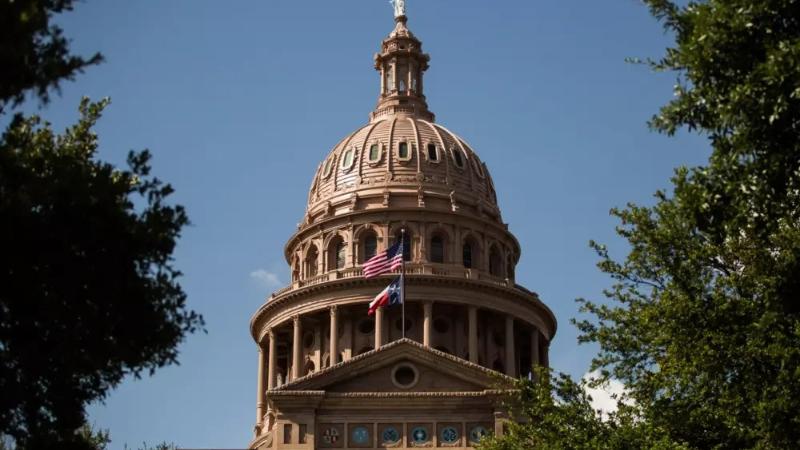
In the Texas Legislature, a quorum is the minimum number of lawmakers required to be present for the assembly to conduct official business, including proposing, discussing, and voting on bills. But what does breaking quorum mean, and why would lawmakers consider doing so?
According to the Oxford English Dictionary, a quorum is defined as "the minimum number of members of an assembly or society that must be present at any of its meetings to make the proceedings of that meeting valid." For the Texas House, that number is set at two-thirds of its members, which equals 100 representatives. Similarly, the Texas Senate requires two-thirds of its members, or 21 senators, to form a quorum.
If lawmakers do not show up to ensure a quorum, they may face fines of $500 per day, and further consequences could include reprimand, censure, or even expulsion. In the Senate, members who fail to attend without a valid excuse may be arrested and compelled to attend the session, as per Senate rules. In such cases, the President of the Senate may request a writ of mandamus from the Supreme Court of Texas to compel their return.
Breaking quorum is a tactic often used in legislative strategies, particularly when opposing parties want to block the passage of legislation. In Texas, where the House and Senate are both controlled by Republicans, Democrats may use quorum-breaking to prevent votes on contentious issues such as redistricting. By not attending the session, the absent lawmakers prevent enough votes from being cast to pass a bill, halting the legislative process.
While some legislative actions can still proceed without a quorum, passing bills, especially on major issues, requires a quorum for voting. This makes the quorum rule a powerful tool for minority groups seeking to block legislation or delay votes. Understanding the significance of quorum in Texas provides insight into the inner workings of the state legislature and the strategies lawmakers use to advance or oppose laws.