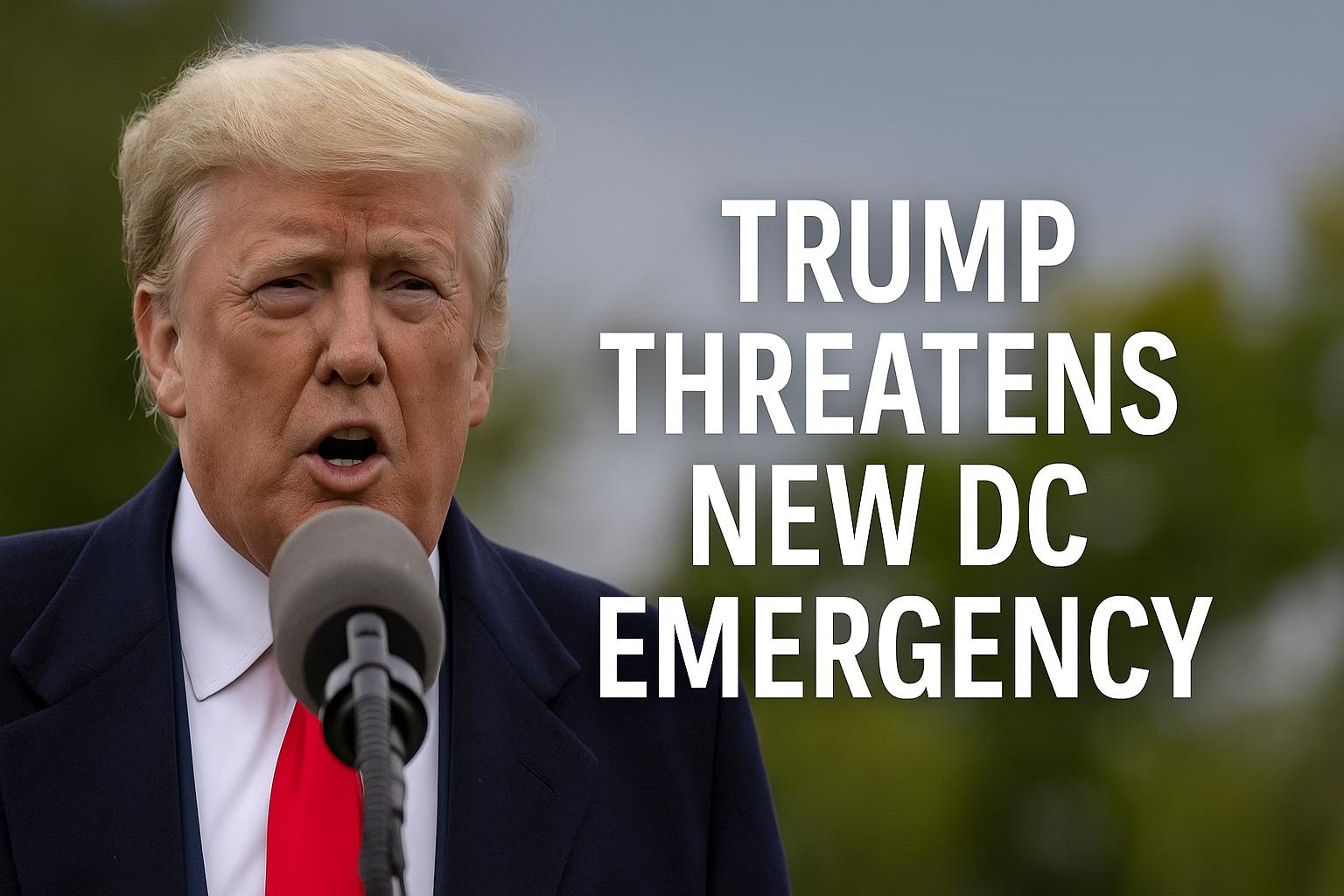
President Donald Trump is once again threatening to declare a national emergency in Washington, D.C., reigniting a clash with Mayor Muriel Bowser over the city’s Metropolitan Police Department and its role in immigration enforcement. The threat comes as Trump’s 30-day emergency control of the capital’s police force, imposed under Section 740 of the Home Rule Act, has expired.
In a post made shortly after midnight on Monday, Trump expressed frustration with Bowser’s remarks that the Metropolitan Police would be returning to pre-emergency operations, which includes halting cooperation with federal immigration authorities. The mayor emphasized that local law enforcement in Washington is tasked with addressing violent crime, not immigration enforcement, and she stated clearly that immigration enforcement will not be a part of the department’s duties going forward.
Trump, however, claimed credit for deploying the National Guard to combat crime in the city during the emergency period and insisted that reversing ICE cooperation would cause crime to surge. He pledged that he would not permit the Metropolitan Police to pull back from immigration enforcement, even threatening to federalize the force again. “If I allowed this to happen, crime would come roaring back,” Trump wrote, assuring Washington residents and businesses that he would intervene if needed.
During the emergency period, which began on August 11, the federal order compelled Bowser to provide local police services to meet federal priorities. That included cooperation with Immigration and Customs Enforcement. In the early days of the federal control, Police Chief Pamela Smith issued an executive order permitting limited coordination with ICE, an action that led to hundreds of immigration-related arrests. With the expiration of Trump’s order, that directive also expired, returning authority over police operations to the city.
Bowser reiterated that ending ICE cooperation does not mean an end to federal law enforcement presence in the city. Instead, it marks a return to the District’s longstanding position that local police should focus on local safety issues. “We still don’t want people using guns in our community. We don’t want anybody stealing from stores or each other. Carjacking will not be tolerated. All of those things are against the law,” Bowser explained, underscoring her stance that serious crimes remain a priority regardless of immigration policy.
The dispute is unfolding just days before Bowser is scheduled to testify on Capitol Hill before the House Oversight Committee, where she will address crime trends in the nation’s capital. Her testimony is expected to highlight the city’s crime-prevention strategies and explain the District’s approach to balancing cooperation with federal agencies while maintaining local autonomy.
Despite the expiration of the emergency order, the presence of federal troops in Washington remains striking. Joint Task Force DC reported that over 2,300 National Guard personnel are still deployed across the city’s streets. Of that number, more than 900 are members of the DC National Guard, while the rest have been drawn from eight other states. The continued deployment signals that security remains a federal concern in the city, even as the legal framework of Trump’s emergency declaration has ended.
The confrontation underscores a deep divide between Trump and local Washington leadership. For Trump, framing immigration enforcement as a public safety necessity plays into his broader national message of strong borders and tough policing. For Bowser, the emphasis is on local governance, resisting federal overreach, and prioritizing the issues most pressing to residents of the capital.
As the standoff intensifies, Washingtonians remain caught between competing visions of governance. On one side is Trump’s insistence that local police align more closely with federal immigration efforts, backed by the implied threat of another emergency order. On the other is Bowser’s commitment to maintaining the city’s independent approach to public safety. With thousands of troops still visible on the streets and hearings looming on Capitol Hill, the debate over crime, immigration, and control of Washington’s police force is far from over.