


















#capitolhill
US Senate reverses stance on Iran war powers resolution
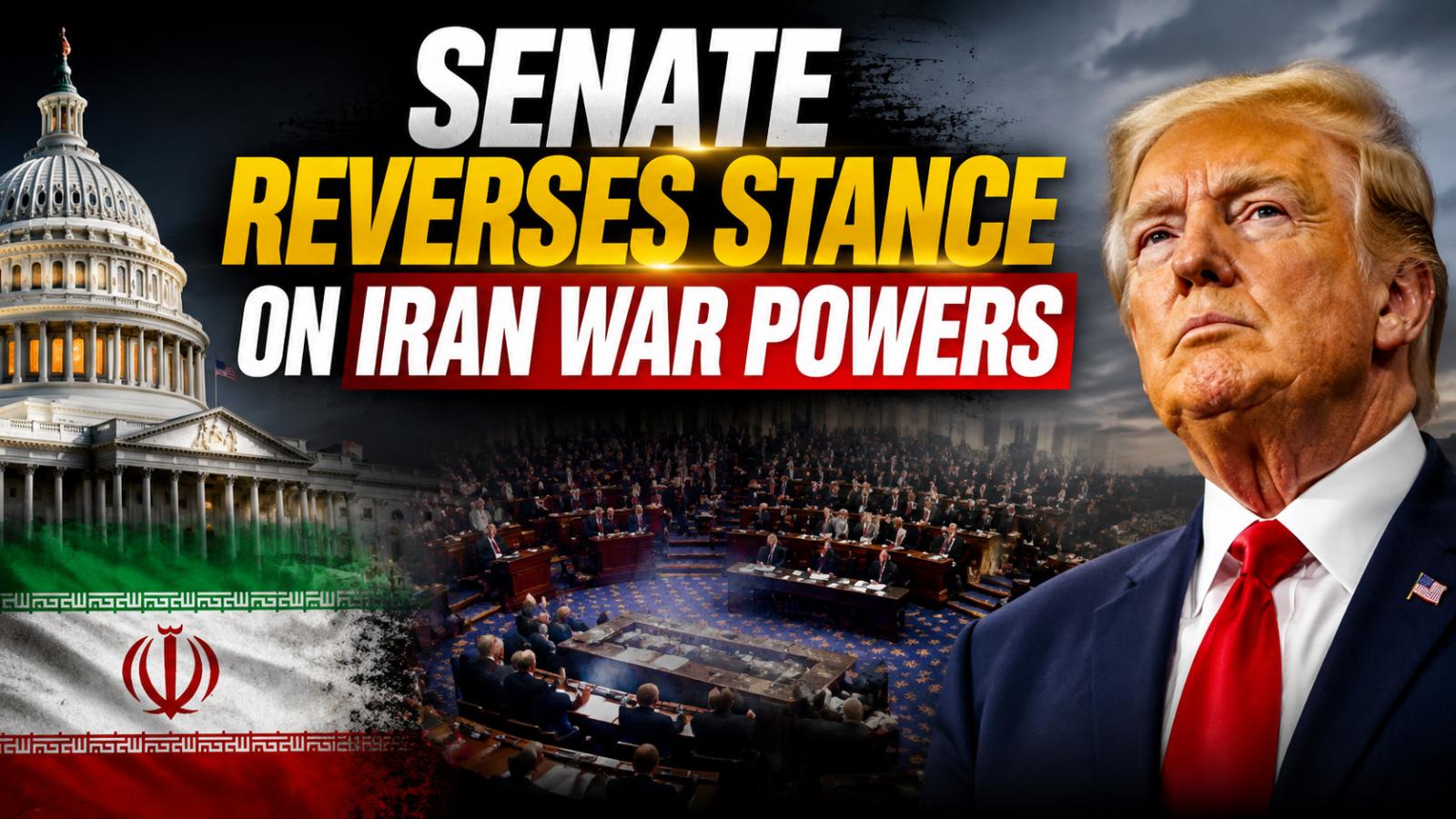
A closely watched Senate vote on a resolution linked to presidential war authority over Iran took an unexpected turn after several Republican lawmakers altered their positions. The measure, which focused on limiting executive flexibility in military action, ended up reflecting a divided but shifting political landscape rather than a clear consensus. Political negotiations behind the scenes The change in voting pattern followed internal discussions among Republican senators and briefings from senior administration figures. Lawmakers who initially leaned toward restricting presidential authority later adjusted their stance after being updated on diplomatic and security considerations related to Iran. The shift underscored how quickly positions can move when strategic briefings and party pressure converge. Key senators adjust positions Among those influencing the outcome were Senator Bill Cassidy and Senator Rand Paul. Cassidy moved away from his earlier support for tighter restrictions after consultations with White House representatives. Rand Paul maintained his broader skepticism toward expansive executive war powers but opted for a procedural position that reflected his long-standing policy concerns without directly blocking the measure. Trump frames outcome as political leverage President Donald Trump responded to the Senate outcome by framing it as a strengthening of US negotiating leverage in relation to Iran. His public remarks highlighted the vote as evidence of alignment within the Republican Party on foreign policy strategy. While the resolution itself remains largely symbolic, it has become a focal point in the wider debate over presidential authority and congressional oversight. Broader implications for US foreign policy The vote shift reflects ongoing tension in Washington over how much autonomy the executive branch should hold in matters of military engagement. Supporters of stronger presidential powers argue for flexibility in fast-moving geopolitical situations, while critics warn against reducing congressional oversight. The Iran-related vote has now become another reference point in that broader constitutional debate.
US Senate reverses stance on Iran war powers resolution
A closely watched Senate vote on a resolution linked to presidential war authority over Iran took an unexpected turn after several Republican lawmakers altered their positions. The measure, which focused on limiting executive flexibility in military action, ended up reflecting a divided but shifting political landscape rather than a clear consensus. Political negotiations behind the scenes The change in voting pattern followed internal discussions among Republican senators and briefings from senior administration figures. Lawmakers who initially leaned toward restricting presidential authority later adjusted their stance after being updated on diplomatic and security considerations related to Iran. The shift underscored how quickly positions can move when strategic briefings and party pressure converge. Key senators adjust positions Among those influencing the outcome were Senator Bill Cassidy and Senator Rand Paul. Cassidy moved away from his earlier support for tighter restrictions after consultations with White House representatives. Rand Paul maintained his broader skepticism toward expansive executive war powers but opted for a procedural position that reflected his long-standing policy concerns without directly blocking the measure. Trump frames outcome as political leverage President Donald Trump responded to the Senate outcome by framing it as a strengthening of US negotiating leverage in relation to Iran. His public remarks highlighted the vote as evidence of alignment within the Republican Party on foreign policy strategy. While the resolution itself remains largely symbolic, it has become a focal point in the wider debate over presidential authority and congressional oversight. Broader implications for US foreign policy The vote shift reflects ongoing tension in Washington over how much autonomy the executive branch should hold in matters of military engagement. Supporters of stronger presidential powers argue for flexibility in fast-moving geopolitical situations, while critics warn against reducing congressional oversight. The Iran-related vote has now become another reference point in that broader constitutional debate.
Pahalgam Victims Honored at Capitol Hill Exhibition on Terror Impact
One year after the deadly attack in Pahalgam, India has taken its message on terrorism to a global stage through an exhibition at Capitol Hill in Washington, organized by the Embassy of India, Washington, D.C.. The event, titled “The Human Cost of Terrorism,” was held to commemorate the victims and highlight the lasting impact of violence on civilians. The attack, which took place on Ap
Pahalgam Victims Honored at Capitol Hill Exhibition on Terror Impact
One year after the deadly attack in Pahalgam, India has taken its message on terrorism to a global stage through an exhibition at Capitol Hill in Washington, organized by the Embassy of India, Washington, D.C.. The event, titled “The Human Cost of Terrorism,” was held to commemorate the victims and highlight the lasting impact of violence on civilians. The attack, which took place on Ap
Protest group installs Trump-Epstein birthday card display near U.S. Capitol
WASHINGTON — A political art collective known as The Secret Handshake has installed a large-scale protest display near the U.S. Capitol, featuring a 10-foot-tall birthday card referencing an alleged message sent by President Donald Trump to disgraced financier Jeffrey Epstein. The installation appeared overnight along 3rd Street Northwest, across from the Capitol grounds between Madison Drive and Jefferson Drive, and is timed to coincide with Epstein’s birthday on Tuesday, Jan. 20.
Protest group installs Trump-Epstein birthday card display near U.S. Capitol
WASHINGTON — A political art collective known as The Secret Handshake has installed a large-scale protest display near the U.S. Capitol, featuring a 10-foot-tall birthday card referencing an alleged message sent by President Donald Trump to disgraced financier Jeffrey Epstein. The installation appeared overnight along 3rd Street Northwest, across from the Capitol grounds between Madison Drive and Jefferson Drive, and is timed to coincide with Epstein’s birthday on Tuesday, Jan. 20.
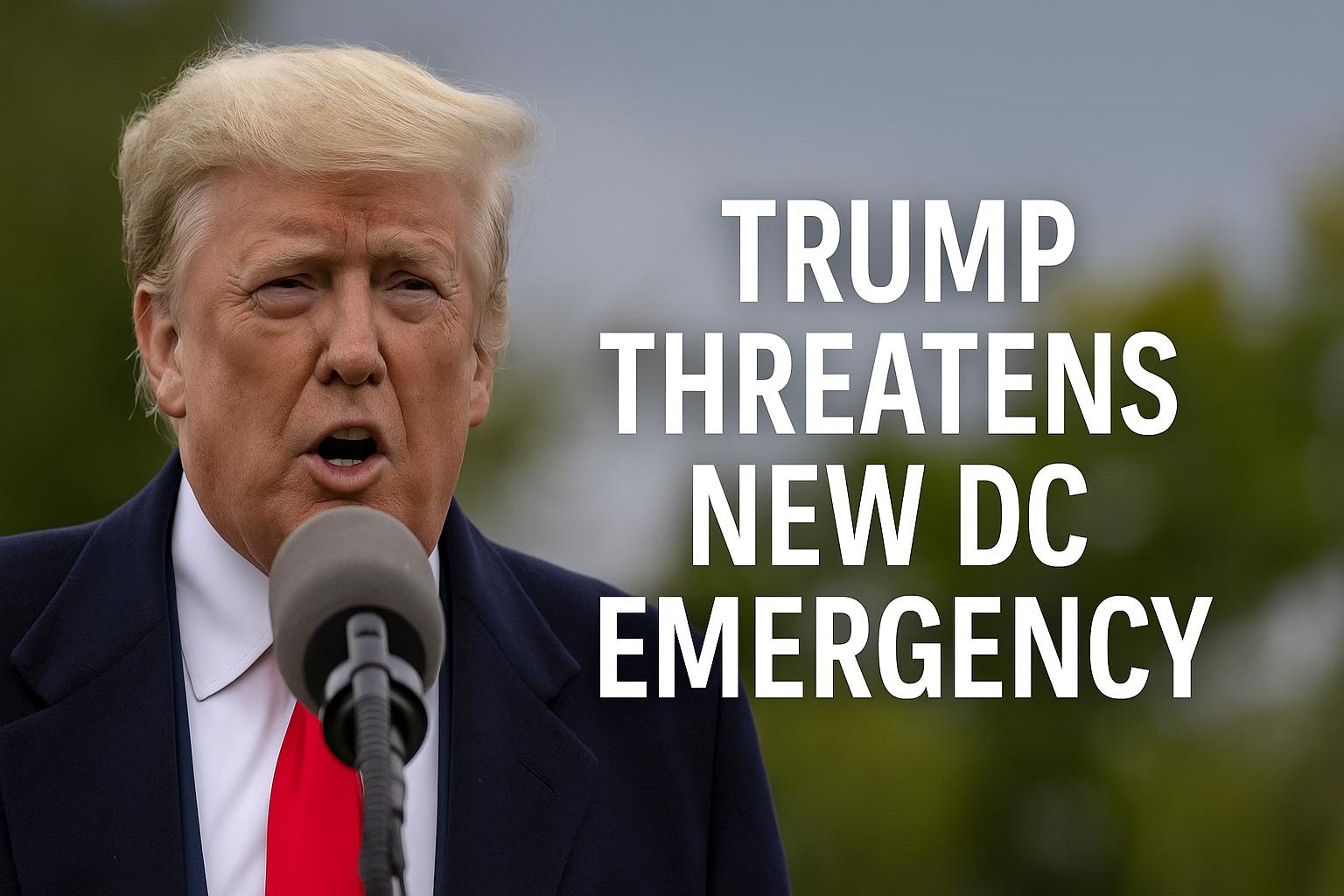
Trump warns of new national emergency in Washington over police and immigration enforcement
President Donald Trump is once again threatening to declare a national emergency in Washington, D.C., reigniting a clash with Mayor Muriel Bowser over the city’s Metropolitan Police Department and its role in immigration enforcement. The threat comes as Trump’s 30-day emergency control of the capital’s police force, imposed under Section 740 of the Home Rule Act, has expired. In a post made shortly after midnight on Monday, Trump expressed frustration with Bowser&r
Trump warns of new national emergency in Washington over police and immigration enforcement
President Donald Trump is once again threatening to declare a national emergency in Washington, D.C., reigniting a clash with Mayor Muriel Bowser over the city’s Metropolitan Police Department and its role in immigration enforcement. The threat comes as Trump’s 30-day emergency control of the capital’s police force, imposed under Section 740 of the Home Rule Act, has expired. In a post made shortly after midnight on Monday, Trump expressed frustration with Bowser&r


