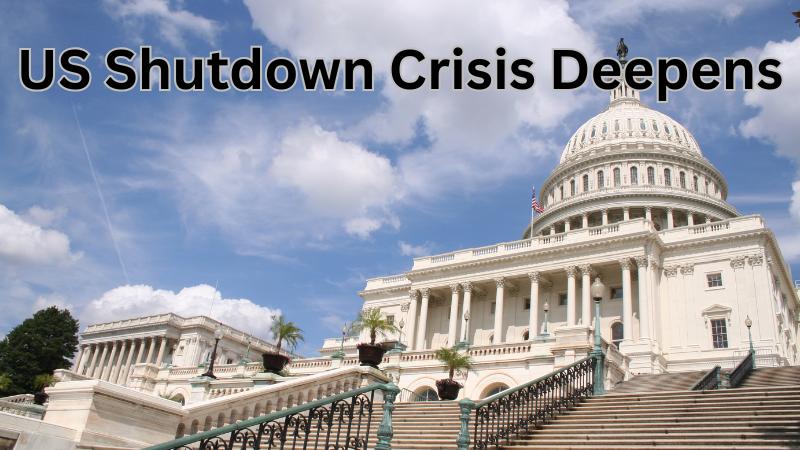
Washington is on the edge of crisis as the US government faces its first shutdown in six years. With funding set to expire at midnight, Senate lawmakers rejected a last-ditch attempt to keep government operations running. The rejection followed a heated standoff between Democrats, Republicans, and President Donald Trump, whose return to the Oval Office has intensified political battles in Congress.
Despite frantic negotiations, Democrats and Republicans failed to find common ground. Senate Republicans attempted to push through a temporary House-backed funding patch, but without the necessary Democratic votes, the measure collapsed. Trump, predicting failure, had earlier declared, We’ll probably have a shutdown, after talks at the White House fell apart. Senate Democratic leader Chuck Schumer admitted that large differences still remained, while House Minority Leader Hakeem Jeffries strongly criticized Trump for sharing a “racist and fake AI-generated video” mocking Democratic leaders.
The controversial video depicted Jeffries in a sombrero and mustache with mariachi music, sparking outrage and worsening tensions. Jeffries challenged Trump to confront him directly rather than hide behind fabricated attacks. Trump, in turn, shifted blame to Democrats, threatening mass layoffs targeting Democratic strongholds and hinting that shutdowns can help cut unwanted programs.
A shutdown would suspend nonessential government functions, leaving hundreds of thousands of federal workers without pay while disrupting social programs and public services. The impact could be especially severe given earlier job cuts under Elon Musk’s Department of Government Efficiency, which already reduced staff in several agencies.
Democrats, though in the minority, are using rare leverage to push for restored healthcare funding for low-income families, a demand Trump’s administration is resisting. Republicans, meanwhile, are focused on trimming federal programs and extending only short-term funding until November. With the Senate requiring 60 votes to pass any budget, the standoff remains at an impasse.
If no resolution is reached, the government will shut down, causing widespread disruptions and fueling public anger. Past shutdowns have shown the political risks, as both parties rush to blame each other while trying to minimize fallout. The longest shutdown in US history occurred during Trump’s first term, lasting 35 days from December 2018.
This looming shutdown highlights not only deep partisan divides but also the growing influence of political theatrics and personal attacks in Washington. With Trump openly embracing the shutdown as a bargaining tactic, Democrats warning of severe economic pain, and government employees bracing for uncertainty, the nation is once again caught in a political storm with global consequences.