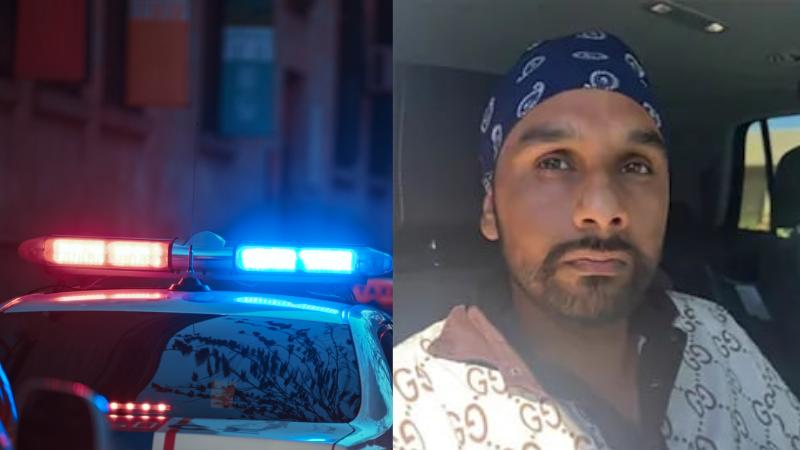
Subramanyam “Subu” Vedam, an India-born man who spent 43 years in a Pennsylvania prison for a murder he did not commit, was freed earlier this month only to be detained again — this time by US Immigration and Customs Enforcement (ICE). The 64-year-old Green Card holder, who arrived in the United States as a nine-month-old infant, was exonerated after newly uncovered FBI evidence proved his innocence. Yet, he now faces deportation to India under a decades-old immigration order dating back to the 1980s.
Vedam’s release on October 3 marked the end of one of the longest wrongful incarcerations in Pennsylvania’s history. But moments after walking out of the state correctional facility, ICE agents detained him, citing an existing deportation order linked to an old drug conviction from his teenage years. That conviction — involving possession and intent to distribute LSD — remains valid, even after his exoneration in the murder case. The order, dormant while he served a life sentence, was revived as soon as he stepped out of prison, effectively transferring him from one form of confinement to another.
Vedam, who had been convicted in 1983 for the murder of his former roommate, was sentenced to life without parole. Prosecutors at the time claimed he shot 19-year-old Thomas Kinser, a classmate from Pennsylvania State University, despite lacking direct evidence such as a weapon, motive, or witnesses. The conviction rested heavily on circumstantial evidence. Appeals and retrials in the 1980s did little to change his fate, and Vedam spent over four decades maintaining his innocence.
In 2022, the tide turned when a legal team at Penn State University’s Dickinson Law uncovered a hidden FBI report from the original case files. The report indicated that the bullet found in the victim’s skull was too small to have come from the alleged weapon — a .25-caliber pistol — destroying the prosecution’s core argument. Additional handwritten notes revealed that prosecutors had withheld exculpatory evidence from the defense, a violation that eventually led to the case’s collapse.
In August 2025, Centre County Judge Jonathan Grine vacated the conviction after a series of hearings and forensic reviews proved that the state’s case had been fundamentally flawed. The District Attorney formally dismissed all charges on October 2, 2025, recognizing that the passage of time, loss of witnesses, and lack of credible evidence made a retrial impossible. Vedam walked free a day later, becoming Pennsylvania’s longest-incarcerated exoneree and among the longest in US history.
During his years behind bars, Vedam pursued education relentlessly. He earned three college degrees, including an MBA with a perfect 4.0 GPA, and launched literacy programs for fellow inmates. His conduct earned him several commendations from prison officials, and those who worked with him described him as a model of perseverance and dignity.
However, freedom proved fleeting. ICE invoked the “legacy deportation order” tied to his 1980s drug conviction and transferred him to the Moshannon Valley Processing Center, an immigration detention facility in Pennsylvania. Reports indicate he now shares confinement with about 60 other detainees but is at least able to communicate more freely with family members than during his decades in state prison.
Vedam’s surviving family — his sister Saraswathi and niece Zoe Miller-Vedam — are now fighting to keep him in the country he has called home his entire life. His lawyer, Ava Benach, has filed motions to reopen his immigration case and to stay the deportation while it is pending. Benach argues that Vedam’s long-standing legal residency and the extraordinary circumstances surrounding his wrongful conviction merit humanitarian consideration.
“Subu has lived in the United States since infancy. Deporting him to India, a country he has no memory of, would be deeply unjust,” Benach said. Family members echo this concern, stressing that after 43 years of isolation, he would struggle to adapt to a world transformed by decades of technological and social change.
ICE spokesperson Jason Koontz, however, stated that Vedam remains in custody as the agency follows standard deportation procedures for individuals with prior felony convictions. He described Vedam as having a “historic criminal record” from the 1980s, emphasizing that the agency is bound by existing law.
For now, Vedam’s fate remains uncertain. His sister recalls that their late mother visited him every week for more than three decades until her passing in 2016, never losing faith that he would one day be free. That dream, though realized briefly, is now overshadowed by the possibility of exile from the only country he has ever known.
As his case unfolds, Subramanyam Vedam stands as both a symbol of justice achieved and injustice renewed — a man cleared by the courts yet confined once again. His fight is no longer about proving innocence, but about securing a home in the nation where his life began and where, after 43 lost years, he still hopes to belong.