PM Modi on women’s reservation bill failure: What his ‘Nari Shakti’ push means for 2029 elections
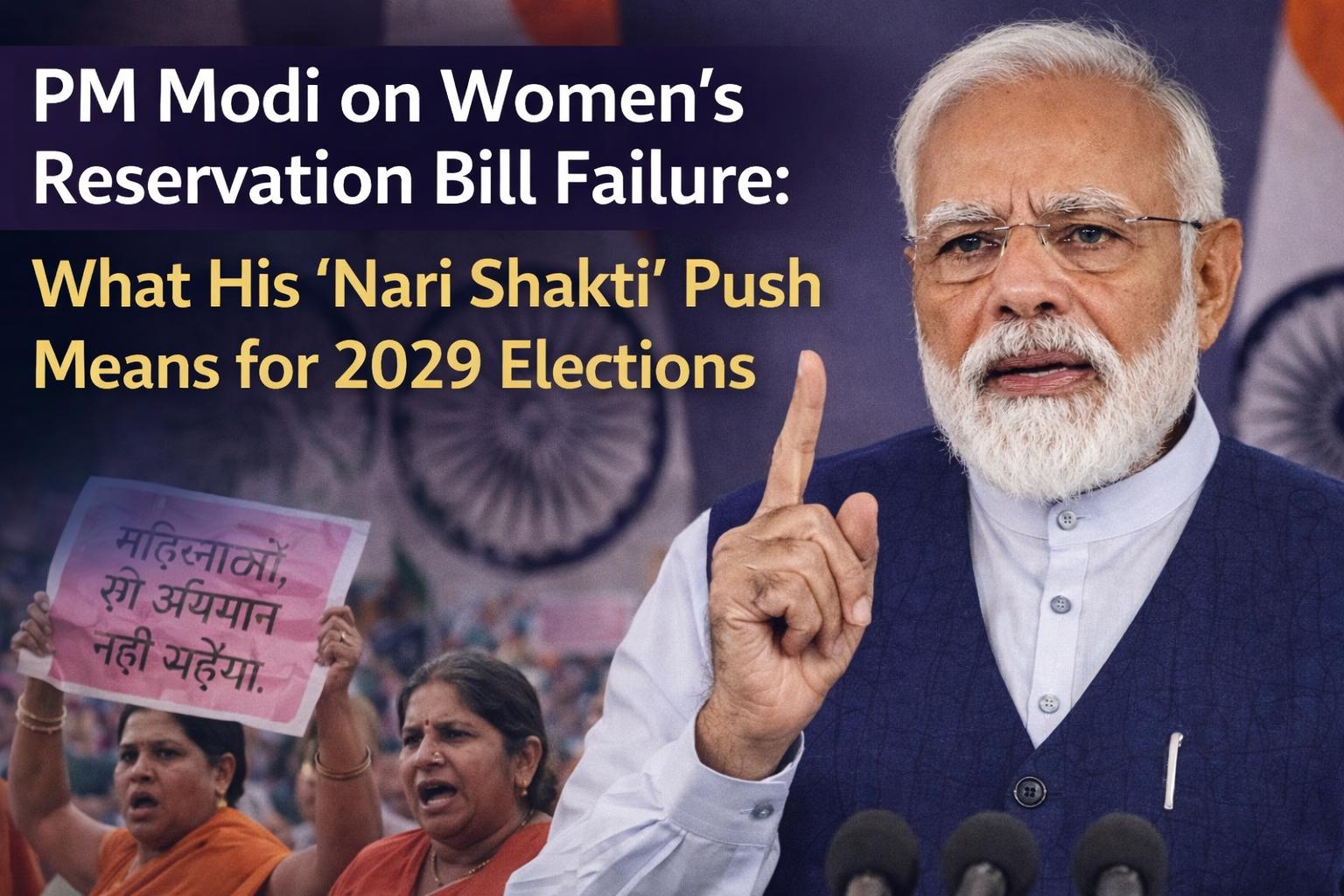
PM Modi women reservation bill speech highlights ‘Nari Shakti’ push
Prime Minister Narendra Modi’s women reservation bill speech on Saturday, April 18, 2026, has brought renewed focus on women’s representation in India’s political system. Calling the Nari Shakti initiative a “great yajna,” Modi emphasized that empowering women remains a central goal despite the recent legislative setback.The address comes just a day after the women’s reservation bill failed to pass in Parliament, triggering political tensions and sharp exchanges between the government and opposition parties.
What happened after the bill failed in Parliament
The Constitution (131st Amendment) Bill aimed to introduce 33 percent reservation for women in the Lok Sabha by expanding the total number of seats from 543 to 816. However, the proposal did not secure the required two-thirds majority needed for passage.Out of 528 members who voted, 298 supported the bill while 230 opposed it, falling short of the 352 votes required. Following the defeat, protests erupted within Parliament, with women Members of Parliament from the ruling party accusing the opposition of blocking a historic opportunity for gender equality.During his speech, Modi criticized opposition parties, alleging that they spread misinformation about the delimitation process to create confusion among the public.
Why this matters for India’s political future
The failure of the women’s reservation bill has significant implications for India’s political landscape. The proposed legislation was designed to increase women’s participation in governance, a long-standing demand that has remained unresolved for decades.From a broader perspective, the issue also reflects deeper political divisions. While the government has positioned the bill as a step toward inclusive growth, opposition parties argue that the approach raises concerns about electoral restructuring and fairness.The debate is not just political—it has social and economic dimensions, as increased representation could influence policy decisions related to education, healthcare, and workforce participation.
Background: Nari Shakti and the 2029 election roadmap
Prime Minister Modi reiterated that the goal of implementing women’s reservation remains intact, with a target timeline linked to the 2029 Lok Sabha elections. The proposal is tied to a future delimitation exercise based on census data, which would redefine constituency boundaries and seat allocation.The Nari Shakti initiative, described as a transformative effort, aims to bring more women into leadership roles and strengthen their participation in national decision-making. The government has framed it as part of a long-term vision rather than a short-term political move.
What happens next after the legislative setback
Despite the bill’s failure, the government has signaled that it will continue pursuing the objective of women’s reservation. Political analysts suggest that the issue will remain a key talking point in upcoming elections and policy discussions.Opposition parties are also expected to intensify their campaigns, presenting alternative approaches while maintaining their stance on the recent bill. The ongoing debate could shape future legislative strategies and influence voter sentiment.
A setback, but not the end of the push for women’s empowerment
The PM Modi women reservation bill speech underscores that the push for gender representation in India is far from over. While the bill’s failure marks a significant setback, it has also brought the issue back into the national spotlight.As India moves toward future elections, the question of women’s representation is likely to remain central to political discourse. Whether through revised legislation or new strategies, the effort to expand women’s role in governance is expected to continue shaping the country’s political future.